In Kiribati, connectivity is more than a convenience. It is a necessity that shapes how people learn, work, communicate, and access essential services across a nation spread over 33 islands and 3.5 million square kilometres of ocean.
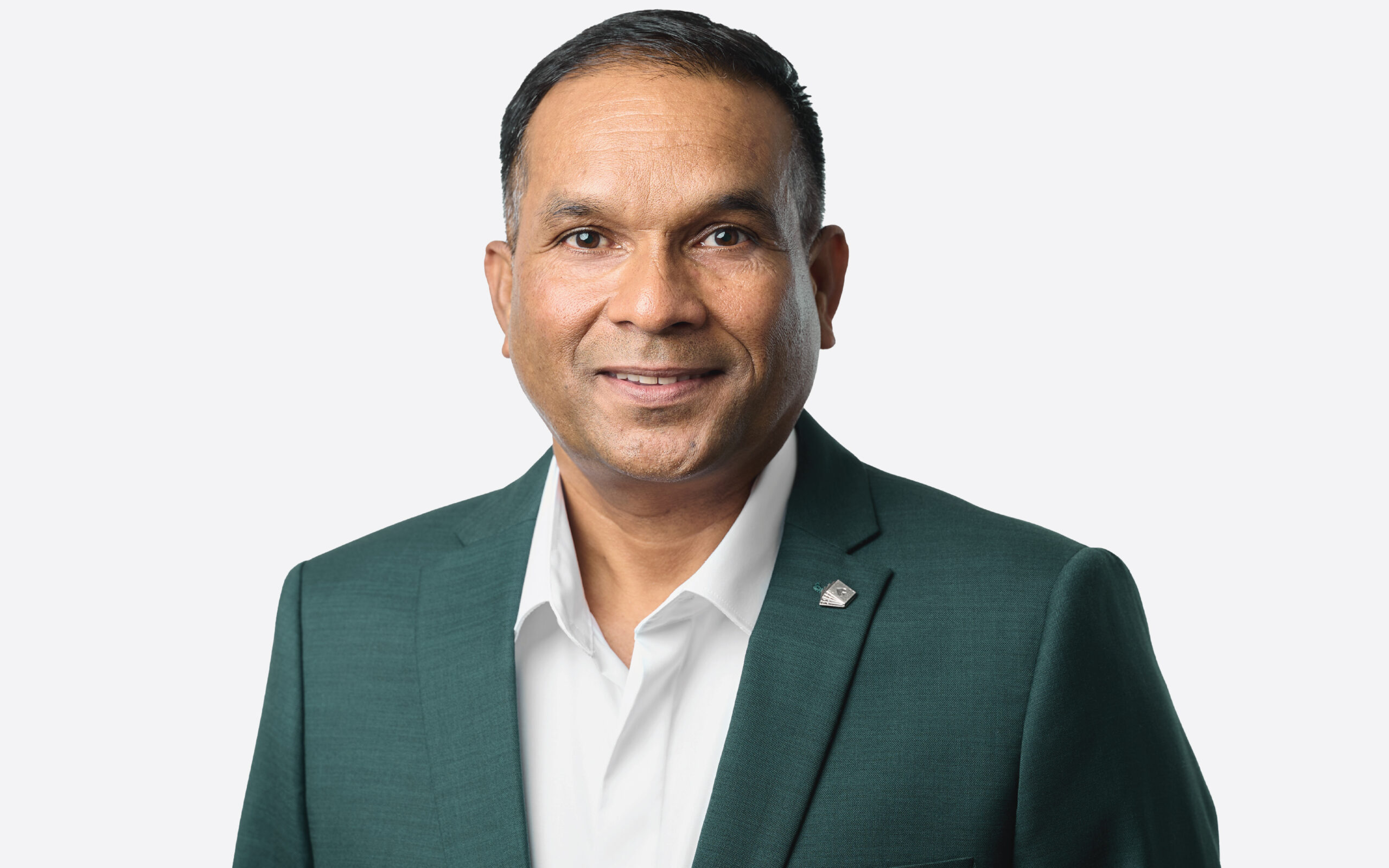
For Kamlesh Sharma, Chief Executive Officer of Vodafone Kiribati, that reality defines the mission.
With approximately two decades of experience in telecommunications across Fiji, New Zealand and Kiribati, Sharma has built a career around solving some of the Pacific’s most difficult connectivity challenges.
In an exclusive interview with Entrepreneur Magazine, he spoke about the responsibility of leading in one of the world’s most remote island nations, where network reliability can influence everything from education and banking to healthcare and economic development.
His perspective is grounded in practical experience. In Kiribati, telecommunications are not framed as a corporate service alone. It is woven into the daily functioning of communities that depend on mobile coverage and internet access to stay connected across long distances and scattered landmasses.
“Telecommunications in Kiribati is far more than business. It powers education, healthcare, banking, and national growth. Returning to lead Vodafone was my chance to transform one of Earth’s most remote nations.” Sharma outlined.
That statement reflects the broader philosophy behind his leadership. For Sharma, the role is not simply about managing a business, but about helping build the systems that allow communities to participate more fully in modern life. In a country where physical isolation has long been a defining feature, digital access has become a critical bridge.
Under his leadership, Vodafone Kiribati has continued to strengthen the networks that connect families, clinics, schools, businesses, and government services. Reliable mobile communication now helps families remain in touch across islands, supports remote health facilities, and gives students greater access to knowledge and learning tools that would otherwise be difficult to reach.
In outlining the key prospects, the CEO stated that Vodafone Kiribati currently provides network coverage to approximately 87% of the population and has set a clear and ambitious target to increase this to 95% within the next 18 months. This expansion is being driven through the rollout of new network infrastructure across the Outer Islands, Kiritimati (Christmas Island), and South Tarawa, enabling the extension of enhanced 4G+ services to communities that have historically experienced limited connectivity.
Recognising that infrastructure alone is not sufficient, Vodafone Kiribati continues to prioritise innovation as a key pillar of its strategy.
A significant milestone was achieved in December 2025 with the integration of satellite-based connectivity through BNL’s Starlink Community Gateway. By leveraging Low Earth Orbit (LEO) satellite technology, Vodafone Kiribati has enhanced network performance, reduced latency, and improved the overall customer experience across the islands. Customers now have access to high-speed, unlimited connectivity through Vodafone-managed Starlink services.
This progress is further strengthened by the East Micronesia Cable (EMC) fibre optic system in Tarawa, which is currently in its testing phase and is scheduled to go live in May 2026. As a key partner alongside BNL, Vodafone Kiribati is enabling access to high-capacity fibre connectivity and will serve as a primary provider of fibre services in South Tarawa, delivering faster internet speeds, enhanced reliability, and significantly increased bandwidth for businesses, government, and consumers.
Looking ahead, Vodafone Kiribati is currently building a state-of-the-art data centre, aimed at strengthening national ICT capability and supporting the next phase of digital transformation. This facility will enable advanced services, including value-added offerings and cloud-based solutions, while providing secure hosting and enhanced data management for both public and private sector organisations. It will also play a key role in improving overall network performance and delivering a better, more reliable digital experience for Vodafone customers.
Beyond connectivity, Vodafone Kiribati is also advancing financial inclusion through its mobile money platform, mPAiSA. With approximately 70% of customers now registered, the platform is playing a critical role in expanding access to financial services, particularly across the Outer Islands. It is enabling secure transactions, supporting economic participation, and bringing more people into the formal financial system.
“These initiatives are part of a broader transformation,” the CEO added. “Digital access is the bridge that connects our people to opportunity, whether it is a student accessing education, a clinic receiving critical information, or a business reaching new markets. Connectivity changes lives.”
Under this leadership, Vodafone Kiribati continues to play a central role in shaping the nation’s digital future connecting communities, empowering businesses, and enabling inclusive growth across one of the most remote regions on Earth.
The challenge, however, is substantial. Operating in the Pacific brings a set of conditions that are as demanding as they are unique. High operating costs, weak infrastructure, electricity interruptions, and logistical challenges all place pressure on service delivery. In remote island settings, even routine maintenance can require complex planning and significant resilience.
Sharma described the operational realities of Pacific markets as demanding, but not insurmountable. Local teams, he noted, continue to adapt, innovate, and find ways to keep essential services running.
That spirit of adaptation is evident in Vodafone Kiribati’s network upgrades across the islands, where the majority of sites in the Outer Islands are powered by solar energy, supported by backup generators. The company has invested in rugged battery systems and solar solutions to ensure a stable power supply, alongside hybrid technologies that combine satellite connectivity with traditional towers to enhance reliability and extend network reach. These are not merely cosmetic improvements; they are practical, purpose-built solutions tailored to a geography where conventional infrastructure often struggles to perform consistently.
The impact of those efforts is felt most strongly in communities that were once cut off. Better coverage has helped restore contact in remote areas, improved access to information, and made day-to-day communication more dependable. For residents living far from the main urban centres, that can make a meaningful difference.
The arrival of a new undersea high-speed cable in May 2026 marks another major step forward. The cable represents more than an infrastructure upgrade in Kiribati. It signals a shift in the country’s digital future. Faster and more stable internet can expand access to online education, open new business opportunities, improve public services, and connect remote communities to global information in real time.
Satellite powered mobile internet has long served as the country’s main digital link to the outside world. But while useful, it has also carried limitations in speed, stability, and capacity. The new cable changes that equation. It strengthens the foundation for more reliable digital services and gives both public and private sectors room to grow.
“Our goal is straightforward. We want to provide reliable, affordable internet for all communities. We’ll close ocean gaps using resilient networks, expanded coverage, international links, and satellite backups.” Sharma explained.
His approach is measured and strategic. Rather than relying on a single solution, it combines multiple layers of connectivity to ensure communities remain online even when conditions change. That mix of resilience and redundancy is especially important in island nations, where weather, distance, and infrastructure constraints can quickly interrupt service.
What stands out in Sharma’s leadership is his emphasis on long-term value. He speaks not only about technical performance, but about the wider social role of telecommunications. That includes supporting education, improving healthcare access, and enabling financial inclusion through digital tools.
One example is the M-PAiSA service, which has helped thousands of people in Kiribati handle payments and purchase goods and services through their mobile phones. In a country where access to physical banking services may be limited by geography, mobile finance can be a practical and transformative tool. It reduces travel, saves time, and gives more people a way to participate in everyday financial activity.
That progress has also depended on close collaboration with government. In markets like Kiribati, where public and private sector goals often overlap, coordination matters. Technology works best when it reflects local needs, local conditions, and the way communities actually live and work.
Sharma’s experience across the Pacific has clearly shaped his leadership style. He understands that sustainable progress in telecommunications is not achieved through speed alone. It requires patience, cultural understanding, operational discipline, and a willingness to keep investing even when the environment is difficult.
“Leading here demands hard work, cultural respect, and a long-term vision. It’s about linking people and igniting progress with patience, adaptability, and commitment to Kiribati’s future.” Sharma concluded.
In Kiribati, connectivity is not simply about technology. It is about access, inclusion, and the ability of an island nation to participate more fully in the digital economy. Through infrastructure investment, resilient systems, and a leadership approach rooted in purpose, Sharma is helping shape that future one connection at a time