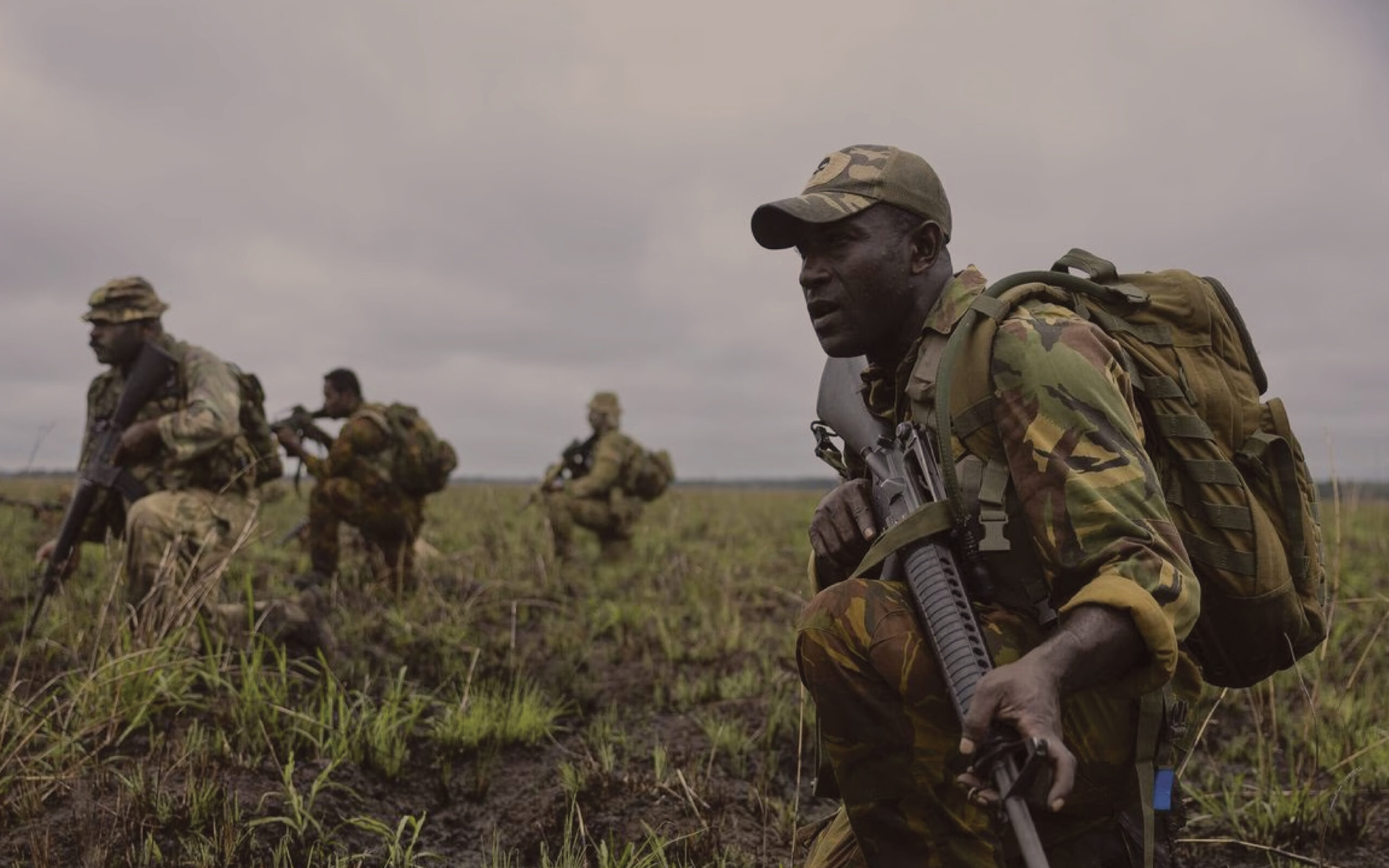
Papua New Guinea’s Defence Force is facing fresh scrutiny after unrest at Murray Barracks in Port Moresby on the night of April 14, 2026, exposed long-running tensions inside one of the country’s most important institutions. Opposition Leader James Nomane says the incident was “not an isolated incident” but the result of “seven years of political interference and institutional decay” within the Defence Force hierarchy.
Nomane’s central claim is that the unrest points to deeper structural problems rather than a one-off breach of discipline. He alleged that recruitment had been compromised by political interference and that senior officers, including a Bougainville veteran, were dismissed without due process or formal charges. He also accused Prime Minister James Marape of being part of the Defence Council responsible for decisions now under scrutiny, saying the Prime Minister’s response amounted to “political theatre.”
That criticism taps into a wider public concern: if recruitment, discipline, and senior appointments are seen as politically influenced, then confidence inside the force can weaken quickly. In a military environment, fairness and procedure are not side issues; they are central to morale, obedience, and legitimacy. When officers believe those standards have been compromised, resentment can build beneath the surface long before it becomes visible in public.
But there is another side to the argument. Governments often face the difficult task of maintaining discipline in a force that is already under pressure, and public unrest inside a barracks cannot be brushed aside as a legitimate substitute for internal process. From that perspective, Marape’s call for order is not just political reflex; it is an attempt to prevent escalation in an already fragile security environment.
The Prime Minister urged personnel involved in the unrest to “immediately cease, return to barracks, and report to their respective commanding officers.” He said PNG is managing multiple national challenges, including natural disasters and global economic pressures, and stressed the need for stability within the country’s disciplined forces. That is a reasonable point: a defence force in open disarray creates risks not just for government authority, but for public safety and national confidence.
Still, the grievances raised by Nomane cannot be dismissed lightly. He argued that despite significant budget allocations over nearly a decade, the Defence Force has seen little improvement in housing, equipment, training, or personnel pay. If that assessment is accurate, it suggests a serious mismatch between spending and outcomes. It also raises a basic question: where has the money gone, and why has the force remained under-resourced in key areas?
Supporters of the government may argue that military reform is slow, expensive, and complicated, especially in a country with competing development priorities. They could say the Defence Force has not been abandoned, but is working through the realities of limited infrastructure, budget constraints, and administrative bottlenecks. That view would frame the problem less as deliberate decay and more as the result of a difficult operating environment.
However, the allegation that recruitment was used as a political tool before national elections is more damaging. If true, it would mean the Defence Force has been pulled into partisan calculations, undermining the very neutrality that gives it authority. A professional military cannot function well if officers believe advancement depends on political proximity rather than merit and service.
That is why the call for an independent probe matters. Nomane wants an immediate leadership overhaul, including the removal of the Minister for Defence, the Secretary for Defence, and senior military officials linked to the fallout. He has also demanded protection and reinstatement for affected officers. While such demands are politically aggressive, they reflect the scale of the distrust now surrounding the institution.
At the same time, a blanket purge without proper investigation would carry risks of its own. Institutions can become even more unstable when decisions are made too quickly, especially in sensitive security bodies. What PNG needs is not just a political response, but a credible process that can separate fact from allegation and accountability from factional politics.
The broader concern is that the unrest at Murray Barracks may be a sign of deeper institutional fatigue. If morale, welfare, command integrity, and recruitment are all under strain, then the Defence Force is not simply dealing with an internal dispute. It is confronting a legitimacy crisis. That has consequences beyond the barracks, because instability inside the armed forces sends a negative signal to investors, regional partners, and the public.
For PNG, the challenge is balancing order with reform. The government must restore discipline, but it also must show that the concerns of officers are being heard and examined fairly. If it leans too heavily on authority without accountability, resentment may deepen. If it focuses only on grievance without discipline, the institution risks further disorder.
The crisis now unfolding is bigger than one night at Murray Barracks. It is a test of whether the Defence Force can remain professional in a political environment that many believe has interfered too deeply in its internal affairs. It is also a test of whether the government can respond with more than calm words and still restore trust.