MRDC Says PNG Gets 51% of Papua LNG Earnings Despite K28 Billion Treasury Warning
Papua LNG's State take rises to 51% at US$65 oil, MRDC says, as Treasury and negotiators split K16.9bn to K5bn on depreciation costs.
Key points
- MRDC says the amended Papua LNG agreement gives the State 51% at US$65 oil, one point above the 2019 deal, and 60% at US$81.
- Treasury put the advanced depreciation cost at K16.9 billion. The State Negotiating Team says K4.6 billion to K5 billion.
- MRDC sits on the negotiating team and is eligible for the concession it defends. The investment decision deadline is 15 December.
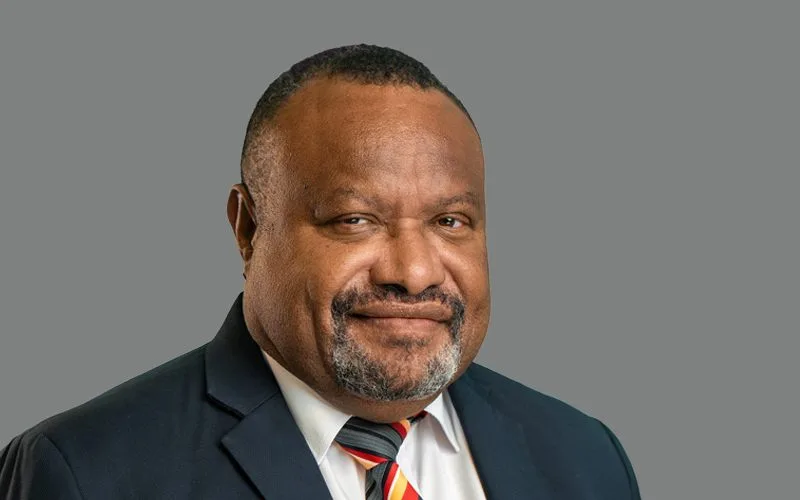
Mineral Resources Development Company says the amended Papua LNG Gas Agreement lifts the State’s take to 51% at an oil price of US$65 a barrel, one percentage point above the 50% secured in the original 2019 agreement. The figure comes from a press statement signed by managing director and chief executive Augustine Mano, released on 11 November, five weeks before the project’s 15 December final investment decision deadline.
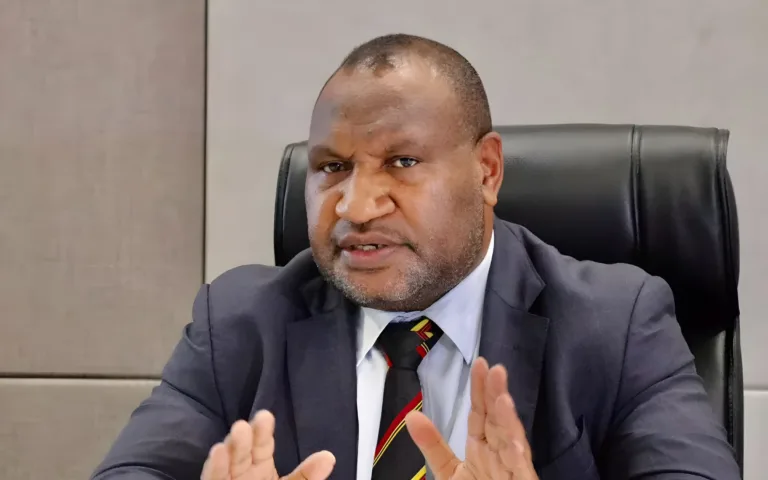
The statement arrives two weeks after internal Treasury projections, rejected by Prime Minister James Marape on 26 October, put the cost of the revised fiscal terms at K28 billion in lost revenue by 2035. MRDC’s document does not mention Treasury. It says it was written to give “context to the recent media reports on the deal.”
MRDC is not a neutral party. It sits on the State Negotiating Team that agreed the terms, and TotalEnergies’ partner table lists it alongside Kumul Petroleum as a project shareholder. Petroleum Minister Jimmy Maladina has also named MRDC as one of four participants eligible for the advanced depreciation concession at the centre of the dispute.
The Papua LNG State-take arithmetic
Mano’s case rests on two numbers. Under the 2019 agreement, according to the statement, the State’s take was 50% at US$65 a barrel on a US$12 billion capital cost. Under the 2026 agreement, it is 51% at US$65 and 60% at US$81, on a capital cost of US$14.5 billion.
The one-point gain at US$65 holds on a capital base 20.8% larger than the 2019 estimate. MRDC presents that as evidence the State gave nothing away. The statement calls the result “a win-win for both parties.”
The larger gain sits further up the price curve. On MRDC’s figures, a US$16 rise in the oil price, from US$65 to US$81, adds nine percentage points to the State’s share. That gain depends on prices the State does not control.
MRDC did not publish a State-take figure for PNG LNG, the ExxonMobil-operated project that began exporting in 2014. Without it, the statement’s central comparison runs only between two versions of Papua LNG, not against the country’s existing benchmark.
How the Papua LNG capex moved
The cost history explains why the 2019 terms had to be reopened. According to MRDC, the project’s capital estimate rose from US$12 billion to US$18 billion after the original agreement was signed, a 50% increase that Mano says left the project “uneconomical.”
The partners re-ran front-end engineering and rebid the construction contracts. MRDC puts the revised cost at US$14.5 billion, 19.4% below the US$18 billion peak but still US$2.5 billion above the 2019 base. Marape’s office uses the same US$14.5 billion figure.
TotalEnergies, which led the project until September, gives a slightly lower number. In a 7 September announcement reported by Reuters, the French company said project optimisation and a new round of contractor tenders had saved close to US$4 billion since 2024, bringing estimated capital expenditure to about US$14 billion.
Even at the lower cost, Mano says, a final investment decision this year was not possible without two concessions: a sharing of oil-price risk, and advanced depreciation. “The two concessions are essentials to meet the hurdle rate for investment, without compromising the State take,” the statement says.
The US$1.95 billion price mechanism
The first concession ties tax to the oil price. According to MRDC, when oil trades above US$81 a barrel the developer pays additional tax above the standard 30% rate, capped at US$1.95 billion. When oil falls below US$80, the rate is reduced proportionately from 30%, with the State’s exposure capped at the same US$1.95 billion.
The cap equals 13.4% of the US$14.5 billion capital cost. MRDC argues the mechanism is “price driven, simple and easier to monitor” than the Additional Profit Tax, which it says has never been triggered because of its complex formula.
Marape gave different trigger points when he defended the same mechanism on 26 October. “They make the recovery at prices below $81. We make our recovery at prices above $83,” he said, according to his office.
MRDC’s statement puts the downside threshold at US$80 and the upside at US$81. Neither document publishes the oil-price path the State used to value the mechanism, so its expected cost or benefit cannot be calculated from public material.
Advanced depreciation: K5 billion or K16.9 billion
The second concession is the one Treasury challenged. Advanced depreciation lets eligible partners bring forward Papua LNG capital deductions against income from PNG LNG between 2029 and 2032, which lowers PNG LNG’s tax bill in those years.
MRDC says the cost is capped at K5 billion and recovered once Papua LNG begins production, because the project will then have no amortisation left to claim. The State Negotiating Team, according to Marape’s office, put the timing shift at K4.6 billion to K5 billion. Treasury’s internal estimate, as reported by Marape’s office and The National, was K16.9 billion.
Treasury’s figure is between 3.4 and 3.7 times the negotiators’. The gap is K11.9 billion to K12.3 billion. That is larger than the US$1.95 billion price concession itself, which The National converted at about K8.93 billion.
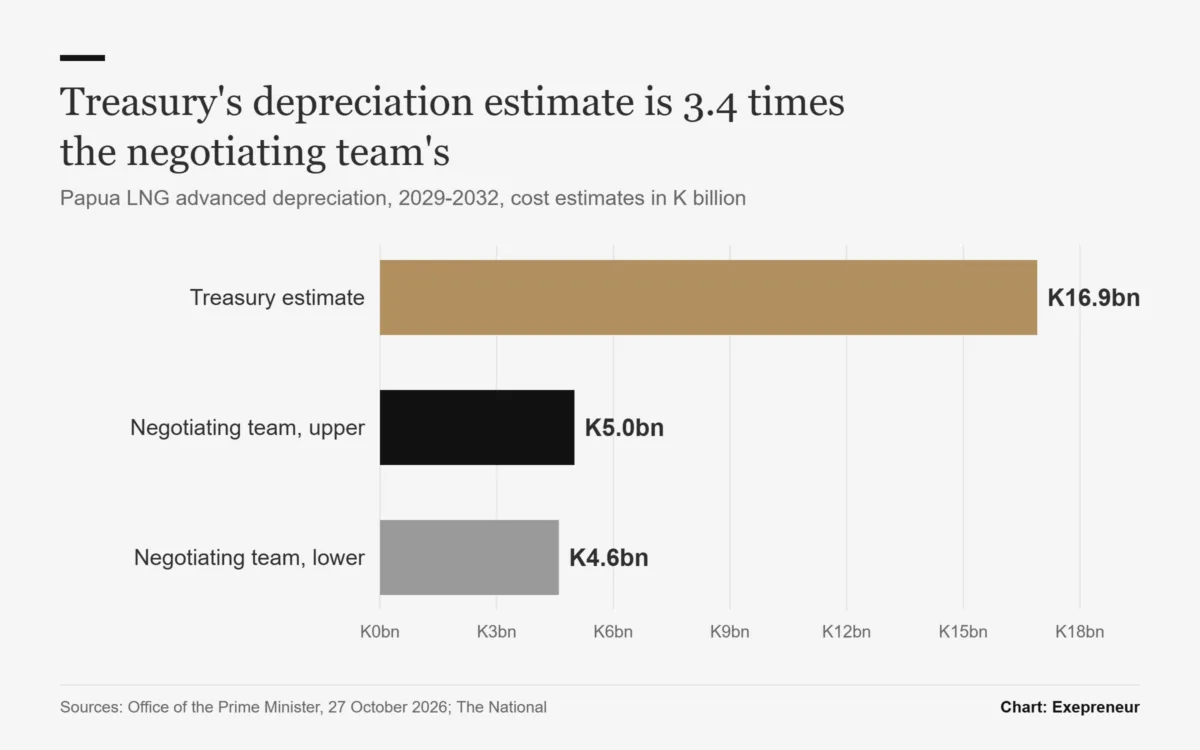
Marape’s office, citing negotiating team briefings, said the Treasury analysis wrongly treated temporary timing deferrals and State equity financing as permanent losses. Marape directed the department to reconcile its numbers with the negotiating team.
Treasury’s own analysis has not been published, and its position is known only through the Prime Minister’s and the minister’s responses to it. No result of the reconciliation has been made public.
Maladina, in comments reported by The National on 27 October, said the concession applies only to ExxonMobil, Santos, ENEOS and MRDC, whose combined interests represent about 60% of Papua LNG equity. Kumul Petroleum Holdings is excluded. He said the analysis also counted a K7.1 billion reduction in Kumul Petroleum dividends, which he said should be distinguished from the State’s fiscal concessions.
The PNG LNG comparison
MRDC draws its sharpest contrast with PNG LNG’s own depreciation terms. According to the statement, PNG LNG received additional depreciation, known as capital uplift, on top of amortising its capital cost. That uplift ended in 2024 and was extended for four years, from 2025 to 2028, under the PNG LNG agreement.
“The tax foregone in the PNG LNG Project due to the Additional Depreciation is a loss. There is no offset,” the statement says. Under Papua LNG, MRDC argues, the 2029 to 2032 cost is recovered at production.
The statement puts PNG LNG’s capital cost at US$20 billion. Reuters and the PNG Chamber of Resources and Energy both use US$19 billion. Mano also says PNG LNG output will begin natural decline “past 2030.” MST Marquee analyst Saul Kavonic told Reuters in September that the decline would begin from around 2028, and that a decision by year end would help extend PNG LNG’s life.
Papua LNG equity: 25% or 22.5%
On ownership, MRDC says the State’s interest rises to 25%, against 19.4% in PNG LNG. The PNG LNG figure, according to the statement, combines 2.8% held by project-area landowners, 4.2% through the Kroton entity and 12.4% net through Kumul Petroleum.
The 2019 Papua agreement gave landowners 2% as a free carry and Kumul Petroleum 20.5%, a total of 22.5%. MRDC says the 2026 deal adds 2.5% “to be acquired on commercial terms,” bringing the State-related total to 25% and making the PNG entities the second-largest shareholder group after ExxonMobil.
Other official documents still describe 22.5%. Kumul Petroleum’s 1 November funding announcement and Maladina’s 27 October statement both refer to a 22.5% back-in. The September partner table published by TotalEnergies lists ExxonMobil at 34.1%, Santos at 21%, TotalEnergies at 20%, ENEOS Xplora at 2.4% and Kumul Petroleum with MRDC at a combined 22.5%. How the additional 2.5% will be paid for has not been disclosed.
Who pays for the State’s share
The funding of the 22.5% has been set out in detail. Kumul Petroleum said on 1 November that the National Executive Council approved a US$1.1 billion plan under NEC Decision 235/2026, with no direct allocation from the national budget.
Of that total, US$300 million, or 27.3%, comes from a syndicated loan arranged by BSP Financial Group. The remaining US$800 million, 72.7%, is to come from Kumul Petroleum’s PNG LNG cash flow during construction. Chairman Isaac Lupari said US$180 million has already been set aside for the first cash call after the final investment decision, and that the BSP facility carries no State guarantee.
MRDC’s statement adds the carry terms. In Papua LNG, it says, the project carries 100% of sunk costs and, depending on the debt-to-equity ratio, half of the State’s equity contribution. Kumul Petroleum pays the other half from PNG LNG revenue over four years of construction. In PNG LNG there was no carry, which MRDC says forced the Government into the IPIC arrangement and the sale of its Oil Search shares to fund its 30% equity portion.
Landowners, levies and power
For landowners and provincial governments, MRDC points to a change in the formula behind royalties and levies. Wellhead value under Papua LNG is calculated after two deductions, operating cost recovery and capital amortisation, rather than the three applied in PNG LNG. Dropping the premium on capital raises wellhead value, which raises the 2% royalty, the development levy and the production levy calculated from it.
MRDC says the production levy is not an entitlement in law or policy and was won in negotiation. It also says PNG LNG landowners and affected provincial governments will receive up to 30% more in royalty and development levy from 2027 to 2034 as a result of the new deal. The statement does not give a kina value for that increase.
The domestic market obligation has also changed. According to MRDC, gas reserved for local use will be priced at 5% of the Japan Customs-cleared Crude index rather than 9%, a 44% reduction relative to the index, and will be available before Papua LNG produces. MRDC says this could make up to 100 megawatts of power available for Port Moresby. Plant-site landowners in four villages will receive one megawatt of free power.
What the statement leaves out
The MRDC document is an argument, and it reads like one. It names the gains against the 2019 agreement and against PNG LNG, but it does not publish a net present value of the State’s take, an oil-price assumption, or a year-by-year revenue profile.
Those are the numbers Treasury and the negotiating team disagree about. Marape has given his own assurance, The National reported.
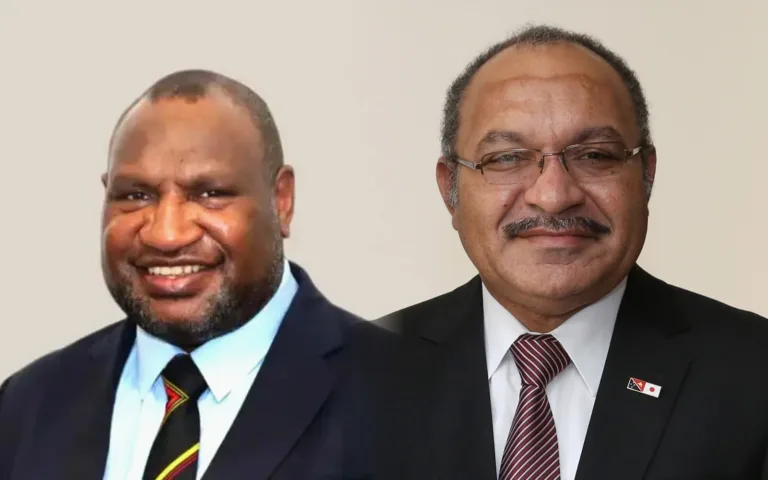
The Opposition has pressed the same point. Former Prime Minister Peter O’Neill warned in March against the concessions then under negotiation and has since questioned the project’s rising cost, according to local reports. Marape’s office said on 9 November that an economic debate with O’Neill was important for accountability.
Mano’s closing case is about timing. PNG LNG revenue will decline, he says, and Papua LNG’s US$14.5 billion of foreign direct investment would offset that decline and lift employment as PNG LNG’s construction did. The PNG Chamber of Resources and Energy says more than 21,000 people worked on PNG LNG at the peak of construction and about 2,000 after it ended in 2014.
“This deal saves Papua LNG, delivers significant gains compared to previous agreements, and improves the State take,” the statement says. As a member of the negotiating team, MRDC “supports this 2026 Papua LNG deal.”
The dates that settle it
Parliament has passed the Papua LNG legislation, which was certified on 6 November according to PNG Chamber of Resources and Energy president Anthony Smaré. The partners have not yet announced a final investment decision.
The binding deadline is 15 December 2026. Santos’s US$189 million purchase of an extra 3.3% stake, which takes its interest to 21%, is conditional on that decision being taken.
The fiscal test comes later. Advanced depreciation starts in 2029, the year Marape has staked his word that government revenue will not fall. The 2029 Final Budget Outcome will show whether that pledge held.