Santos Ltd. (ASX: STO) agreed on 7 September to pay about US$189 million to lift its stake in Papua LNG to 21 per cent, according to a company statement. The same day, TotalEnergies SE (TTE) said it would hand the job of running the Papua New Guinea gas project to Exxon Mobil Corp. (XOM), Reuters reported.
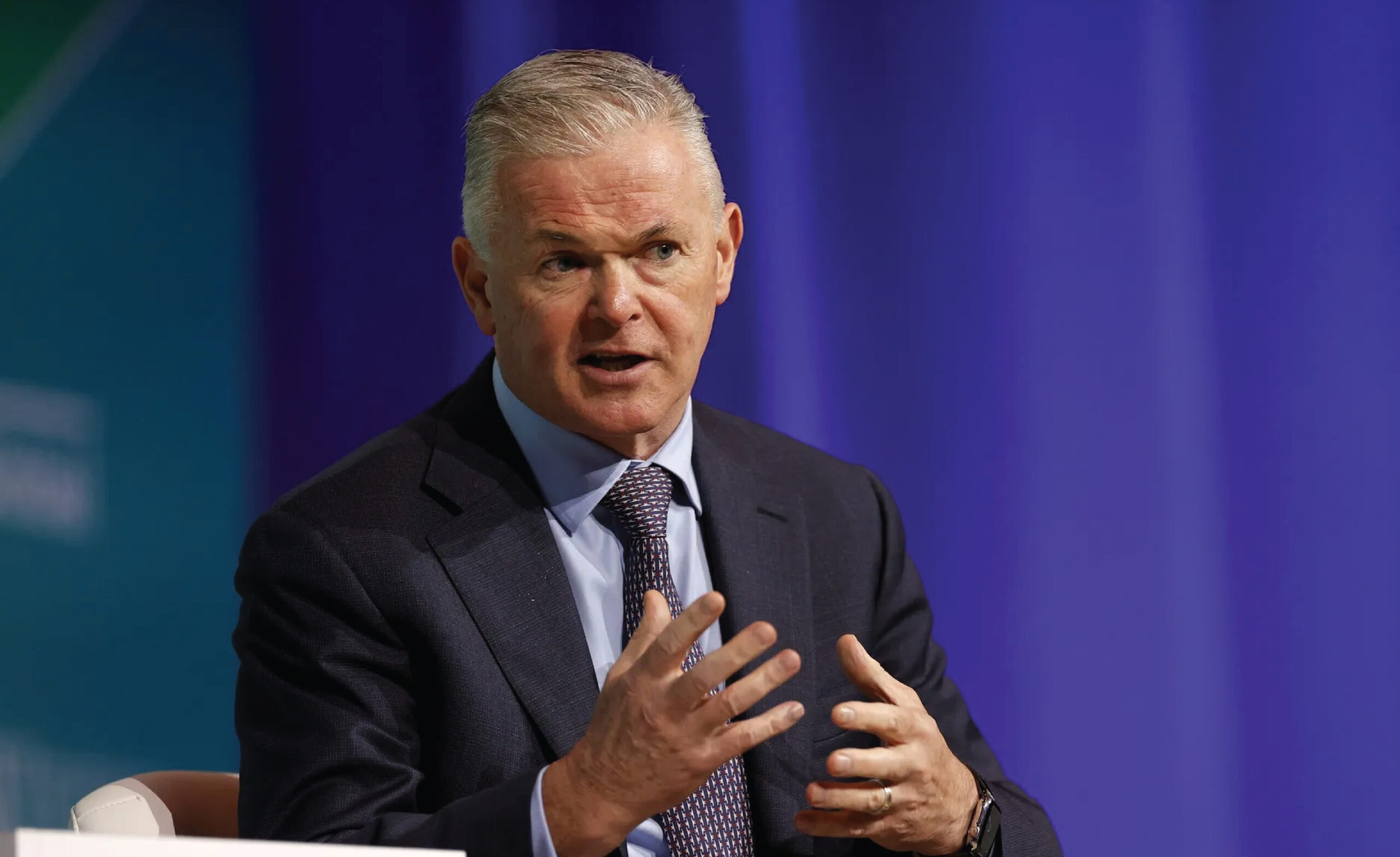
“Papua LNG is a world-class project and this is the right time to increase our position,” Kevin Gallagher, Santos’s managing director and chief executive, said in the statement.
In a LinkedIn post after the first tier of landowner negotiations closed, Gallagher called Papua LNG “the next phase of growth for Santos’ PNG platform.” He described it as a development “positioned right on the doorstep of Asia’s rapidly expanding energy markets.”
The deal
Under the September agreements, TotalEnergies will sell 9.1 per cent of the project to its partners in proportion to what each already holds, and keep 20 per cent for itself, Reuters reported. ExxonMobil becomes the operator, the company responsible for building and running the project day to day.
Santos’s release sets out the new line-up. The figures allow for the share the PNG Government is entitled to take up in the project, known as its back-in right.
| Partner | Before | After |
|---|---|---|
| ExxonMobil (operator) | 28.7% | 34.1% |
| PNG State (Kumul Petroleum and MRDC) | 22.5% | 22.5% |
| Santos | 17.7% | 21.0% |
| TotalEnergies | 29.1% | 20.0% |
| ENEOS Xplora | 2.0% | 2.4% |
According to the company, the extra 3.3 percentage points would lift its expected share of Papua LNG output by about 19 per cent, to roughly 1.2 million tonnes of liquefied natural gas a year. The State can take a further 2.5 per cent in total, subject to conditions, the release said.
The purchase needs regulatory approval. It only completes if the partners give the project their final go-ahead, Santos said.
An existing plant next door
Santos began exploring in PNG in 1987 and started production from the South-east Gobe field in 1998, Gallagher said when the company listed on PNG’s National Stock Exchange in December 2021, The National reported. That listing followed Santos’s merger with Oil Search. Its PNG interests mainly relate to PNG LNG, Gallagher said at the time.
Santos held 39.9 per cent of PNG LNG as of June 2025, the Journal of Petroleum Technology reported, the same figure Argus Media gave in 2023. ExxonMobil has operated the plant since production began in 2014, according to ExxonMobil.
PNG LNG produced at a pace equal to 8.7 million tonnes a year in the second quarter, with plant reliability above 98 per cent, Santos said in its quarterly report in July. Its nameplate capacity is 6.9 million tonnes a year, Energy Voice reported in 2016, a figure Enerdata also gives.
Papua LNG would be built near PNG LNG, outside Port Moresby, according to BIC Magazine. The gas would come from the Elk and Antelope fields in Gulf Province, about 320 kilometres away by pipeline, The Leader reported. Those fields were first discovered in 2006 and hold more than one billion barrels of oil equivalent, Australian Associated Press reported in August, noting that their development had been slowed for years by controversy.
An ExxonMobil spokesperson told Reuters that taking over Papua LNG should “strengthen alignment across the projects.”
In the second quarter, Santos approved two projects tied to its existing PNG operations, according to its quarterly report. One, a tie-in at the Agogo facility, targets a rate of return above 50 per cent. The other, an oil drilling campaign at PNG LNG, targets above 30 per cent.
At the half-year results in August, Gallagher said Santos wants to invest “in high-return opportunities in and around infrastructure we already own and operate.” He was speaking about the Cooper Basin in South Australia.
A cheaper project
TotalEnergies said in September that the estimated cost to build Papua LNG has fallen to around US$14 billion, after close to US$4 billion of savings since 2024, Pipeline & Gas Journal reported. Some of that came from a redesigned scheme for handling condensate, a light oil produced with the gas, built to work with PNG LNG. More came from rebidding contracts with a wider pool of Asian construction firms.
In December 2025, Argus Media reported that TotalEnergies had restarted contract tenders after earlier cost estimates were judged too high for the project to proceed. It widened the contractor pool to include Chinese firms and narrowed the planned gas pipeline from 40 inches to 30 inches across.
Construction tenders are now complete, with recommended contract awards waiting for partner approval, according to TotalEnergies. Santos’s 7 September release gave no cost figure of its own.
Asian buyers
Santos’s 7 September release says the bigger stake raises its exposure to Asian LNG demand. Gallagher said there that Papua LNG is “strategically positioned to supply premium Asian markets.”
Shell plc puts global LNG demand at 422 million tonnes in 2025 and forecasts 650 million to 710 million tonnes by 2040, Pipeline & Gas Journal reported in March. Shell expects Asia to account for 70 per cent of the growth in gas demand met by LNG over that period. The journal noted that the figures were not final because of the war involving Iran.
At 5.6 million tonnes a year, Papua LNG would equal about 1.3 per cent of 2025 global demand on Shell’s figure. Qatar plans to raise its LNG capacity to 142 million tonnes a year by 2030, QatarEnergy chief executive Saad Sherida Al-Kaabi said in February 2024, a target about 25 times Papua LNG’s planned output.
A marketing venture between TotalEnergies and PNG state entities will sell 2.4 million tonnes a year, and TotalEnergies has signed a preliminary agreement to take 1.5 million tonnes a year for its own portfolio, Pipeline & Gas Journal reported. TotalEnergies keeps its right to buy gas from the project despite cutting its stake, according to the journal. Santos’s release names no buyers for its share.
Money to pay for it
World Oil reported in August that Santos’s peak spending on its Barossa gas project and Pikka oil project in Alaska is now behind it. Gallagher called 2026 “a transition year” in July, as both projects came online. Santos narrowed its full-year production forecast to between 99 million and 105 million barrels of oil equivalent.
First-half net profit fell 19 per cent to US$355 million on revenue of US$2.6 billion, AAP reported. Cash flow was held back in part by PNG product that Santos was entitled to but had not yet shipped, about 1.3 million barrels of oil equivalent, which the company expects to recover in the second half. Santos had US$3.8 billion of cash and available credit and no debt falling due before September 2027, and has set a target to cut net debt by US$2.5 billion by 2030, the company said in August.
For Papua LNG, Santos is targeting at least 60 per cent of development costs from project finance, loans repaid from the project’s own earnings, according to its half-year results. In December 2025, TotalEnergies told an investor conference in Sydney that seven government-backed export credit agencies and more than 30 commercial banks were interested in funding the project, Argus Media reported.
In June 2025, the XRG consortium, led by Abu Dhabi National Oil Co., offered about US$18.7 billion for all of Santos, or US$5.76 a share, the Journal of Petroleum Technology reported. The consortium walked away in September 2025. Santos said at the time that the bidders were unwilling to accept a fair sharing of risk, Offshore Technology reported.
What Santos does not control
In his post, Gallagher wrote that work with landowners in Gulf and Central provinces had shaped “a benefits framework that will deliver real, lasting change for local communities.”
The Development Forum, which the Petroleum Ministry describes as the platform for the State, the developers and affected landowners to agree on benefit sharing, is led by the PNG Government. It began in July, Santos said in its second-quarter report. PNG’s Oil and Gas Act 1988 requires the forum to be completed before the State issues the project’s development licence, Petroleum Minister Jimmy Maladina said in October 2025, according to a ministry statement.
A government presentation to the forum counted more than 220 clans and over 63,000 people as beneficiaries, according to BankTrack, a campaign group that monitors bank-financed projects. BankTrack also reported that a group announced on 22 July that a court had granted a one-month injunction halting the forum, and that the injunction was later overturned.
On 1 July, the PNG Centre for Environmental Law and Community Rights and Jubilee Australia said in a joint statement that landowners needed months to prepare and full access to documents, and that independent observers appeared to be excluded.
In August, Gallagher told an earnings briefing: “There was a stall after a few weeks when it first got up and going.” The problems had been resolved and the forum had resumed, he said, according to AAP. He expected it to finish around the end of September.
His post does not say when the first tier concluded. Exepreneur has not yet seen confirmation of that milestone from the PNG Government or from the operator.
Villagers Meg Heako and Joseph Ka’au questioned Santos about the project, The Leader reported in its coverage of the company’s annual meeting in Adelaide in April. Departing chairman Keith Spence told the meeting: “I really can’t say any more than that the development forum needs to occur and is planned to occur.”
Gallagher said Santos would receive an update from TotalEnergies after the forum and would seek assurances that the project met Santos’s standards, the paper reported. “I’d be very confident they would,” he said, pointing in part to “Total’s reputation.” Less than five months later, TotalEnergies agreed to hand over the running of the project to ExxonMobil.
What comes next
TotalEnergies chief executive Patrick Pouyanné called the September agreements a “decisive step” towards the final decision, Pipeline & Gas Journal reported, and thanked the PNG Government led by Prime Minister James Marape. The partners and the government have also amended the 2019 Gas Agreement, the contract that sets the State’s terms, to reflect the lower budget, according to the journal.
The partners are targeting their final investment decision, the formal go-ahead to build, in the fourth quarter of 2026, Santos said. That is when Santos has said it will publish Papua LNG’s cost, schedule and expected returns.