
Westpac’s FJ$225 Million Fiji Injection Nearly Doubles the Branch’s Capital Base
Westpac's FJ$225 million for Westpac Fiji equals 85% of the branch's Tier 1 capital, after loans grew 20% and its capital ratio fell to 14.93%.
Key points
- Westpac Group will put FJ$225 million into Westpac Fiji, equal to 85% of the branch’s Tier 1 capital at September 2025.
- Westpac Fiji’s loans grew 20.2% in FY2025 while its capital adequacy ratio fell from 16.48% to 14.93%, against the Reserve Bank of Fiji’s 12% minimum.
- Holding its ratio at 14.93%, the new capital would let Westpac Fiji carry about FJ$1.5 billion more in risk-weighted assets, by Exepreneur’s calculation.
Westpac Group will put FJ$225 million into Westpac Fiji, a sum equal to 85% of the Tier 1 capital the Fiji branch reported at the end of its last financial year.
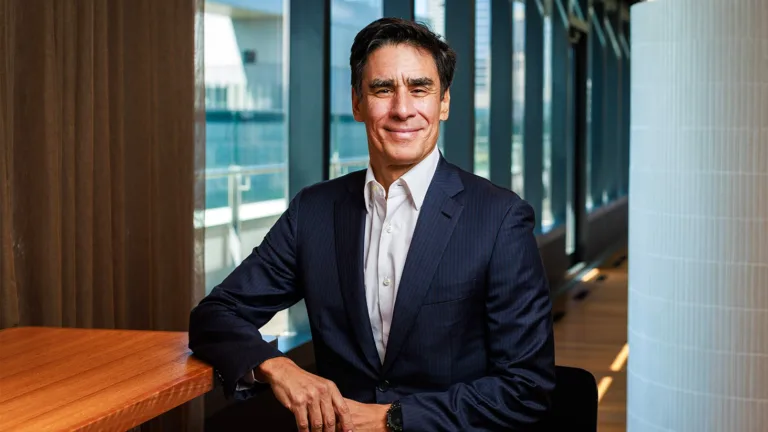
The Australian bank announced the injection in Suva on 18 November. Paul Fowler, Westpac’s Chief Executive, Business and Wealth, flew in for the announcement and tied it to the bank’s 125 years in Fiji, FBC News reported.
The announcement was framed as a vote of confidence in Fiji. The bank’s own audited figures point to a more practical reason. Westpac Fiji has been lending faster than its capital base could grow, and its capital ratios have fallen as a result.
The capital squeeze behind the announcement
Westpac Fiji’s Key Disclosure Statement for the year to 30 September 2025, audited by KPMG and filed under Reserve Bank of Fiji rules, shows loans to customers rose 20.2% in a year, from FJ$1.52 billion to FJ$1.83 billion. Total assets rose 16.4% to FJ$2.96 billion.
Capital did not keep pace. Tier 1 capital rose from FJ$230.2 million to FJ$265.8 million, but the Tier 1 ratio fell from 15.23% to 13.80%. The total capital adequacy ratio fell from 16.48% to 14.93%.
Working back from the published ratios, Westpac Fiji’s risk-weighted assets rose about 27.5% in the year, from roughly FJ$1.51 billion to FJ$1.93 billion, by Exepreneur’s calculation. Risk-weighted assets are the measure regulators use to set how much capital a bank must hold against its loans. When they grow faster than capital, the ratio falls.
The Reserve Bank of Fiji sets a minimum capital adequacy ratio of 12% for licensed commercial banks. At 14.93%, Westpac Fiji was still almost three percentage points above that floor. One more year of 20% loan growth without new capital would have taken it close to the line.
| Westpac Fiji, year to 30 Sept | FY2024 | FY2025 | Change |
|---|---|---|---|
| Loans to customers | FJ$1,522.5m | FJ$1,830.5m | +20.2% |
| Total assets | FJ$2,543.1m | FJ$2,960.2m | +16.4% |
| Deposits and borrowings | FJ$2,120.2m | FJ$2,266.7m | +6.9% |
| Net profit after tax | FJ$34.9m | FJ$45.5m | +30.4% |
| Tier 1 capital | FJ$230.2m | FJ$265.8m | +15.5% |
| Tier 1 ratio | 15.23% | 13.80% | -1.43 pts |
| Capital adequacy ratio | 16.48% | 14.93% | -1.55 pts |
| Impaired assets / total assets | 2.17% | 1.64% | -0.53 pts |
Source: Westpac Banking Corporation Fiji Branch Key Disclosure Statement, FY2025. Ratios not in the statement are Exepreneur calculations.
What FJ$225 million buys Westpac Fiji
Measured against the September 2025 balance sheet, the injection is large. It equals 7.6% of Westpac Fiji’s total assets and 12.3% of its loan book. It is almost five years of the branch’s FY2025 profit.
If the full FJ$225 million counts as Tier 1 capital and risk-weighted assets stayed at their September 2025 level, Westpac Fiji’s Tier 1 ratio would rise to about 25.5% and its total capital ratio to about 26.6%, by Exepreneur’s calculation. Neither Westpac nor FBC News said how the capital will be classified or when it will be paid in.
The more useful figure is lending capacity. Holding its capital ratio at the FY2025 level of 14.93%, Westpac Fiji could carry about FJ$1.5 billion more in risk-weighted assets than it does now. That is close to the size of its whole loan book a year earlier.
Westpac did not give a lending target, and it will not need to use all of that room. Capital ratios well above the minimum also let a bank take larger single exposures, which is what Fowler signalled when he spoke of infrastructure financing. Bank rules generally cap how much a lender can commit to one borrower as a share of its capital, so a bigger capital base raises the size of deal Westpac Fiji can lead on its own.
Westpac Fiji: a profitable branch with a funding gap
Westpac Fiji is not being rescued. Its FY2025 net profit rose 30.4% to FJ$45.5 million, a return on average assets of 1.65%, up from 1.36% a year earlier.
Part of that rise came from credit quality. The bank wrote back FJ$4.5 million of bad and doubtful debt provisions in FY2025, after charging FJ$1.9 million the year before. Impaired assets fell from 2.17% of total assets to 1.64%.
Stripping out those provision movements, profit before tax and provisions rose about 15%, from FJ$48.0 million to FJ$55.2 million, by Exepreneur’s calculation. Net interest income rose 11% to FJ$68.8 million. Fee income fell 2.6% and foreign exchange income fell 18.5%. Operating expenses fell 7.1% to FJ$70.9 million.
The balance sheet shows the strain of fast lending. Loans grew 20.2%, while deposits and borrowings grew only 6.9%. The ratio of loans to deposits rose from about 72% to about 81%.
Westpac Fiji filled the gap partly through other banks. Amounts payable to other financial institutions rose from FJ$79.4 million to FJ$331.6 million. Its balance with the Reserve Bank of Fiji fell from FJ$609.1 million to FJ$538.9 million, and it no longer held any of the FJ$104 million in securities it reported a year earlier.
New capital helps here too. Equity funding carries no interest cost and cannot be withdrawn, unlike deposits or interbank borrowing. The injection reduces Westpac Fiji’s need to compete for deposits to fund its next stage of growth.
The trade-off is return on equity. On its FY2025 profit of FJ$45.5 million, Westpac Fiji earned about 14.3% on equity of about FJ$318 million, made up of FJ$12.5 million in assigned capital, FJ$27.3 million in credit reserves and FJ$278.5 million in retained earnings. Add FJ$225 million and the same profit would return about 8.4%. Westpac is betting the extra capital will produce enough new lending to close that gap.
The credit risk that comes with growth
Fast loan growth carries its own risk, and the disclosure statement shows where Westpac Fiji’s cushion sits. Total provisions covered 34.67% of impaired assets in FY2025, little changed from 33.65% a year earlier. Across the global group, provisions covered 247.29% of impaired assets.
Westpac Fiji’s general reserve for credit losses, which Fiji’s central bank requires banks to disclose, fell from FJ$32.2 million to FJ$27.3 million in the year, a drop of 15%. Individually assessed provisions fell from FJ$6.3 million to FJ$4.3 million.
Those numbers moved in the right direction because impaired assets fell, from FJ$55.1 million to FJ$48.6 million. But a loan book that grows by a fifth in a year has not yet been tested through a downturn. Loans written in 2025 and 2026 will show their quality over the next several years, not in the first.
Funding cost is a strength. Westpac Fiji paid FJ$7.7 million in interest expense in FY2025 against FJ$2.27 billion in deposits and borrowings, a cost of about 0.34%, by Exepreneur’s calculation. Interest income was FJ$76.5 million. That spread is what makes the branch profitable, and it is what the new capital is meant to put to work on a larger scale.
From exit to reinvestment
Five years ago Westpac was trying to leave Fiji.
In December 2020 the group agreed to sell Westpac Fiji and Westpac Bank PNG to Kina Securities for about A$420 million. Papua New Guinea’s Independent Consumer and Competition Commission refused to authorise the PNG part of the deal, and the sale was terminated in September 2021, PINA reported at the time.
During that review, then Chief Executive Peter King told the PNG regulator that without the Kina sale, Westpac’s “only remaining option would be to continue to progressively scale down the business and seek an exit whenever possible,” the Australian Financial Review reported.
That did not happen. On 4 October 2023, Westpac told the ASX it had ended the sale process and would keep both banks and increase investment in them. The Australian Financial Review reported that Canberra had told Westpac over the previous year that it wanted the bank to stay in the Pacific, citing Westpac sources and China’s growing influence in the region.
Fowler pointed to that diplomacy on 18 November. “With the Vuvale Union Treaty bringing our two countries closer, we want to play our part in Fiji’s growth,” he said, according to FBC News.
The FJ$225 million is the largest public sign yet of what “increase investment” meant. It follows other spending that Westpac listed alongside the announcement: leadership and banker training for local staff, a refurbished Suva head office and Thomson Street branch that reopened in August 2026, upgrades to core banking and payment systems, and new merchant terminals that connect to business point-of-sale systems.
A small slice of the group, a large one of Fiji
For Westpac Group, Fiji is a rounding error. The branch’s FY2025 profit equalled about 0.45% of the global group’s profit, measured in Fijian dollars in the same disclosure statement.
For Fiji, Westpac matters more. Fiji’s six commercial banks held FJ$17.1 billion in total assets at the end of December 2025, according to the US State Department’s 2026 Investment Climate Statement. Westpac Fiji’s FJ$2.96 billion at September 2025 suggests a share of about 17%, by Exepreneur’s estimate, though the two figures are three months apart.
The market is crowded. ANZ, BSP, Bank of Baroda, BRED Bank, HFC Bank and Westpac all compete in a country of under a million people. BSP Fiji holds about 28% of the market across both loans and deposits, Business Advantage PNG reported in September. HFC is the only locally owned commercial bank.
Credit demand is strong. The Reserve Bank of Fiji’s June 2026 Quarterly Review recorded private sector credit growth of 14.4%. Westpac Fiji’s 20% loan growth in FY2025 ran ahead of that, and the new capital lets it keep taking share if it chooses.
Who carries it out
The investment will be run from two levels. Emma Low has been Westpac’s Managing Director, Pacific Bank since December 2023, having served as Chief Operating Officer of the Pacific business for two years before that, according to her LinkedIn profile. Shane Smith is Chief Executive of Westpac Fiji.
“This investment strengthens our balance sheet so we can do more for Fijian families and businesses, support the country’s continued growth and invest in the bank our customers and communities rely on,” Low said, according to FBC News.
Smith said tourism and commerce, two of Fiji’s most important industries, would be able to draw on more financing, Fijivillage reported. Westpac Fiji said it would keep its focus on responsible lending.
What to watch
The first test comes in Westpac Fiji’s next Key Disclosure Statement, for the year to 30 September 2026. It will show whether the capital has been paid in, how it is classified, and whether the Tier 1 ratio has recovered.
The second is loan growth. If lending keeps rising near 20% a year, the injection will be absorbed within a few years and return on equity will recover. If lending slows, Westpac will be holding a large capital buffer in a small market, and its return on that capital will fall.
The third is the infrastructure claim. Fowler named larger financing as a goal. Any deal Westpac Fiji leads or joins on a major Fijian project would be the clearest proof that the capital is being used as he described.
Westpac Fiji’s assigned capital, the amount the parent formally allocates to the branch, was FJ$12.5 million in both FY2024 and FY2025. Most of the branch’s capital has come from profits it kept in Fiji. The FJ$225 million is 18 times that assigned figure.