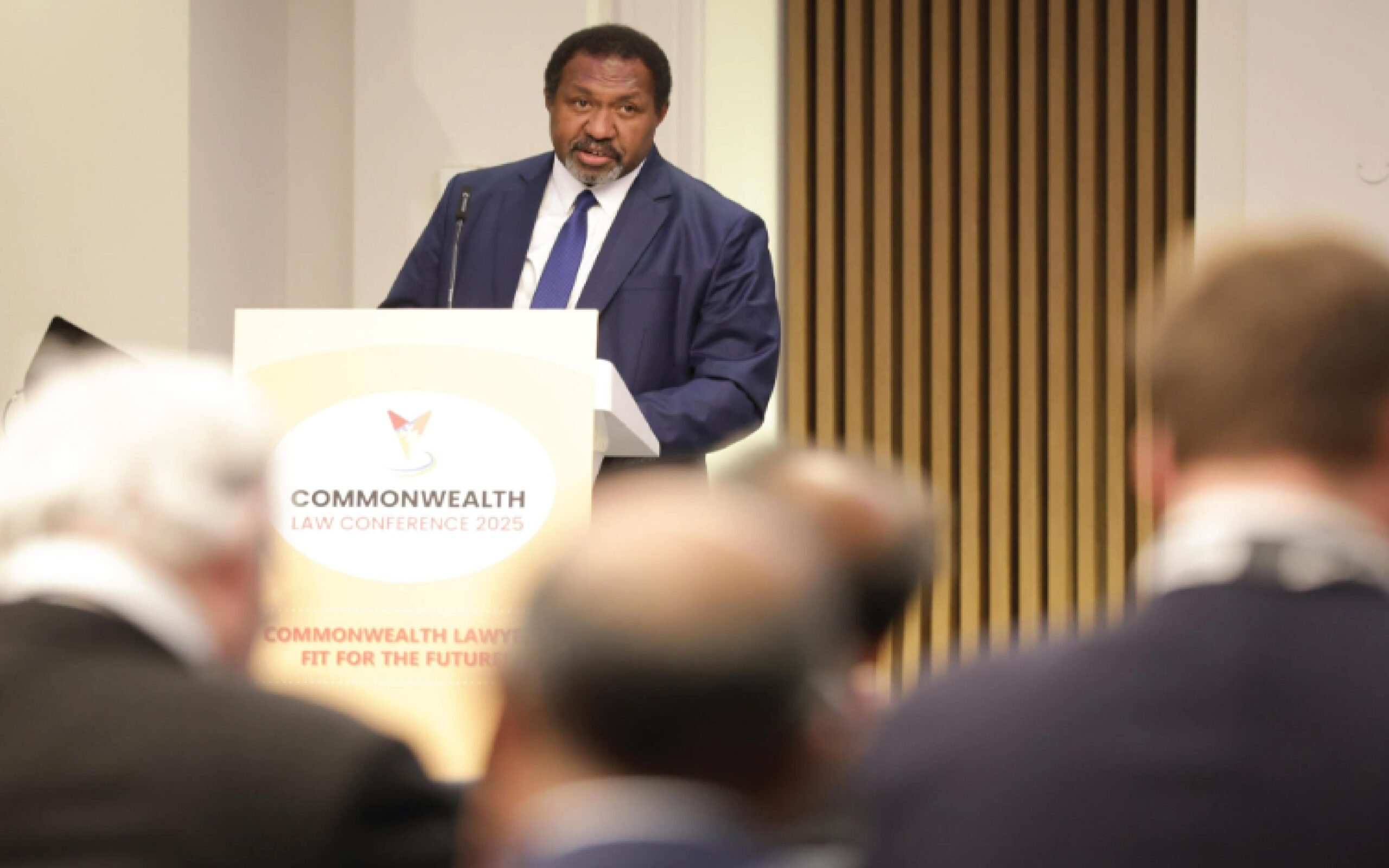
The Papua New Guinea Law Society president on legislative overreach, stalled electoral reform, and King’s Counsel titles the profession will not recognise.
“Democracy under demolition through legislative overreach.” That is how Hubert Namani, president of the Papua New Guinea Law Society, described the direction of the country’s law-making to Exepreneur.
The bills he objects to, in his words, “undermine judicial accountability, erode institutional checks and balances, and shield enforcement bodies from scrutiny.” Namani did not name them in the interview.
He led the Law Society’s Rule of Law March, which he said drew support across PNG and the Commonwealth. “Our colleagues across the Commonwealth, many of whom now stand ready to support PNG, resonated with our professional stand,” Namani told Exepreneur.
He has raised the same concerns at international meetings and gained allies who see PNG’s problems as part of a global pattern. He stresses that the fight must start at home.
An honour without a process
The Bench and Bar do not recognise the King’s Counsel titles issued recently by PNG’s Attorney General, Namani said.
“Titles such as King’s Counsel are not merely ceremonial,” he told Exepreneur. “They represent the pinnacle of legal excellence and ethical integrity. They must be awarded on clear merit, through a transparent and accountable process that upholds public confidence.”
“The legitimacy of such honors rests not in the title itself, but in the integrity of the process behind it,” Namani said.
He named no recipients in the interview and did not say how many titles were conferred.
“Frustratingly slow”
Namani calls PNG’s electoral system “a critical juncture.”
“My concerns remain and are ongoing,” he said. “While we continue to advocate for genuine and comprehensive electoral reform, progress has been frustratingly slow.”
He listed flawed voter rolls, election-day violence, abuse of process and political interference. Namani has seen the damage first-hand, describing disorganisation, disenfranchisement and violence that have marred past elections.
“Elections are the cornerstone of any democracy,” he said. If the processes behind them are compromised, he added, the legitimacy of those elected, and of the government, becomes questionable.
He called for a sweeping overhaul: strengthening the Electoral Commission’s independence, improving voter rolls, and cracking down on misconduct.
“We cannot afford another election marred by these issues,” Namani said. “We must look seriously at how we safeguard the integrity of the outcome so that leaders are truly chosen by the people, not by manipulation or intimidation.”
The Law Society will keep pushing the reform agenda “not as a political actor, but as a guardian of constitutional democracy and good governance,” he said.
Beyond the Bar
Namani also holds leadership roles in civil aviation and landowner governance. He described his approach as grounded in “integrity, legal discipline, and inclusive consultation.”
Aviation demands strict safety. Land governance requires balancing customary rights with modern development, and ensuring fair benefits for communities.
Namani says the common thread is serving the public interest “with transparency, fairness, and respect for institutional processes.” Decisions must be lawful and build trust, he said. “They must reflect stakeholder voices and promote long-term sustainability.”
For God and Country
Namani traces his work to the motto of his alma mater, De La Salle High School: “For God and Country.”
At Namani & Associates, he said the firm has “remained committed to mentoring young lawyers, building institutional capacity, and aligning legal practice with public interest.”
He wants investment in legal education, ethical leadership and digital innovation.
“The conversation must continue,” Namani said.
The next generation of PNG lawyers, he said, must be “bold defenders of the Constitution, ready to stand, speak, and serve For God and Country.”





