Soderberg Shifts WAF’s Capital Budget to Drought as 27 Sources Go Critical
The Water Authority of Fiji has moved capital works money into drought relief, deferring non-essential projects as 27 of 44 water sources hit critical levels.
Key points
- The Water Authority of Fiji has moved capital works money into drought relief, deferring non-essential projects on the Prime Minister's directive.
- Chief executive Seru Soderberg says the money is paying for water carting, extra leak-repair crews, cofferdams, temporary pumping stations and desalination equipment.
- 27 of WAF's 44 monitored water sources were critical on 18 November. Businesses are being asked to cut use by up to 30%.
Key points
- The Water Authority of Fiji has moved capital works money into drought relief, deferring non-essential projects on the Prime Minister’s directive.
- Chief executive Seru Soderberg says the money is paying for water carting, extra leak-repair crews, cofferdams, temporary pumping stations and desalination equipment.
- 27 of WAF’s 44 monitored water sources were critical on 18 November. Businesses are being asked to cut use by up to 30%.
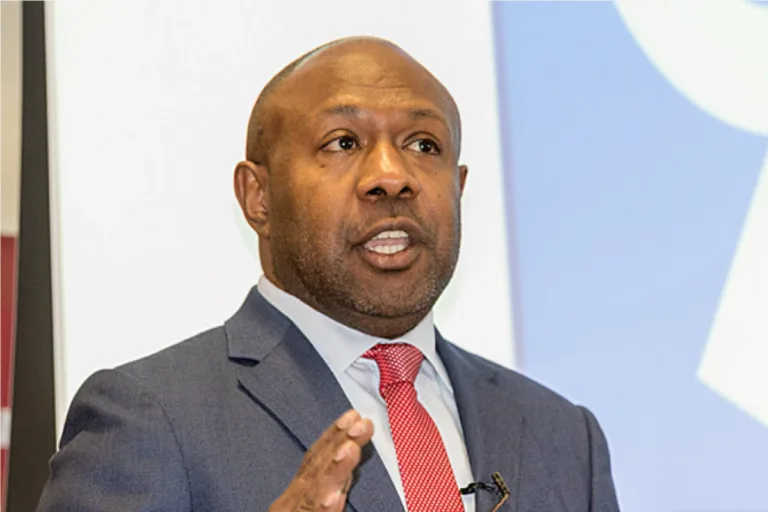
The Water Authority of Fiji has moved money from its capital works program into emergency drought relief, The Fiji Times reported on 24 November. The shift also pays for extra manpower and water carting. Chief executive Seru Soderberg said non-essential infrastructure programs have been deferred to free up funds.
The shift follows a directive from the Prime Minister, Soderberg told The Fiji Times. The newspaper’s report gave no amount and did not name the deferred projects.
“We’ve put aside some additional funding that has been provided by Government already,” Soderberg said.
Where the Water Authority of Fiji money is going
The reallocated funds pay for larger water carting fleets and more workmen to repair leaks, according to Soderberg. They also cover cofferdams, temporary pumping stations and incoming desalination equipment.
He said the change does not touch routine water and wastewater services. “The financing that we have reprioritised is through our capital works program, so it doesn’t affect the operations,” he told The Fiji Times.
The authority began early mitigation measures this year after a Fiji Meteorological Service El Niño warning, the newspaper said. Rainfall has stayed well below average since August.
Water sources at critical levels
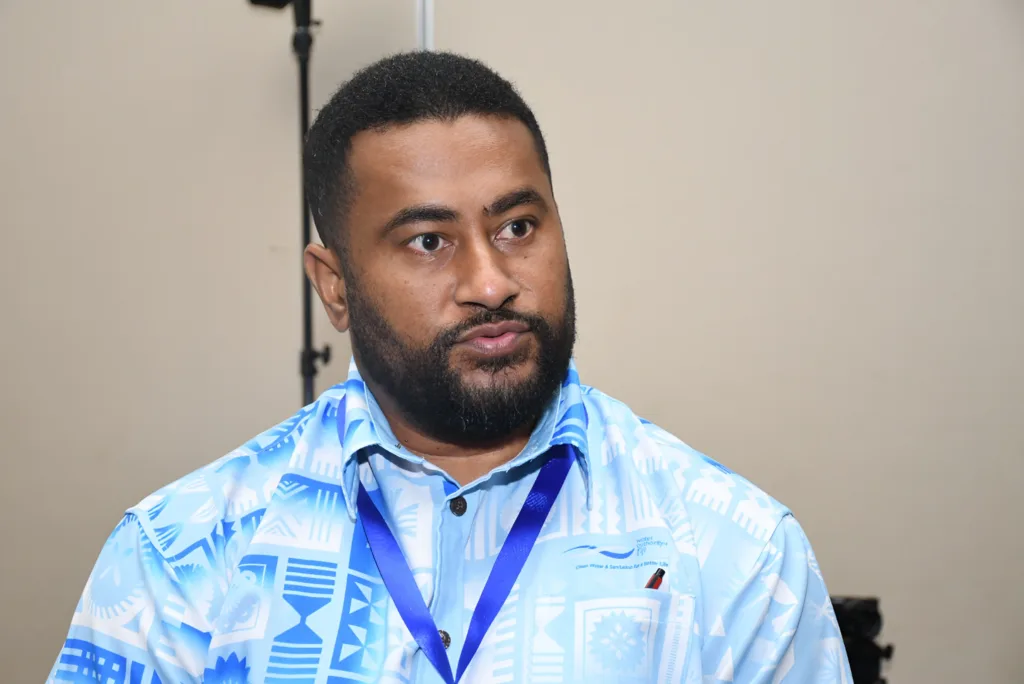
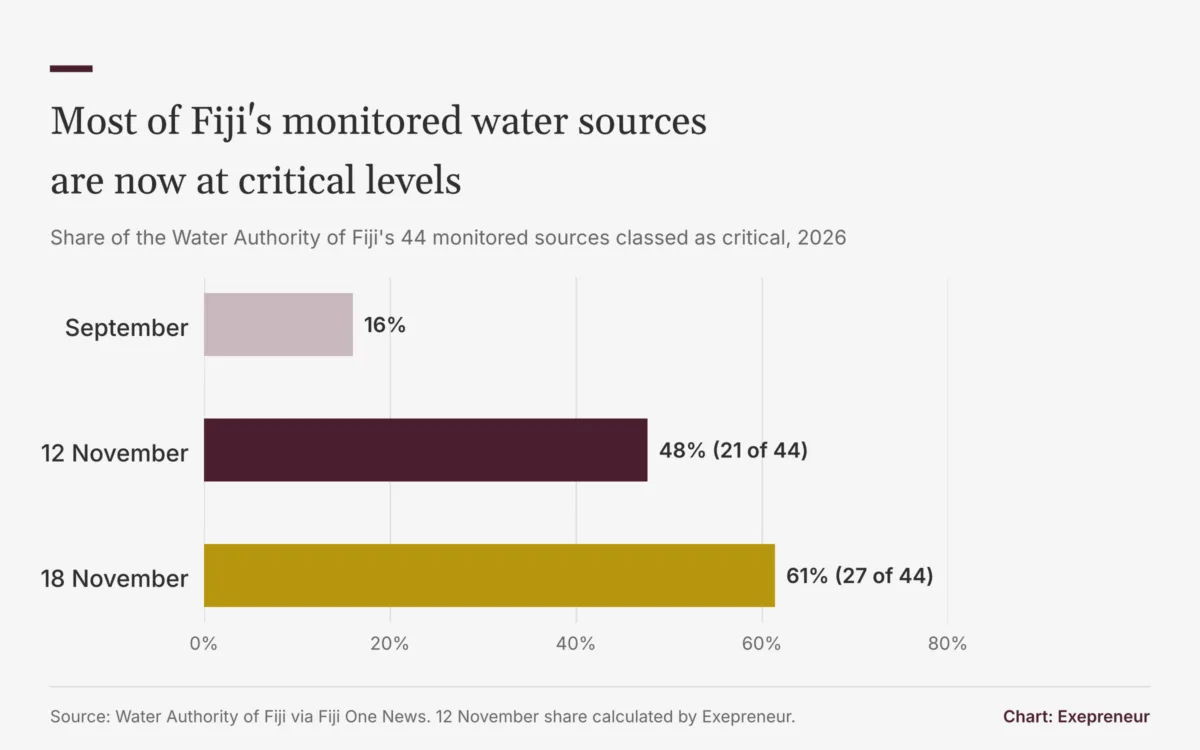
27 of the Water Authority of Fiji’s 44 monitored water sources were at critical levels on 18 November, Fiji One News reported. That was up from 21 on 12 November, Soderberg told the TOPEX 2026 conference. Four more were close.
Only 16% of monitored sources were classed as critical in September, according to the authority. That share has since risen to 61%.
About 31,600 people are affected by intermittent supply, rationing or water carting, the authority estimates. As of 18 November, 91 water carting trucks were running each day. They had delivered 32.5 million litres since 30 October, according to Fiji One News.
More than two million litres have gone by sea to the Yasawa Group, Malolo, Vatulele, Batiki and northern maritime communities.
Businesses asked to cut use by 30%
Soderberg asked businesses at TOPEX 2026 to cut water use by 20% to 25% now, Fiji One News reported. The cut rises to 30% from December, measured against each firm’s August to October use.
Businesses should fix leaks, stop washing vehicles and watering lawns, and keep 48 hours of water storage, he said. The authority said the measures are voluntary. Any formal rationing will go through the proper channels, with customers told first.
A national state of disaster
Prime Minister Sitiveni Rabuka declared a national state of disaster on 18 November, Reuters reported. It runs for one month, and the National Disaster Risk Management Council advises on any extension.
Rabuka said F$20 million has been redeployed from existing funds for emergency water for families and farmers, according to Reuters. The Fiji Meteorological Service expects below-normal rainfall through April.
The capital budget being drawn on
The Water Authority of Fiji was allocated F$291 million in the 2026-27 National Budget, according to Fijivillage. Public Works Minister Ro Filipe Tuisawau told Parliament in July that F$81.3 million was for treatment plants, pipelines and networks.
Named projects included the F$18 million Suva Water Mains Upgrade and F$10 million for rural water, Tuisawau said. He also listed F$8 million for emergency works and F$2.7 million for leak detection.
Fiji’s 2026-27 budget sets F$572 million for interest against F$875.7 million for capital spending, Exepreneur reported in October.
The state of disaster lapses in mid-December unless it is extended. Below-normal rainfall is forecast to last until April.