Marape Says Kumul Petroleum Has US$180m Ready for Papua LNG Stake
Cabinet backs KPHL funding the State’s 22.5% Papua LNG share from PNG LNG cash, savings and local lenders as K550m in dividends reaches Treasury.
Key points
- Cabinet has approved a KPHL plan to fund the State’s 22.5% Papua LNG stake from PNG LNG revenue, company savings and domestic lenders, the Prime Minister’s office said on 22 October.
- KPHL has set aside US$180 million, about 5.7% of a gross 22.5% share of the project’s US$14 billion cost on Exepreneur’s arithmetic. The plan’s size, terms and lenders have not been published.
- KPHL paid K550 million in 2026 dividends, up 83% on 2024, while the final investment decision, already delayed twice, is now set for 15 December 2026.
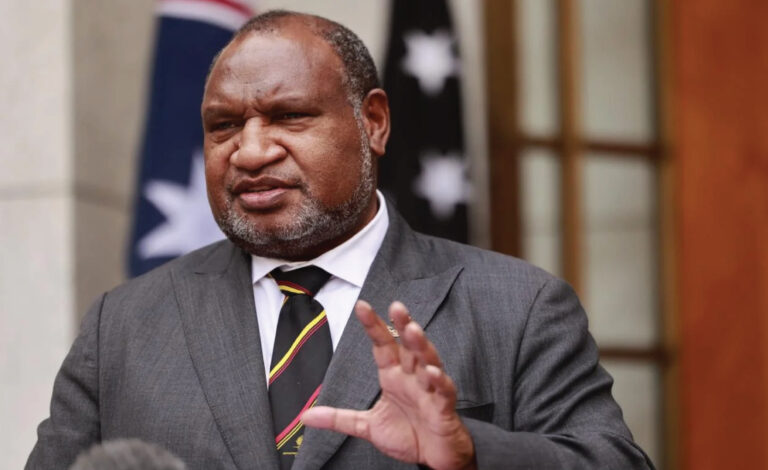
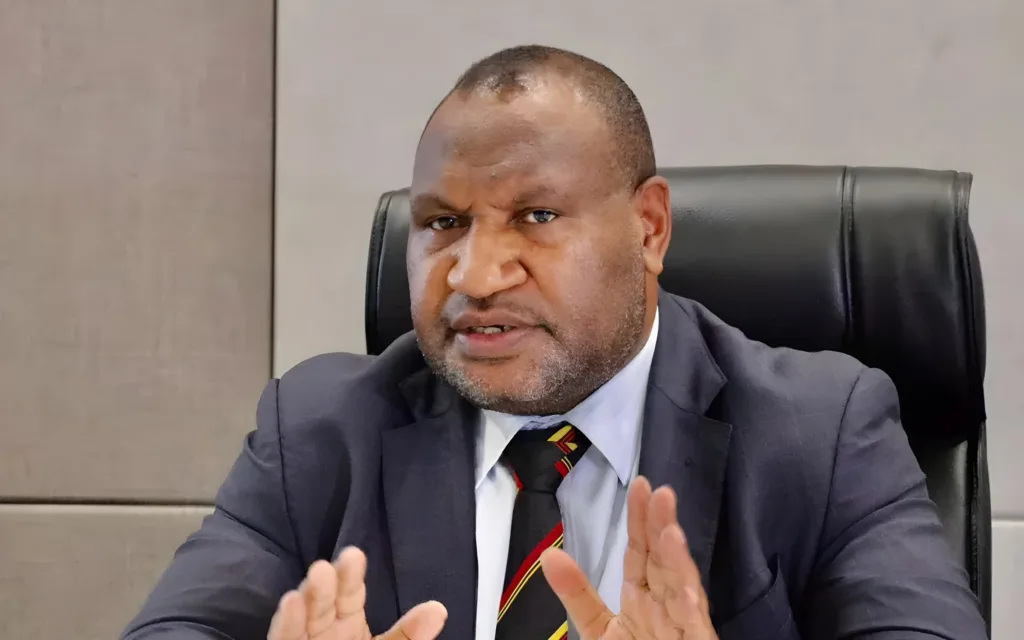
“For the first time, we are doing Domestic Funding for Papua LNG,” Prime Minister James Marape said on 22 October, as Kumul Petroleum Holdings Limited (KPHL) handed the State a K400 million dividend.
The same announcement, published by the Prime Minister’s office, said Cabinet had approved a KPHL Financing Strategy that “will utilise existing PNG LNG revenues, company savings and domestic financial institutions” to meet the State’s equity obligations in Papua LNG.
KPHL, the release said, “has already set aside US$180 million” toward those obligations, due when the project reaches a final investment decision. Petroleum Minister Jimmy Maladina put that decision at 15 December 2026, with construction expected from 2027, subject to approvals and financing.
KPHL’s payments to the State have come largely from that PNG LNG income. In 2021, according to The National, then managing director Wapu Sonk said KPHL had received US$1.644 billion in PNG LNG dividends since 2014 and passed about 68% of it to the State as dividends, capital returns, taxes and community spending.
What the State is paying for
The Prime Minister’s office described the government’s goal as “a total 25 per cent national participation in the Papua LNG Project,” including “the 22.5 per cent interest to be carried through KPHL.” Business Advantage PNG, reporting the 2021 agreement with Total, described the 22.5% as a back-in right under which the State pays its share of project costs. A separate 7% free carry negotiated that year applies only to future exploration projects, not Papua LNG.
World Oil reported on 7 September that the State had exercised those back-in rights under an amended gas agreement. Post-transaction, ExxonMobil holds 34.1% and takes over as operator, Santos 21%, TotalEnergies 20% and ENEOS Xplora 2.4%. KPHL and MRDC hold 22.5% between them. Neither World Oil nor the Prime Minister’s office gave the split between the two.
World Oil put capital expenditure at about US$14 billion, down nearly US$4 billion since 2024 through design changes and EPC rebidding, for a 5.6 million-tonne-a-year plant fed by the Elk-Antelope fields in Gulf Province. In May, Marape’s office said an initial US$18 billion tender had been rebid down to around US$14 billion, and that the partners were “time-bound to deliver this project.”
Measuring the US$180m
On Exepreneur’s own arithmetic, which assumes the full 22.5% is paid in cash, 22.5% of US$14 billion is about US$3.15 billion, putting the US$180 million at roughly 5.7% of a gross share. If part of the State’s share is funded with project debt, its cash equity would be lower; its share of back costs incurred before it took up the stake would add to the bill. Neither the debt structure nor the back costs have been published, and part of the 22.5% sits with MRDC rather than KPHL.
No public document gives the financing plan’s total size, its terms, or which domestic banks or superannuation funds are involved. No independent source has confirmed where the US$180 million is held or in what currency. The only public source for both the set-aside and the Cabinet-approved plan is the Prime Minister’s office.
In 2021, according to Business Advantage PNG, Total and KPHL said they would “explore joint equity financing options” with global financial institutions. KPHL has also borrowed to buy equity in the past. In 2014 it used a UBS loan to buy Oil Search shares, and The National reported a A$382 million loss on the UBS transaction, which Sonk said was not caused by KPHL’s 2017 sale of the shares. In 2023, according to Natural Gas World, it secured funding to buy an additional 2.6% of PNG LNG from Santos.
Dividends to Treasury
The 22 October release put KPHL’s 2026 dividends at K550 million, the K400 million payment plus an earlier K150 million, alongside K480 million in advance tax, a combined contribution of more than K1 billion. Chairman Isaac Lupari reported the advance tax figure, and the release said KPHL is targeting further payments, subject to cash flow and its operating plan. Marape said the money would help “complete the Fuel Subsidy, finance the El Niño Relief” and support the 2026 Budget.
NBC PNG reported KPHL paid K300 million in 2024, and EMTV reported K400 million in 2023. On those figures, 2026 dividends are 83% higher than 2024. The National reported K300 million for 2021, when Marape set out a policy sending 60% of dividends to the budget and 13% to KPHL savings for reinvestment. The government’s 2025 dividend policy raised the expected remittance to 80% of KPHL revenue, according to NBC PNG.
The financing plan now draws on those “company savings”, while the 2025 policy expects 80% of revenue to go to the State. In December 2025, according to NBC PNG, the chair of Parliament’s Plans and Estimates Committee, Joseph Yopyyopy, said billions of kina received by KPHL between 2022 and 2024 had not been fully remitted to the State. He gave no amounts.
Marape made the remark on 22 October, addressing critics of State equity participation.
Leadership through the decision
Since July 2025, KPHL has changed its chairman twice and replaced its managing director with an acting appointee. In July 2025 Marape appointed Gerea Aopi chairman and asked him to lead a “full and independent review.”
By late September 2025 the board had suspended Sonk, citing, according to Marape, alleged financial dealings with a law firm, alleged use of company resources in litigation against the board, and allegations in international media. Marape said Sonk was innocent until proven otherwise. The National reported that Sonk vowed to clear his name. No findings against him have been published.
Business Advantage PNG reported in November 2025 that the board had appointed Dr Luke Liria acting managing director. The Prime Minister’s office now names Lupari as chairman and Liria as acting MD. The date and reason for Aopi’s replacement have not been made public, nor has the outcome of his review.
The Plans and Estimates Committee also recommended amending the KPHL Act, saying the structure that makes the Prime Minister sole trustee “concentrates decision-making power, limits parliamentary oversight.” Questions about KPHL’s accountability to Parliament go back to around 2017-18, when, according to The National, a Public Accounts Committee inquiry into the company stalled.
The date to watch
The final investment decision has moved before. In 2021 it was expected in 2023. In October 2025 Business Advantage PNG reported it as anticipated in early 2026. The current target, set by Maladina, is 15 December 2026, the date on which KPHL’s US$180 million falls due.