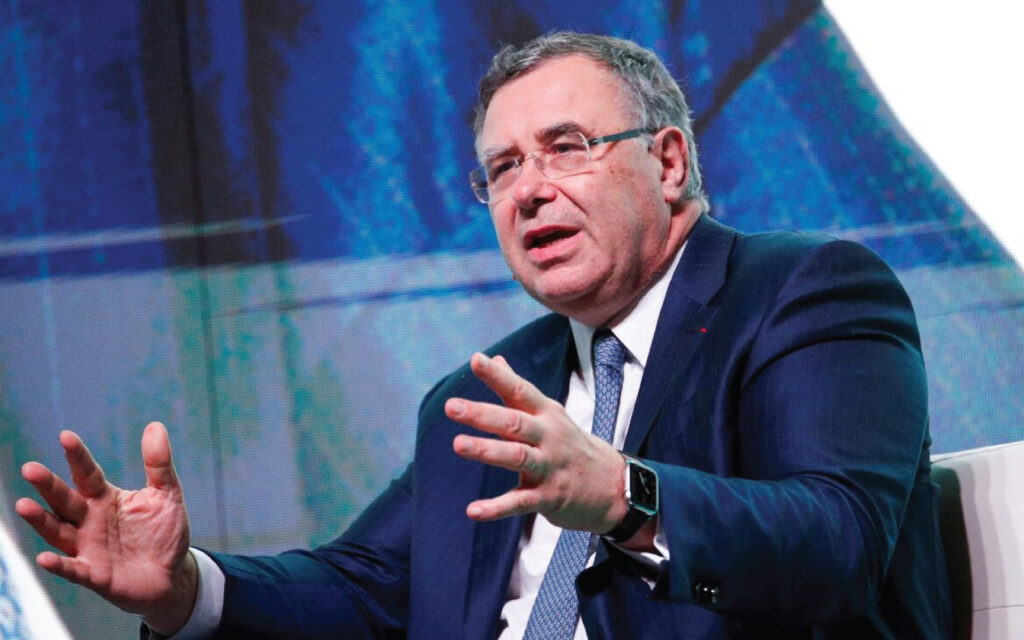
New York, September 29, 2025 – TotalEnergies Chairman and CEO Patrick Pouyanné and the Executive Committee outlined the company’s strategic roadmap in a presentation today, reaffirming a balanced growth approach focused on Oil & Gas, primarily LNG, and Integrated Power. The event was broadcast live and highlighted the company’s ambition to grow energy production by around 4% annually through 2030 while aggressively cutting emissions.
TotalEnergies plans to reduce operational emissions by 50% on Oil & Gas Scope 1 and 2 by 2030 relative to 2015 levels, and methane emissions by 80% compared to 2020. The company also announced a $7.5 billion savings program covering capital and operational expenditures over 2026-2030.
Capex guidance was lowered to roughly $16 billion in 2026 and between $15 billion and $17 billion per year from 2027 to 2030, marking a $1 billion annual reduction from previous forecasts. The firm will prioritize high-margin upstream projects and maintain a selective approach on low-carbon investments, including approximately $4 billion annually dedicated to Integrated Power, of which $3-$4 billion will support that segment’s growth.
TotalEnergies anticipates oil and gas production will grow more than 3% annually through 2030, driven by a strong project portfolio with 95% of 2030 production already operational or under development. Near-term growth exceeding 3% annually in 2025 and 2026 is expected from new high-margin projects in the U.S. offshore, Brazil, Iraq, and Uganda, alongside major LNG expansions in Qatar and Malaysia.
The LNG segment is projected to deliver more than 70% cash flow growth by 2030 compared to 2024, assuming $70 per barrel Brent and $8 per Mbtu gas prices. This increase stems from a 50% sales growth primarily from U.S. and Qatari LNG projects such as Rio Grande LNG Train 1-4 and North Field East and South. The company also plans to accelerate gas-to-power integration in the U.S. and Europe, supporting its integrated energy business model.
Electricity production is set to ramp up by roughly 20% per year through 2030, reaching 100 to 120 terawatt-hours annually, with renewables accounting for 70% and flexible gas 30%. Investment focus will center on deregulated markets including the U.S., Europe, and Brazil. The Integrated Power segment aims to be free cash flow positive by 2028 and achieve a 12% return on average capital employed by 2030, further differentiating TotalEnergies’ diversified energy portfolio.
TotalEnergies reaffirmed its commitment to shareholder returns, targeting a payout ratio exceeding 40% of annual cash flow across commodity price cycles. The Board has approved a $1.5 billion share buyback program for Q4 2025, bringing the total for the year to $7.5 billion. For 2026, share buybacks are guided between $0.75 billion and $1.5 billion per quarter depending on Brent prices and exchange rates, supporting an approximate 50% payout ratio at $70 per barrel Brent.
The company’s disciplined investment strategy and expected free cash flow growth—projected at around $10 billion by 2030 versus 2024 prices—underpin these plans to sustain dividends and buybacks, enhancing resilience against oil and gas market volatility.
TotalEnergies is a global integrated energy company that produces and markets energies: oil and biofuels, natural gas, biogas and low-carbon hydrogen, renewables and electricity. Our more than 100,000 employees are committed to provide as many people as possible with energy that is more reliable, more affordable and more sustainable. Active in about 120 countries, TotalEnergies places sustainability at the heart of its strategy, its projects and its operations.
TotalEnergies’ Papua LNG project in Papua New Guinea is progressing toward a Final Investment Decision (FID) expected in early 2026, with construction anticipated to begin the same year. The integrated LNG development includes nine production wells, a 320 km pipeline, and up to four liquefaction trains, targeting an annual export capacity of 5.6 million tonnes. Operated by TotalEnergies (37.55%) with ExxonMobil, Santos, and JX Nippon, the $10 billion project aims to boost local employment and economic growth while addressing energy demand in Asia-Pacific markets. Despite previous delays driven by cost concerns, TotalEnergies remains committed to advancing this flagship LNG venture in Gulf Province with sustainability measures integrated.
Leading Papua New Guinea, Pacific and Australian Economist Kishti SenKishti Sen stated that the integrated LNG (ie upstream and downstream combined) will be one of its two growth pillars going forward. The other is integrated electricity – generation and transmission.
“Good news is that Papua LNG (an integrated LNG project) is front and centre to grow TotalEnerrgies LNG supply from 2030 onwards. That means construction happens in 2026 subject to FID. There is a four year construction lead to bring major LNG projects online”