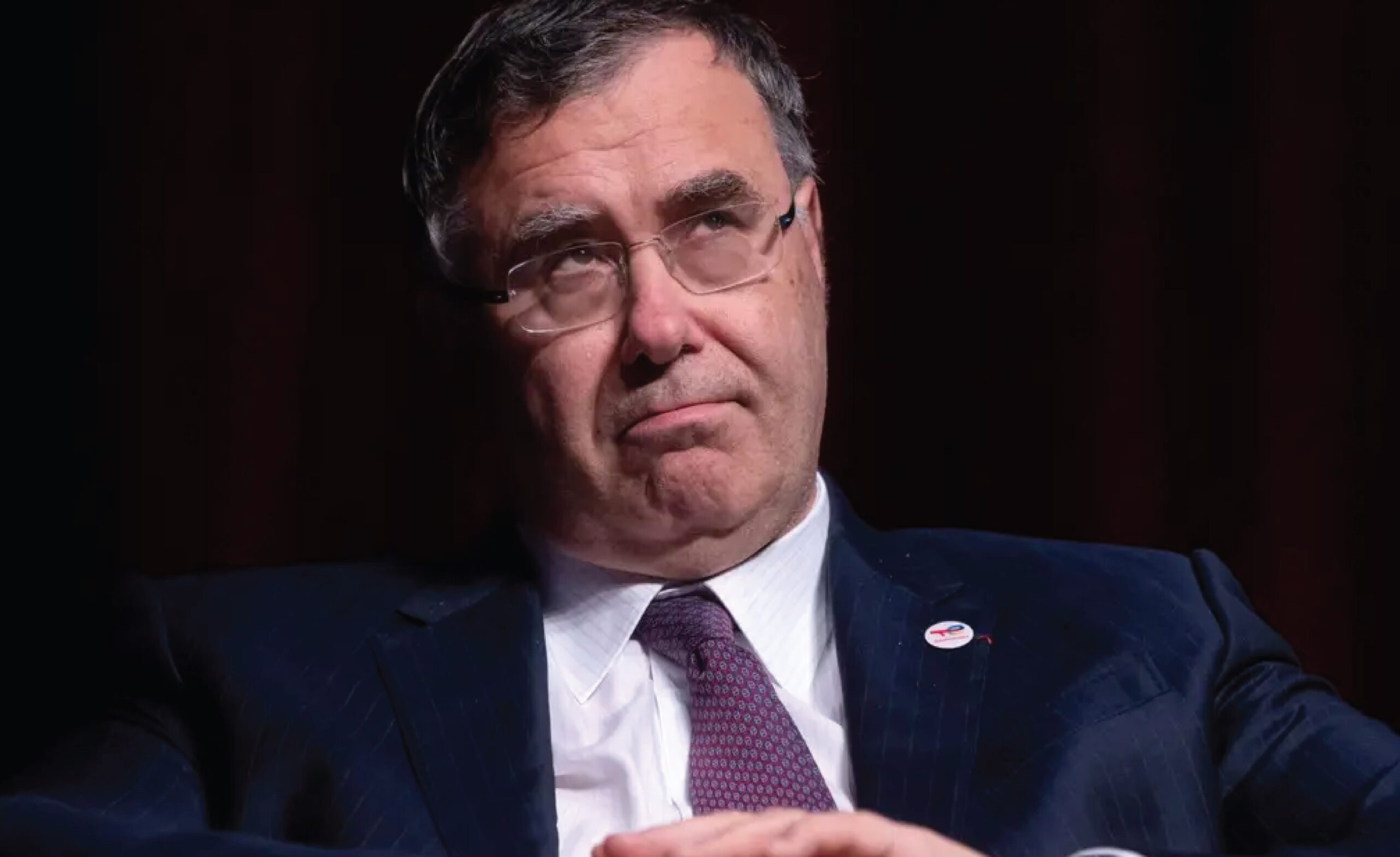
Patrick Pouyanné has a number now, and he is not backing down from it. “We are around $14 to $15 billion, not at $18 billion, not at $12 billion,” the TotalEnergies chief executive told analysts on the company’s February earnings call, describing the revised cost of the Papua LNG project after two years of rebidding, redesign and hard bargaining with contractors across Asia.
It is the number that determines whether Papua New Guinea’s second LNG project reaches a final investment decision this year, six years later than TotalEnergies originally promised.
It is also a number that twenty-nine banks and export credit agencies have already decided is not worth the risk.
The gap between a cheaper project and a fundable one
Papua LNG was never going to be cheap. What has changed is which kind of expensive it is. When TotalEnergies and its partners launched front-end engineering design in March 2023, the project carried a price tag near $18 billion, a figure the company itself would later call financially unworkable.
A rebid process launched in late 2024, run against an expanded pool of Asian engineering and construction contractors, brought that down by roughly 22%. JGC of Japan and Hyundai Engineering & Construction of South Korea now hold the frontrunner position for the EPC contract, with formal award expected only after FID.
The arithmetic behind the new number breaks down, on available project documentation, into three broad blocks. Upstream development of the Elk-Antelope gas fields in the Eastern Highlands, including well drilling, gas processing and a CO2 reinjection system designed to avoid roughly one million tonnes of emissions a year, accounts for close to half the budget.
A 700-kilometre pipeline across some of PNG’s most difficult terrain, from highland gas fields to the coast, takes another slice. The remainder funds three new electrified LNG trains at Caution Bay, built alongside the existing PNG LNG plant that ExxonMobil has operated since 2014, adding 5.6 million tonnes of new annual capacity plus 2 million tonnes of tolling volume through the older facility.
None of that is controversial. What is controversial is who is expected to pay for it.
Twenty-nine banks and a lead financier standing alone
Since December 2025, the project’s financing has been unraveling in public. Six civil society organisations, led by Reclaim Finance and the Centre for Environmental Law and Community Rights in Port Moresby, filed a formal complaint with the Equator Principles Association alleging Papua LNG breaches six of ten Equator Principles on climate, biodiversity and human rights.
Twelve banks responded within weeks. By February, the total had climbed to twenty-nine banks and export credit agencies that have ruled out financing the project, including ING, Rabobank, Standard Bank, KfW IPEX-Bank and the Swedish Export Credit Corporation. All four of Australia’s major banks, Commonwealth Bank, Westpac, ANZ and National Australia Bank, are on that list. So is Crédit Agricole, which withdrew as the project’s lead financial advisor in 2024 after facing its own campaign pressure, forcing Mitsubishi UFJ Financial Group into the role it holds today.
“MUFG’s role as financial advisor to a project rejected by many banks highlights serious failures in its risk management,” said Shona Hawkes, director of environmental justice at the Jubilee Australia Research Centre, one of the complainants. MUFG has not withdrawn. Neither has Japan’s export credit machinery: the Japan Bank for International Cooperation and Nippon Export and Investment Insurance both continue to treat the project as a matter of national energy security, alongside Mizuho and Sumitomo Mitsui Banking Corporation. China Eximbank and Bank of China, which together supplied $1.3 billion toward the original PNG LNG build between 2008 and 2014, sit in reserve as a fallback if the Japanese-led syndicate cannot close the full amount.
That is the financing map for a project TotalEnergies still describes as on track for sanction this year. A consortium built almost entirely on Japanese state-linked capital, with Chinese banks as the backstop, is not the diversified international bank syndicate that financed the original PNG LNG project in 2008, when nineteen banks spanning Europe, Asia, North America and Australasia came together despite a global financial crisis. Whether a narrower, more geopolitically concentrated group of lenders can close $9.8 to $10.5 billion in debt financing, against a project facing sustained NGO pressure and a documented $2.5 billion financing gap, is the question that will decide the timeline more than any engineering milestone will.
What the balance sheet actually shows
Strip away the campaign noise and the equity math is straightforward. Before PNG’s state back-in, TotalEnergies holds 37.55% as operator, ExxonMobil 37.04%, Santos 22.83% and Japan’s ENEOS Xplora 2.58%. After the state exercises its right to buy in, which Papua New Guinea’s Oil and Gas Act 1998 entitles it to do, the split shifts to TotalEnergies at 29.1%, ExxonMobil at 28.7%, Santos at 17.7%, ENEOS at 2.0% and the PNG state, through Kumul Petroleum Holdings and the Mineral Resources Development Company, at 22.5%.
That state stake carries a price tag of its own, roughly $900 million assuming the customary 70% debt financing ratio, and Kumul Petroleum managing director Wapu Sonk who has stepped down now has already told the public where the money will come from. PNG LNG, the country’s original gas project, retired its entire $16 billion bank-financed debt in December 2025, six months ahead of schedule.
“Our increased income will strategically flow into and assist us to put together the necessary finance for PNG to take up its mandated 22.5% equity in the forthcoming Papua LNG project,” Sonk said, cautioning that the milestone should not be mistaken for a cash windfall given PNG’s continuing exposure to global petroleum prices.
The timing is not a coincidence. PNG closed one enormous project-finance chapter in December and immediately pointed the proceeds at the next one. Prime Minister James Marape has leaned into the comparison directly, noting that PNG LNG’s original $14 billion construction cost, financed by nineteen banks during the depths of the 2008 crisis when PNG’s entire economy measured $26 to $30 billion, proved the country could deliver a project of that scale and honour the debt. Papua LNG, at $14 to $15 billion, would represent more than the entirety of PNG’s current GDP in a single project, a test of whether that 2008 credibility still holds in a financing environment that has grown far more hostile to fossil fuel lending.
The one meeting standing between here and FID
None of the financing questions matter until Papua New Guinea’s landowners agree to a deal. Under the Oil and Gas Act, no project of this scale can proceed to FID without a Development Forum, the formal negotiation between the state, the developer and customary landowners that produces a Benefit Sharing Agreement.
For Papua LNG, that process has already run through social mapping and landowner identification, completed in 2022 and amended in 2025, and a ministerial determination naming the primary beneficiaries, gazetted in December 2023. What remains is the forum itself, scheduled for late June to early July 2026, bringing together landowners, the Gulf Provincial Government and Central Province.
Marape has been blunt about the government’s posture heading in. The state has rejected calls for free concessions or additional tax incentives, he said, describing a “give-and-take” approach designed to protect the state’s equity position rather than sweeten the deal to accelerate sanction. It is a harder line than the one PNG took in 2019, when the original gas agreement, signed under the O’Neill government, was renegotiated by the incoming Marape-Steven administration specifically to secure better terms.
Petroleum Minister Jimmy Maladina has separately flagged that under proposed reforms to PNG’s wider production sharing contract framework, the state’s revenue share could rise from 2% of wellhead value to a minimum 10% of gross revenue. Papua LNG will not be covered by that reform. It remains governed by the original 1998 legislation, which caps the royalty rate at 2%, among the lowest in the world, a fact the current government cannot renegotiate for this specific project no matter how the landowner talks unfold.
TotalEnergies, ExxonMobil and Santos are not signatories to the Benefit Sharing Agreement themselves. They support the state’s identification of beneficiaries and stand to lose the most if the forum stalls, since Pouyanné has said financing, engineering and marketing workstreams all need to converge by mid-year for a 2026 sanction to hold.
Why Total is still pushing, and why PNG cannot afford to say no
Papua LNG is a rounding error inside TotalEnergies’ global portfolio. At 6.6 trillion cubic feet of reserves, it is a fraction of the 80 trillion cubic feet the company is developing in Mozambique. Marape has made that comparison publicly himself, an acknowledgment that PNG is not fighting for priority placement inside Total’s capital allocation the way Mozambique or Qatar are. Papua LNG still represents close to the majority of TotalEnergies’ entire 2026 global capital expenditure budget of $16 to $17 billion, if sanctioned this year, which tells you more about capital discipline across the industry than it does about PNG’s strategic weight to Paris.
For Papua New Guinea, the calculation runs the opposite direction. The existing PNG LNG project has delivered more than K33 billion in economic benefit since 2014, roughly $8 billion, nearly half of it as tax revenue to the state. Papua LNG would double the country’s LNG exports from 8 million to 16 million tonnes a year.
For a government managing a widening gap between its own 4% growth projections and the Asian Development Bank’s more cautious 3.6% forecast, a project of this scale is not optional infrastructure. It is the single largest lever available to change PNG’s growth trajectory for the next decade, which is exactly why Marape has staked political capital on securing personal assurances from Pouyanné, most recently after a bilateral meeting with French President Emmanuel Macron in late June.
What comes next
Three things now determine whether 2026 becomes the year Papua LNG finally reaches FID, or the seventh consecutive year it does not. The Development Forum has to produce a Benefit Sharing Agreement without reopening disputes over compensation and equity, the kind that dogged the original PNG LNG project for years after construction began.
The financing syndicate, built almost entirely on Japanese state capital with China as a backstop, has to close a $2.5 billion gap that cost optimization alone has not solved. And TotalEnergies has to decide, in a portfolio where Mozambique and the Middle East compete for the same capital, that a project one-twelfth the size of its largest LNG development is still worth prioritising in 2026 rather than 2027.
Pouyanné has said the number will not move again. Whether the banks, the landowners and the government all agree to work with the number he has already fixed is the story that will actually be written this year, not in a boardroom in Paris, but in a forum tent in Gulf Province.





