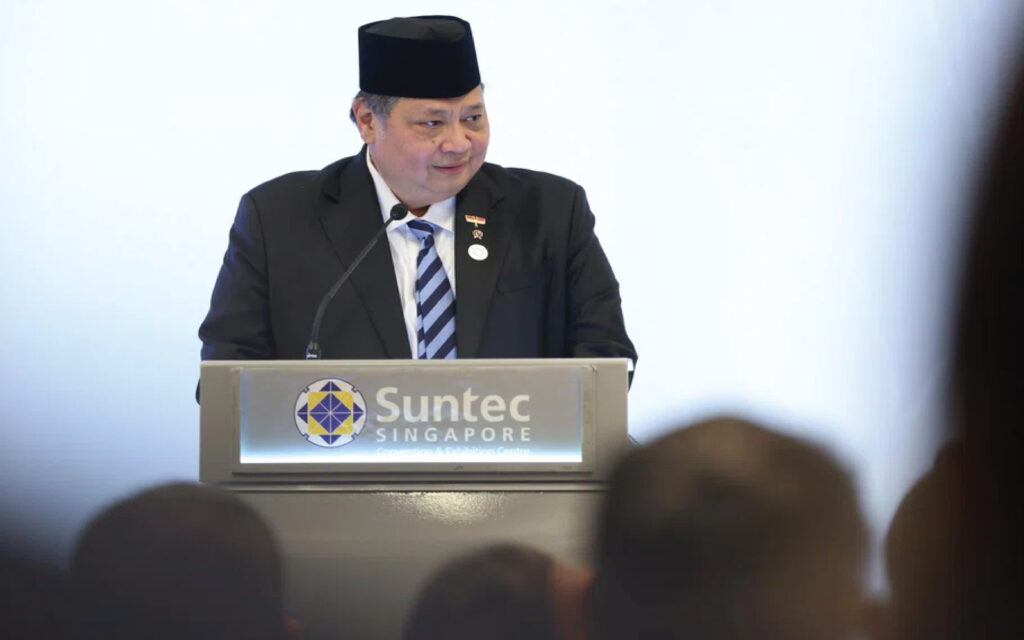
South-east Asia is positioning itself as a leading hub for economic opportunity, with the region projected to become a US$2 trillion economy by 2030, according to Indonesia’s Coordinating Minister for Economic Affairs, Airlangga Hartarto.
Speaking at the “Islands of Growth” business forum in Singapore on November 18, 2025, Airlangga shared a confident outlook for the region, which includes emerging sectors like the digital economy, data centers, and green energy. “Indonesia and Singapore, as well as Asean, are top of the map – foremost (in) robust economic growth in the last decade,” he said.
He contrasted Southeast Asia’s growth with other regions, noting, “The growth of Europe is less than 3 per cent. North America, also less than 3 per cent. Only Asean growth is more than 4 per cent.”
The forum, focused on Indonesia’s Riau province islands—Batam, Bintan, and Karimun (BBK)—highlighted the strategic importance of this free-trade zone, established in 2007. This area has long enjoyed strong economic ties with neighboring Singapore, boosted by frameworks under the Sijori Growth Triangle, which also includes the Malaysian state of Johor. Together, these territories offer Singapore-based manufacturers access to larger land and labor resources near their regional hubs.
Airlangga’s remarks came as the BBK region continues to attract significant investments. Singapore remains the largest foreign investor, accounting for 69 percent of Batam’s foreign direct investment in the first half of 2025, amounting to around S$632 million.
Global companies such as Schneider Electric have operations in Batam while maintaining regional headquarters in Singapore. The company’s vice-president for planning and logistics, Pradeep Singh, explained, “We play with the strengths of these two locations, which are very complementary to each other.” He noted Batam offers proximity to Singapore, a trained and cost-effective workforce, and government incentives, making it a compelling manufacturing base.
Besides manufacturing, BBK’s industrial parks now include the Nongsa Digital Park, opened in 2018, which serves as a digital bridge between Singapore and Indonesia. It enables Singapore-based tech firms to tap into lower-cost talent and expanded data center capacity.
This growing collaboration reflects a broader vision to boost economic integration and advanced sectors across Southeast Asia, underscoring the region’s accelerating momentum toward becoming a $2 trillion economy by 2030.
Related posts:
- Australia Has Been Criticized for Declining Foreign Aid. But Is It Really Their (Australia) Problem?
- ANZ Reports Record Revenue of A$10,995 million in CEO Shayne Elliott’s Final Result
- Nasfund vs. Nambawan Super: Papua New Guinea’s Superannuation Giants Battling for Your Retirement Future
- Harmony Gold Mine Completes $1.01 Billion Acquisition of CSA Copper Mine