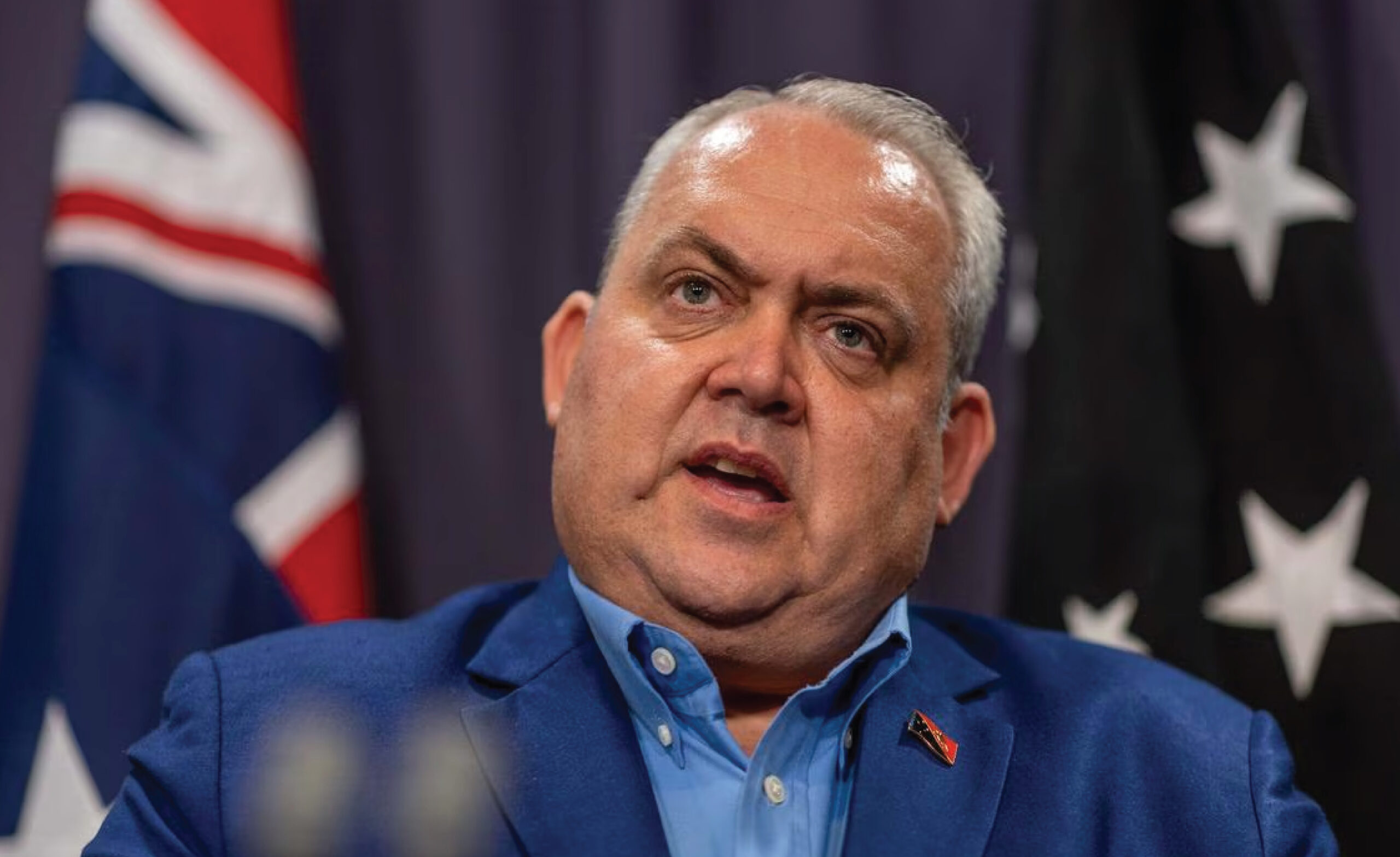
Papua New Guinea ordered the immediate closure of Taiwan’s representative office in Port Moresby on 16 July, and the timing tells a different story than the one Foreign Minister Justin Tkatchenko is offering.
Tkatchenko framed the closure as routine, telling the Manila Times it reflected PNG’s “unwavering commitment to honoring, respecting, and upholding Papua New Guinea’s foundational One-China Policy,” and dismissing the 36-year-old office’s relevance outright in the same report: “That office doesn’t affect their business and contract. That office doesn’t do anything.” Prime Minister James Marape backed the move, according to a statement carried by InsidePNG, saying PNG recognizes Beijing as the sole legitimate government of China and has no intention of being drawn into the cross-Strait dispute.
But the Lowy Institute’s The Interpreter reported that the closure landed within a week of the Pukpuk Treaty, PNG’s first mutual defense pact with Australia, coming into legal effect, and that Fiji signed its own defense agreement with Australia, the Ocean of Peace Alliance, on 6 July, just ten days earlier. Two Pacific nations, two Western security pacts, two swift gestures toward Beijing immediately after, according to the same Lowy Institute analysis. That is not coincidence. It is a pattern.
Taiwan’s two responses, and a US rebuttal Port Moresby hasn’t addressed
Taiwan pushed back through two distinct channels. Its foreign ministry called the move unconsulted and vowed to keep operating, according to a statement reported by Island Times News, with the office set to “safeguard our nation’s rights and interests and provide necessary services to our nationals.” Days later, Taiwan’s Foreign Minister Lin Chia-lung escalated the accusation at a legislative hearing, with Focus Taiwan and the Taipei Times both reporting that he alleged, without evidence, that China had given Tkatchenko direct benefits ahead of the closure, calling it another instance of Beijing’s “elite capture” strategy in the Pacific. That claim remains unproven and should be treated as an allegation, not established fact.
Beijing, unsurprisingly, welcomed the outcome. Foreign ministry spokesman Lin Jian told reporters, per the Manila Times, that China “highly appreciates” PNG’s decision and pledged continued support on matters both governments treat as core interests.
Washington read the episode differently than Port Moresby wants it read. The Lowy Institute’s The Interpreter reported that an unnamed US State Department spokesperson called the closure “yet another example of Beijing’s intimidation campaign,” directly contradicting Tkatchenko’s “routine policy” framing. PNG has not responded to that characterization.
The economics explain why this was an easy trade for PNG
The reason PNG could afford this gesture sits in the trade numbers, as laid out by the Lowy Institute. LNG accounts for roughly 40% of PNG’s total exports, worth about $5.36 billion in 2024, and close to a third of that volume goes to Taiwan, the analysis found. But that flow matters far more to PNG than to Taiwan: the same report notes that PNG supplies only about 6% of Taiwan’s total LNG imports, a share Taiwan’s other suppliers, Australia, Qatar and the United States, can absorb without difficulty. Closing an office cost PNG almost nothing on the Taiwan side of the ledger.
The China side of the ledger is the one PNG is actually protecting. According to the Lowy Institute, China’s trade with PNG exceeded K17 billion, about $4.4 billion, in 2024, running a surplus in Beijing’s favor. Symbolically aligning with Beijing on Taiwan, right after formalizing a Western security guarantee, buys PNG continued access to that relationship at close to zero measurable cost.
The anniversary was the cover story, not the trigger
The Lowy Institute reported that Tkatchenko tied the closure to the 50th anniversary of PNG-China diplomatic relations, a framing that lets the decision read as scheduled housekeeping rather than a reaction to the Australia treaty. It is a plausible-sounding peg. It is also the kind of peg governments reach for when a decision’s real timing would otherwise invite exactly the question this analysis is raising.
There is a second layer to the whiplash, reported by Island Times News. A week before ordering the closure, Tkatchenko was publicly attacking Chinese military conduct in the region, criticizing a Chinese missile test that landed between Tuvalu, Nauru, and near Solomon Islands as something he called “the stupidity of it all.” A foreign minister sharply condemning Beijing’s military behavior one week, then closing a fellow democracy’s diplomatic presence to please that same government the next, is not consistent messaging. It is hedging, conducted in public, badly disguised.
Neither PNG nor Australia has gone on record confirming the sequencing was deliberate. That connection is this analysis’s own inference from the timeline reported by the Lowy Institute, not a fact either government has stated, and it should be read as such. But the pattern now includes two Pacific nations doing the identical thing within the same two weeks, which makes coincidence the harder explanation to sustain, not the easier one.
Taiwan lost an office. PNG lost nothing measurable. What actually moved was PNG’s hedge between Canberra and Beijing, and Taiwan was simply standing where that hedge needed to land.





