The Beginnings: A Passionate Expatriate CEO in PNG
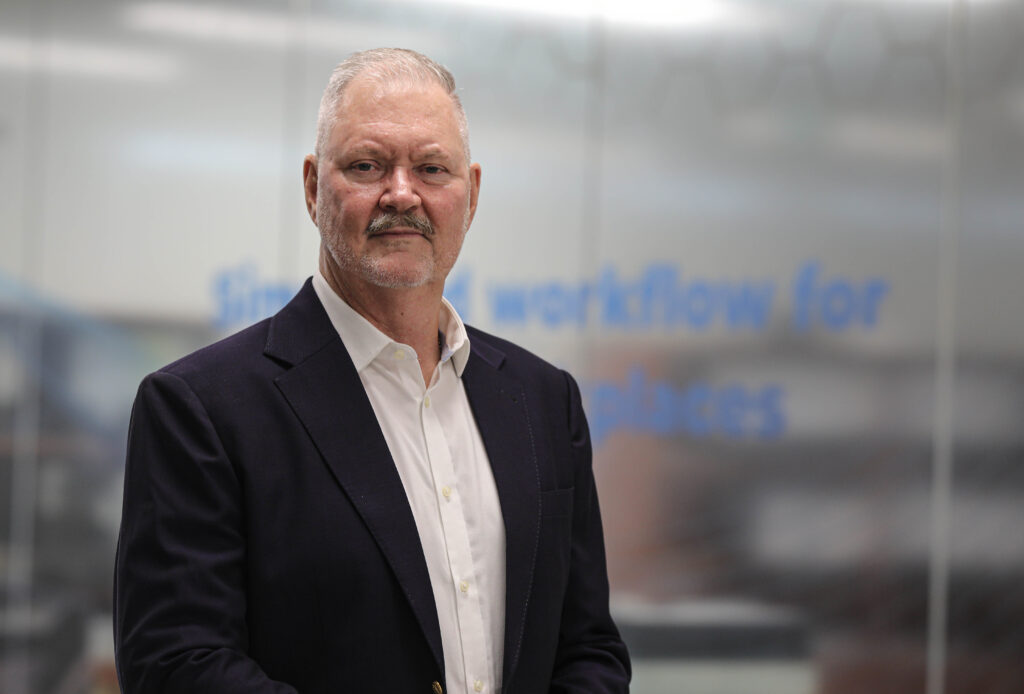
It’s uncommon to find an expatriate CEO of a local company so deeply involved in a country’s domestic affairs. But Peter Goodwin, the CEO of Remington Group, is a unique character. He’s known for his candor and direct approach.
Peter isn’t just another foreign CEO in Papua New Guinea (PNG). His grandfather, an American merchant, fought in two wars: World War I (WWI) in Gallipoli in 1915 and World War II (WWII) in Papua New Guinea in 1942. This rich history is a badge of honor for Peter.
Decades after the war and Papua New Guinea’s independence, a young Peter, originally from Australia, found himself in the country in 1983, where his grandfather had once fought.
Seconded from Commonwealth Bank (CWB) to Papua New Guinea Banking Corporation (PNGBC), Peter worked for PNG’s equivalent of the Commonwealth Bank. During the lead-up to independence, he witnessed CWB transfer assets to PNGBC, ensuring a smooth transition.
Peter spent three and a half years at PNGBC’s Boroko Branch in Port Moresby. He then moved to the Port Moresby Branch as a training coordinator, followed by a position at the PNGBC training center on the current site of the Shady Rest Hotel. There, he trained Papua New Guineans from across the country. In 1986, he spent a year in Rabaul, learning to dive under the watchful gaze of active volcanoes, even becoming an assistant diving instructor.
Peter returned to Brisbane, followed by a stint in Sydney. Soon after, he was back in PNG in 1992, but Brisbane called him back in 1993. PNG’s pull remained strong, and he returned again in 1995. This time, he joined a French bank that later became American – the Bank of Hawaii.
After the Bank of Hawaii, Peter and his family moved to the Solomon Islands, where he became the Managing Director of the National Bank of Solomon Islands, acquired by BSP Financial Group in 2007.
Australia called him back once more, but PNG continued to beckon. In 2015, he returned for a longer stay, becoming CEO of Remington and a permanent resident, solidifying his nearly decade-long connection to PNG.
Joining Remington Group as CEO
Founded in 1948, Remington Group is a household name in PNG. Traditionally known for printing services, the company has undergone a rapid digital transformation under Goodwin’s leadership.
“Remington was a well-known name when I worked for the Banks in 1995,” Peter says. “They’ve been around since 1948, that’s 76 years. A lot of people don’t know how long we’ve been around. It’s a great brand, and we’ve spent a lot of time trying to get it right.“
As with most businesses navigating the information age, Remington has had to adapt to the technological revolution. Peter keeps a close eye on these advancements as he recounts his experience leading the company’s digital transformation.
However, things weren’t always smooth sailing. Peter recalls a time over 20 years ago when Remington Technology was in deep financial trouble. Former PNG Prime Minister Peter O’Neill stepped in, buying the company and saving it from going under.
“Being a patriot and seeing so many Papua New Guineans working there, he didn’t want to see it fold,” Peter explains. “He bought the company and worked with a guy named Ken Harvey to bring it back on track. I came in 2015 and brought my own flavor, energy, vision, and strategy to the table, and that’s been our journey ever since.“
His vision, he says, is to be the best technology provider of print-related and digital services, offering end-to-end business systems in the country.
“We don’t limit ourselves,” Peter says. “Our vision is to be world-class. We want to be the best, not just in PNG, but in the world. We set high goals and pursue them every day.“
Operating in a challenging country like PNG hasn’t been easy. When Peter joined the company, he found it outdated, relying heavily on manual processes. They weren’t a digital business.
“Here we were selling cutting-edge technology in multi-function devices and printers, yet we ourselves were still paper-based. But we’ve turned that completely around,” Peter says.
Remington’s journey, as Peter describes it, is about “constantly upgrading, reinvesting in ourselves, modernizing ourselves, and keeping up with the latest technologies.”
Views on PNG’s Business Environment
Papua New Guinea faces challenging economic times ahead. Central Bank governor, Elizabeth Genia, issued a stark warning to citizens and businesses alike. This aligns with the concerns of local and international business leaders and political commentators who urge the government to take decisive action.
For any corporate executive managing a large organization in PNG, like Peter, risk management, both internal and external, is paramount.
A staunch advocate for PNG’s economic potential, Peter doesn’t shy away from criticizing or praising the government’s management:
“Remington has a fresh disaster recovery plan focused on business continuity, record and data maintenance. But without proper power supply, the company, like all others in PNG, suffers. We hold our data in silos across different locations as a strategic approach.“
Peter has strong opinions about holding people accountable, particularly those in government.
“Private enterprise drives this economy,” he states. “If the government doesn’t provide an environment for us to excel, with reliable power, water, and access to well-educated Papua New Guineans, we’re in serious trouble. That’s the message I constantly deliver.”
Frequent power outages and limited internet connectivity disrupt operations, especially for tech-dependent businesses like Remington. As Goodwin highlights, this adds to operational costs due to expensive backup power solutions.
Fluctuating exchange rates inflate the import costs of equipment and materials, hindering domestic manufacturing growth. Goodwin and other CEOs in the manufacturing sector urge the government to take action.
A lack of government support for infrastructure creates challenges. Inadequate transportation networks significantly increase logistics costs and delivery times. Limited access to clean water and sanitation raises health concerns and affects employee well-being. Additionally, insufficient investment in infrastructure creates uncertainty for businesses seeking to expand.
Despite these challenges, Goodwin remains optimistic about the overall economy and the resilience of Papua New Guineans to bounce back.
“Papua New Guineans have a remarkable resilience, bouncing back from every setback,” he says. “However, I’m concerned that these setbacks are taking an increasing toll. Each time we fall, it seems to take a little longer to recover. My fear is that one day we’ll hit a point where we’re too exhausted to get back up. This is what really worries me.“
“But, if we can get our leaders back on track, seriously address corruption, hold people accountable, and deliver consequences for wrongdoing with the backing of the court system, I believe we’ll be in a much better position.”
The country’s growing middle class with rising disposable income presents a significant opportunity, particularly for companies offering digital services. “We see a growing demand for these services,” says Goodwin, “and Remington Group is well-positioned to capitalize on this trend.”
Leadership Style
Effective leadership is crucial for organizational success, regardless of size. It inspires and guides teams towards achieving goals. However, strong teams and favorable external factors also play a role.
Despite his outspoken nature, Goodwin emphasizes transparency and accountability within his company:
“I try to bring energy to the table every day,” he says. “I hold both Papua New Guineans and expatriates accountable. I hold my people accountable, but I also hold myself accountable. I don’t ask my people to do anything I wouldn’t do myself.”
“And if you want a great winning team, everybody has to do what they’ve got to do to be successful, and that’s what we do here,” Goodwin adds.
And his winning team, as he proudly reveals, consists primarily of Papua New Guinean women. For Goodwin, gender balance isn’t about numbers; it’s about behavior and approach.
“If you look at my top team, the majority are Papua New Guinean women in senior leadership roles,” he says. “Of course, we have senior leaders who are men. It’s about leading from the front, whether you are a man or a woman, being passionate, driven, and honest.”
Overall Economic Outlook
Echoing the sentiments of other business leaders, Goodwin is concerned about the economic outlook. “The economy is not as good as some say,” he remarks, referencing inflation rates.
Historically, PNG has grappled with significant inflation fluctuations. The late 1990s saw inflation soar above 15%. Recent years have shown improvement, with inflation hovering around 5%.
However, the situation remains uncertain. Estimates suggest inflation reached 5.7% in 2023, and external factors like rising global food and energy prices pose ongoing threats. The reliance on imported goods makes Papua New Guinea particularly vulnerable to these external shocks.