Papua New Guinea’s mining sector is a cornerstone of the nation’s economy, representing roughly 12 to 15 percent of the country’s Gross Domestic Product (GDP) and contributing over 60 percent to national export earnings. Beyond that, mining is a substantial source of employment, directly and indirectly supporting tens of thousands of Papua New Guineans. Given this economic significance, the corporate income tax derived from mining activities is a crucial revenue stream that funds government operations, infrastructure projects, and social programs aimed at improving the lives of PNG citizens.
In 2025, Papua New Guinea is poised to collect an unprecedented K2 billion in corporate income tax from its mining sector marking a dramatic increase from only K24 million collected a decade ago. This impressive rise can be attributed partly to the recent surge in global commodity prices, but it also reflects the Papua New Guinea Internal Revenue Commission’s (IRC) intensified efforts to enforce tax compliance and clamp down on longstanding fiscal leakages.
Mining’s Contribution to PNG’s Economy: The Bedrock of National Wealth
Mining accounts for a substantial share of PNG’s economic activity. Key mines such as Lihir Gold, Ok Tedi, Porgera, and Hidden Valley have played pivotal roles, contributing billions of kina in exports and providing jobs for local communities including indigenous populations. The sector’s health is often seen as a bellwether of PNG’s broader economic prospects; as mining thrives, so does government revenue, public investment, and overall economic growth.
However, the benefits of mining have not always been evenly distributed. While mining companies have generated significant wealth, PNG’s government revenue from the sector has been undermined by complex fiscal and financial dynamics, limiting the country’s ability to fully capitalize on its natural resources for sustainable national development.
The Theory Versus Reality: A Stark Discrepancy in Taxation
Despite having one of the most progressive mining tax regimes in the world on paper, Papua New Guinea faces a stark gap between the theoretical tax revenue it should collect and what it actually receives. According to a joint analysis by the IRC and the Intergovernmental Forum on Mining, Minerals, Metals and Sustainable Development (IGF), PNG’s theoretical Average Effective Tax Rate (AETR) for mining stands at a remarkable 74%—surpassing Chile’s 64%, Peru’s 49%, Zambia’s 58%, and Australia’s 43%. The AETR represents the overall rate of taxation on mining profits after accounting for all fiscal obligations, such as corporate income tax, royalties, and additional profits tax.
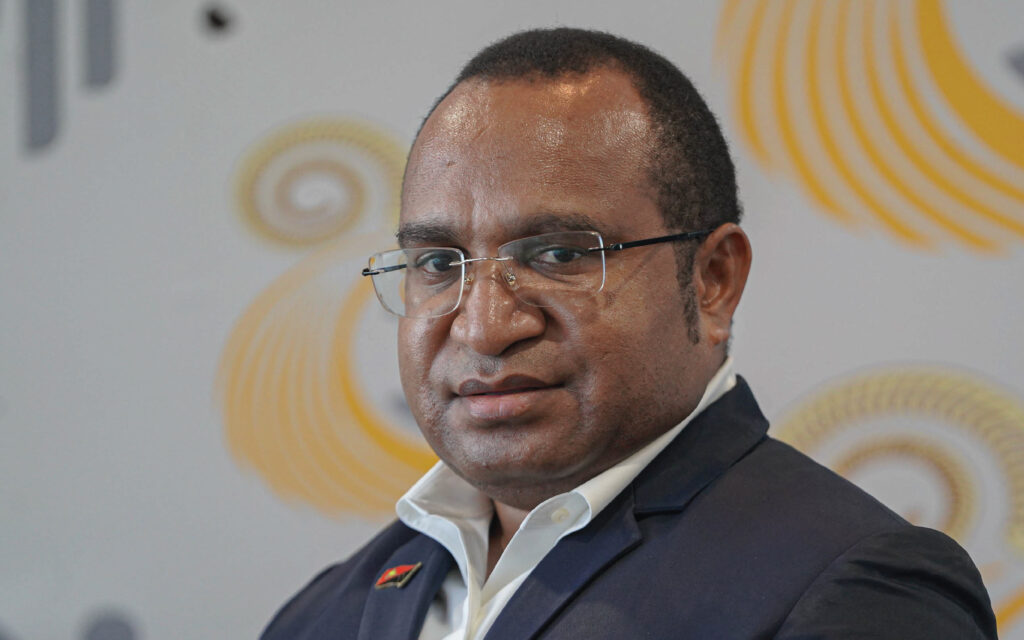
However, when actual tax return data from four major mines over a period of ten years was scrutinized, the realized AETR was a mere 12%. Commissioner General Sam Koim, OBE, explained the gravity of this gap: “For every kina the Government should theoretically receive, it is collecting just 16 toea — only 16 percent of the expected fiscal take. This is not a statistical discrepancy; it is an economic red flag exposing systemic inefficiencies within our fiscal regime.”
This means that while Papua New Guinea has fiscal frameworks that are robust in structure, a combination of deep-rooted structural issues and behavioural practices have led to significant erosion of potential revenues.
Unpacking the Structural and Behavioural Drivers of the Tax Gap
The reasons behind this yawning gap between theory and reality are complex, involving both design flaws in the tax system and deliberate corporate financial arrangements:
-
Heavy Dependence on Profit-Based Taxes: The current system relies substantially on taxes such as Corporate Income Tax (CIT) and Additional Profits Tax (APT), both of which apply only after investors have fully recouped their costs. This reliance delays important revenue flows to the government, leaving it vulnerable to aggressive profit and cost accounting practices by the mining companies.
-
Perpetual Capital Recovery Loops: Mining operators have strategically extended cost recovery periods by regularly announcing new expansions or phases of development just as old cost recovery timelines end. This leads to frequent resetting of depreciation schedules, artificially deferring taxable profits notwithstanding growing production and export volumes.
-
Reclassification of Related-Party Loans: It is common for mining projects to be financed through loans from related parties rather than direct equity investments. After the investors extract interest payments offshore and claim tax deductions locally, these loans are reclassified as equity. This financial sleight enables “capital returns” to be paid tax-free, effectively allowing profits to be repatriated without tax liability. As Koim explained, “This is not capital being returned — it’s loan money recycled to avoid tax.”
-
Avoidance of Dividend Withholding Tax: Perhaps most strikingly, from 2013 to 2023, none of PNG’s five largest operating mines paid Dividend Withholding Tax, despite export revenues increasing from K9 billion to K44 billion in this period. “It defies commercial logic that billion-kina operations can go a decade without paying dividends. Profits are clearly being realised, but in ways that do not trigger tax liability,” Koim noted pointedly.
Government Efforts to Tighten Compliance and Protect Revenues
Recognizing the risks posed by these loopholes, the IRC has embarked on an ambitious and targeted campaign to strengthen tax enforcement since 2019. This campaign has included the establishment of specialist audit teams focused solely on the extractive industries, the adoption of sophisticated data analytics to track payments and compliance anomalies, and the implementation of comprehensive tax audits across existing mining operations.
Two major audits have already been completed with three more underway, revealing instances of aggressive tax avoidance and underpayment. These enforcement actions have coincided with more transparent reporting and have gradually narrowed the fiscal leakages.
“The dramatic rise — from K24 million ten years ago to around K2 billion today — reflects both stronger enforcement and favourable market conditions,” Koim affirmed, attributing the gains to improved oversight rather than just higher commodity prices.
The Prime Minister’s Directive: A Clear Signal for Reform
Prime Minister Hon. James Marape’s directive to comprehensively review tax compliance in the mining sector affirms the government resolve to not only increase revenue but also to ensure that taxation is fair, transparent, and aligned with national development goals. This directive demands a reassessment not just of enforcement but of the underlying fiscal and legislative frameworks to close structural gaps that allow revenue erosion.
This initiative indicates political will to balance the need to attract responsible mining investment with safeguarding PNG’s fiscal sovereignty and protecting the interests of its citizens.
Industry Perspectives and Partnership Dynamics
While official statements emphasize compliance and reform, a complete picture requires engaging with mining companies, industry associations, and perhaps independent experts. Their perspectives on challenges in implementing reforms, concerns about investment climate, and willingness or resistance to changes in fiscal terms would add nuance.
Some companies have expressed support for clarity and stability in tax policies, which they view as essential for sustained investment. Others caution that overly rigid fiscal adjustments or enforcement could deter future exploration and expansion.
Tangible Benefits for Local Communities
Improved mining tax collections hold promise far beyond government coffers. These revenues can finance critical investments in infrastructure such as roads, schools, healthcare facilities, and clean water supplies, particularly benefiting local communities often directly impacted by mining operations.
Moreover, equitable revenue sharing and reinvestment help address social grievances and environmental concerns, fostering inclusive growth and reducing conflict risks.
Risks and Challenges
Despite progress, risks persist. Commodity prices remain volatile, posing uncertainties for revenues. Mining companies continually innovate financial strategies to minimize tax exposure. Political dynamics and governance challenges could influence the rigor of enforcement efforts over time.
The escalating calls for reforms must be carefully managed to preserve PNG’s attractiveness to global investors while ensuring the country receives a fair share of its mineral wealth.
An International Context: Lessons and Comparisons
Other resource-rich emerging economies face similar challenges in translating mineral wealth into fiscal resources. Countries like Chile and Peru have grappled with balancing competitive investment regimes and robust taxation. PNG’s higher theoretical AETR suggests potential, but learning from international experiences in tightening compliance, improving transparency, and using technology for enforcement can offer valuable pathways.
Call for Transparency and Responsible Investment
The IRC continues to underscore the importance of transparent, responsible investment. Profits paid in taxes help build a more prosperous Papua New Guinea for all citizens. Tax minimization schemes through aggressive accounting and opaque financial structures undermine public trust and long-term development.
Converting PNG’s Natural Wealth Into National Prosperity
Papua New Guinea’s mining tax collections have experienced impressive growth, showcasing the positive impact of targeted government efforts and favourable market trends. Yet, significant structural and behavioural gaps continue to limit PNG’s taxation capacity.
The Government’s commitment to reform, enforced compliance, greater transparency, and ongoing dialogue with industry stakeholders will be vital in transforming PNG’s abundant mineral wealth into true fiscal sovereignty and sustainable national development.
Commissioner General Sam Koim summed this evolution well: “Those who pay their fair share will be acknowledged, but those who hide behind loopholes will be exposed.”
The story of PNG’s mining taxation is far from over. It will require constant vigilance, policy refinement, and public accountability to ensure the wealth beneath the surface translates into tangible benefits above it for generations to come.
Related posts:
- Papua LNG Project Faces Delay, Final Investment Decision Pushed to 2025: Impact on Economy Uncertain
- Kina Securities Reports Fraud with Losses Expected to Reach K12-K15 Million
- Westpac Bank Reports $3.5 Billion Net Profit for First Half of 2025 Financial Year
- A Closer Look at Jaindi Exports and Its Plan to Build a Massive Content Processing Plant in Madang, PNG