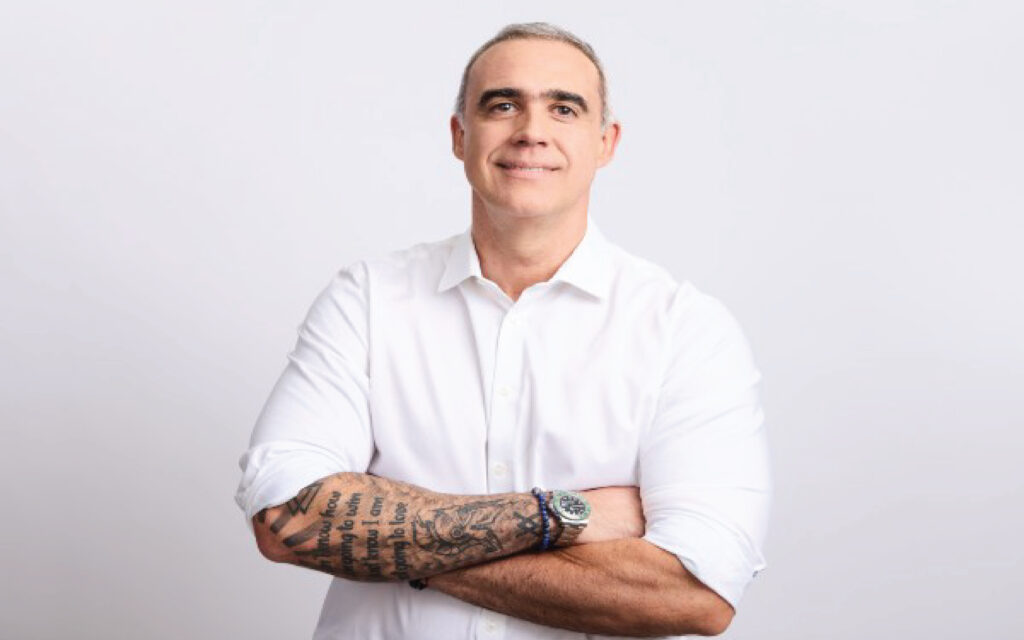
Hurricane season in the Caribbean typically runs from June to November. In 2024, the storm arrived a month early at Digicel’s Jamaica headquarters when Marcelo Cataldo assumed the role of CEO to address the company’s deep financial challenges.
Cataldo, originally from Paraguay, brings extensive telecom experience. He spent much of his career at Millicom, serving as CEO and president of Tigo Colombia for over seven years, along with multiple executive roles within the group.
Digicel was founded in 2001 by Irish billionaire Denis O’Brien. The operator quickly disrupted the Jamaican market with aggressive pricing, a strategy that supported rapid expansion across the Caribbean, Central America, and the Pacific. Today, Digicel operates as a leading telecom provider in 24 markets.
Over time, Digicel accumulated significant debt, reportedly reaching US$7 billion at its peak. This led to a major restructuring as the company neared financial collapse.
The Irish Times reported that two years ago, Denis O’Brien was compelled to relinquish most of his shares to bond investors as part of a deal that also involved writing off US$1.7 billion in debt.
Cataldo was recruited from Millicom to stabilize the business. His immediate priority focused on managing the company’s finances as high-interest debts approached maturity in 2027 and 2028. To address this, Digicel re-entered the bond market and secured loans to refinance its entire debt portfolio, which currently stands at US$2.7 billion.
Speaking with Developing Telecoms, Cataldo said the company’s focus has now shifted from debt management to growth. Digicel serves 10 million customers across 25 markets.
A major asset following recent investments is extensive 4G network coverage. Digicel’s 4G coverage averages 95% across its markets.
Cataldo noted the region’s data usage remains low compared to other parts of the world.
He said, “The Caribbean region is immature in data usage compared to other regions.”
He added, “In this region, we still have voice-only users with feature phones. This presents an opportunity to drive revenue and ARPU – we have a blessed opportunity to move people into the digital world.”
Despite coverage, challenges persist. Around 90% of Digicel’s customers are prepaid users, and issues such as affordability and digital literacy remain significant barriers.
Smartphones typically cost between US$150 and US$200 in the region, which Cataldo acknowledges is a “sizeable amount of money” for many households. Despite this, he remains confident that demand for digital services will continue to grow. Even with 95% coverage, only about 70% of Digicel’s mobile customers are connected to 4G, signaling room for increasing adoption.
Operating in multiple countries adds complexity. However, Cataldo praised regional governments for their cooperation and shared focus on digital transformation.
He said, “Regulators understand their agenda. We show our capabilities and our possibilities to help them achieve it, because they want to digitise their countries as much as any other.”
Demographic trends in the Caribbean also pose challenges. Population growth has stagnated as many young people leave for more developed regions seeking employment.
Nevertheless, Digicel remains well-positioned in its markets. Cataldo explained that the “telecoms pie” in most Caribbean countries is divided mainly between two major players: Digicel and Liberty Latin America.
He contrasted this with Latin America and Eastern Europe, where market competition involves up to four operators.
Looking ahead, Cataldo outlined plans to strengthen network resilience and reliability over the next year.
This includes a new partnership with clean energy provider Caban Energy to supply units in markets including Jamaica. The initiative aims to enhance network resilience while reducing carbon emissions.
Another priority is expanding the company’s fibre footprint. Currently, Digicel’s fibre network connects approximately 900,000 households.
Previous fibre rollout efforts had been paused due to the debt burden. Deployment efforts are now increasing, with Guyana and Curacao among key focus areas.
Business-to-business (B2B) services also represent significant growth potential. Cataldo highlighted Digicel as one of the few regional companies offering ICT solutions such as data centres, cloud computing, and unified communications.
He said, “We engage with the companies at a very early stage to help them understand what they need, then sell the service.”
These services fill a void left by global hyperscalers like Google and Microsoft, which often lack local presence due to scale considerations.
While Cataldo acknowledged that the company’s turnaround is ongoing, there is clear optimism about the future.
With its refinancing completed, Digicel now has the flexibility to invest in and expand its offerings.
The operator targets steady mobile growth, accelerated fibre-to-the-home deployment, and expanded business and ICT services in the coming years.
Cataldo said, “It’s still early days. But we are on the right track – delivering on EBITDA, delivering on cash, and fulfilling our commitments to shareholders and investors. Most importantly, we are creating real opportunities to bring more people in the Caribbean into the digital world.”
Related posts:
- PNG Representative Atten UN Cybercrime Conference
- Digital Transformation is Papua New Guinea’s Top Priority Says Datec CEO
- Open Banking Could Reshape Papua New Guinea’s Financial Landscape, Says Tisa Bank CEO
- Sarah Stubbings, ANZ Regional Executive Pacific, on Building a Sustainable Future for Pacific Communities