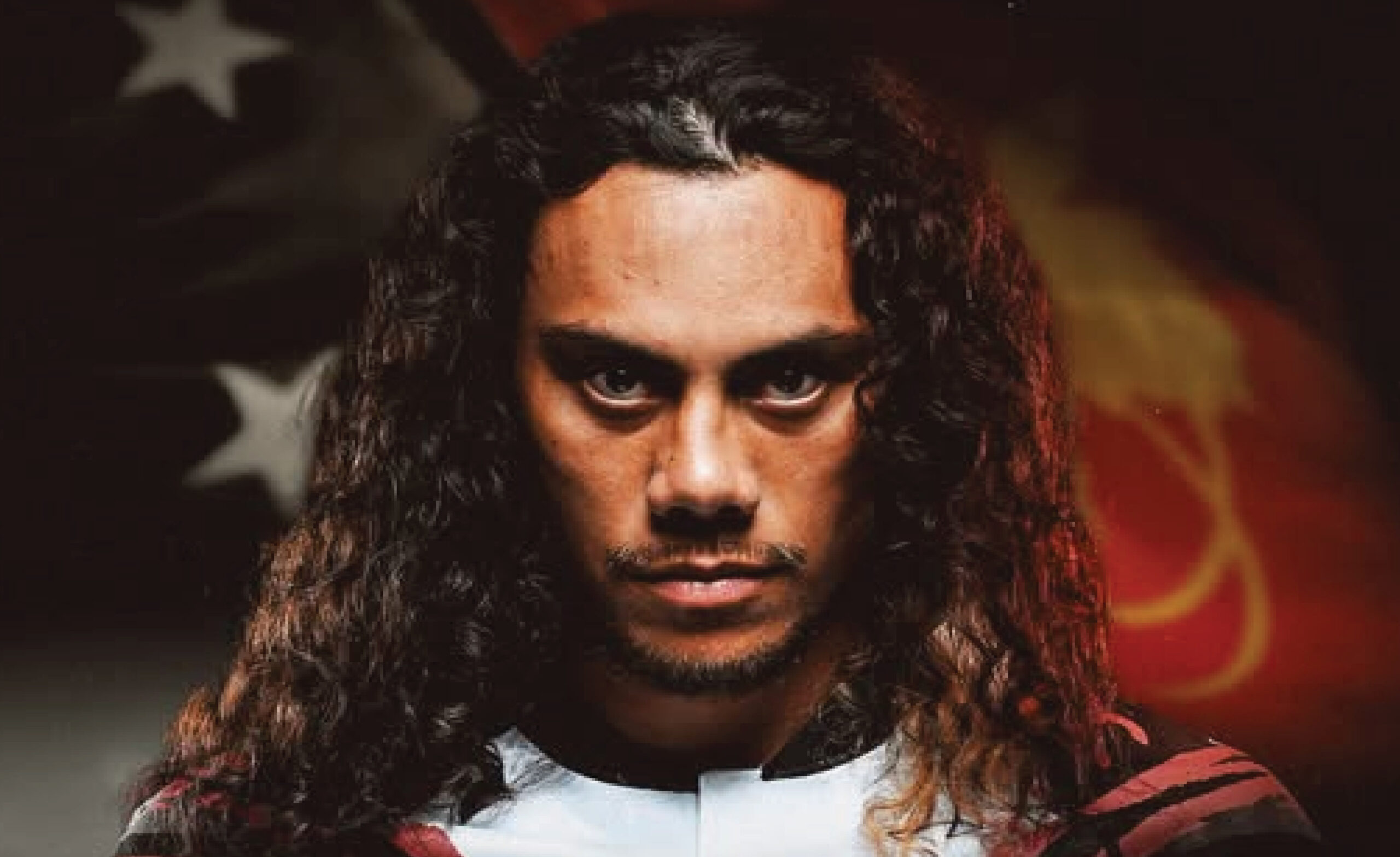
Coca-Cola Europacific Partners and Bank South Pacific have committed more than A$20 million to the PNG Chiefs over three seasons, according to figures reported by AAP. Pepsi’s PNG bottler instead pays the club’s marquee signing, Jarome Luai, an estimated A$300,000 a year to front its brand.
Luai will carry Coca-Cola’s logo on his sleeve on match days while fronting Pepsi off the field, putting both sides of what AAP called the world’s biggest branding rivalry on one player. All figures are in Australian dollars unless stated.
Three prices, one franchise
AAP reported BSP’s three-year front-of-jersey deal at about A$15 million, or A$5 million a season. The National put the package at A$20 million, about K64.1 million, running to 2030, and Zero Tackle, citing The Australian, reported more than A$20 million with a A$4 million annual baseline.
BSP, listed on PNGX and the ASX, becomes the club’s principal foundation partner and official banking partner, with signage, hospitality, executive access and academy programs attached, EMTV reported. Chairman Robert Bradshaw said it was symbolic that a PNG-headquartered, majority PNG-owned company was backing the national NRL team, Papua New Guinea Today reported. Group chief executive Mark Robinson called it “a partnership with purpose.”
AAP reported that CCEP’s sleeve sponsorship covers the club’s first three seasons and is believed to be worth more than A$5 million. Initial funding flows over the next 12 months before the contract becomes the richest sleeve deal in the NRL. It is Coca-Cola’s largest investment in any of its 10 NRL clubs, the agency reported.
CCEP already funds the Ipatas Cup and the PNG Hunters’ Queensland Cup campaign, according to Ministry of Sport. Country director Tim Solly said rugby league had united communities and created pride among Papua New Guineans.
Pacific Industries Limited, which holds the PepsiCo bottling licence in PNG, signed Luai to a five-year ambassador deal running to 2031, B&T reported. The National carried the announcement on August 28, before BSP or Coca-Cola announced their deals. Luai’s Chiefs contract ends after 2029, two seasons before the Pepsi deal expires.
On AAP’s figures, Coca-Cola’s sleeve averages at least A$1.67 million a season, A$5 million spread over three. Pepsi’s Luai deal, at about A$300,000 a year, is roughly 18% of that, and its full five-year term comes to about A$1.5 million, less than a third of Coca-Cola’s three-year commitment.
What each brand bought
The Chiefs’ announcement says CCEP PNG becomes the club’s exclusive partner for non-alcoholic ready-to-drink beverages, with sleeve branding plus rights across match days, media, hospitality and community programs. The deal builds on Coca-Cola’s existing relationship with the NRL Telstra Premiership, according to the release.
Chiefs chief executive Lorna McPherson told AAP that Luai’s arrangement is a personal endorsement with no link to the club, and that Pepsi cannot use the Chiefs’ brand. “Pepsi is clear on that and so is coke,” she said. On that description, any Pepsi advertisement built around Luai runs without Chiefs marks, while Coca-Cola’s logo sits on the jersey he plays in.
Coca-Cola’s deal covers the full roster. Pepsi’s rests on one player staying fit and in form through 2031.
Luai said he was proud to join the Pepsi and Pacific Industries family, B&T reported. Pacific Industries managing director Paul Chue said in a statement carried by The National that Luai’s humble beginnings and Pacific Islands heritage would connect with Papua New Guineans.
Two bottlers, one old franchise
Founder Gabriel Chue and his son Paul held the Coca-Cola franchise in PNG for about 40 years until Coca-Cola Amatil, since acquired by CCEP, took it back, Business Advantage PNG reported in 2019. That report dates the handover to 2008; a 2020 report from the same outlet puts it in 2009.
Pacific Industries won the exclusive PepsiCo licence in 2018 and relaunched Pepsi, Mountain Dew and Mirinda in December 2019 alongside its own GoGo Cola and Gold Spot brands, Business Advantage PNG reported. Everett Chue told the outlet a generation of Papua New Guineans had gone about 20 years without Pepsi.
CCEP committed K80 million to a PET bottle plant at its Lae headquarters, Business Advantage PNG reported. Tim Solly, then sales and commercial director, said the company was undersupplying the market.
Pacific Industries opened a K70 million Pepsi can and PET facility in Port Moresby, the same outlet reported in May 2025. Everett Chue told The National the company had invested more than K150 million in PNG since 2010.
CCEP PNG runs two plants and four distribution centres with 545 staff, Food and Beverage Outlook reported. Neither company publishes PNG sales volumes, market share or margins; CCEP reports PNG inside a combined Australia, Pacific and Indonesia segment. No public figure shows whether the sponsorship money is buying growth or defending share.
Everett Chue said unrest around the Rabaul plant cost Pacific Industries almost 30 production days in a year, and estimated power disruptions had cost K10 million over six years, Business Advantage PNG reported. The company’s growth rests on PNG’s informal economy, the outlet reported, and it leases kiosks to small traders on condition they avoid directly competing products.
A club that runs on sponsors
AAP reported that PNG’s set-up means the franchise will lean harder on sponsorship revenue than a typical club. Alongside Luai, the club has signed Brian To’o, Zac Lomax, Alex Johnston and Joey Manu, with Willie Peters as coach, according to the agency.
Australia committed A$600 million over 10 years, of which A$190 million goes to the club’s establishment, Chiefs Pacific strategy general manager Anthony Trimachi said, AAP reported. McPherson told AAP that commercial partners keep the club sustainable once some government funding ends, and that players weighing a move look at the commercial platform as well as the team.
Third-party deals must be arranged at arm’s length, and clubs cannot organise them for players, AAP reported. Luai and Gold Coast forward Cooper Bai have also signed with PNG food company Trukai. Struddys holds exclusive rights to the club’s playing jerseys and merchandise from 2028 through 2031, Papua New Guinea Today reported.
The condition under every contract
Pat Conroy, Australia’s Minister for Pacific Affairs, has said the funding agreement lets the Commonwealth withdraw its money, after which the NRL would have to withdraw the franchise, ABC Pacific reported. SBS reported the deal is contingent on Australia remaining PNG’s security partner of choice over China. PNG Foreign Minister Justin Tkatchenko has said Port Moresby will not sign such a deal with China, according to ABC Pacific.
BSP’s contract runs to at least the end of the 2030 season. Pepsi’s runs to 2031.
The Chiefs unveil their logo on October 21 and their first jersey the next day, Zero Tackle reported. Player signings open to the market on November 1, according to AAP, and the club plays its first NRL match in March 2028, The National reported.
Every recruit pitched after November 1 now has a PNG benchmark: A$300,000 a year to be the face of a cola brand, paid by the company whose rival’s logo sits on his sleeve.