Papua New Guinea’s push to digitize government services is riding a wave of optimism, but the same tools meant to save billions could become the instrument that chops down public trust if the government fails to deliver.
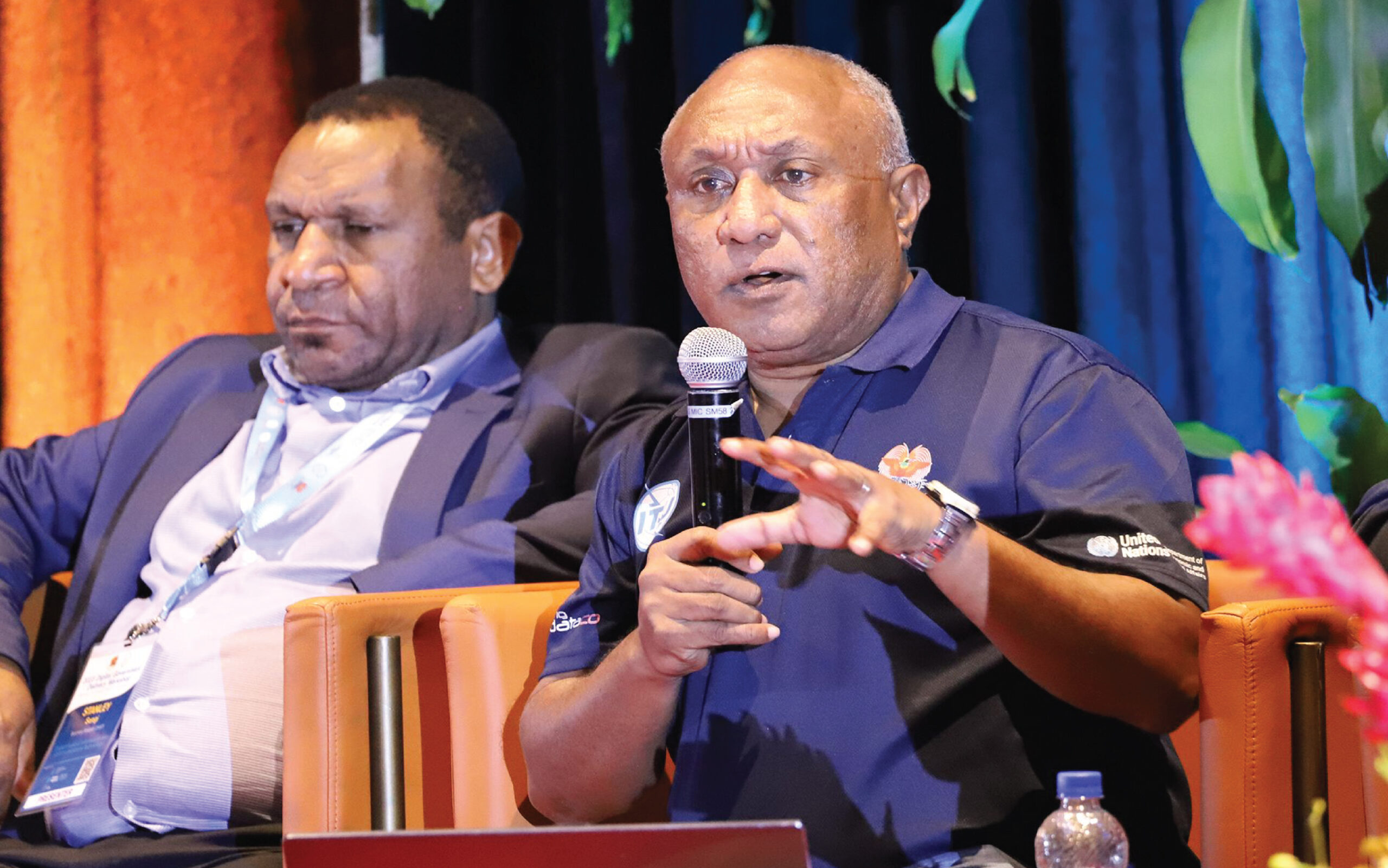
Prime Minister James Marape’s Marape-Rosso government has tasked Communications Minister Timothy Masiu with building what the Department of ICT describes as “a vibrant digital economy,” a mandate that has put PNG on the global map with interventions like PNG GovStack aimed at improving service delivery and cutting corruption.
But as expectations rise, so do the stakes. The unrest that rocked Port Moresby in January 2024—dubbed “Darkest Wednesday” by some officials—was among the most violent in PNG’s recent history, with rioters looting, burning, and vandalizing businesses, with preliminary damage estimates exceeding K1 billion.
In response, Masiu invoked the National Information and Communication Technology Act 2009 to threaten a 10-day shutdown of social media platforms, citing “significant evidence of serious abuse of social media spreading false information that led to destruction of properties.”
“I have statutory power under the National Information and Communication Technology Act 2009 to restrict access to social media sites and applications if this continues,” Masiu said in a statement at the time, adding that users spreading misinformation could lose their accounts and face arrest.
The threat underscored a broader pattern: PNG’s digital governance framework grants sweeping powers to authorities, raising concerns among civil liberties advocates about the potential for abuse.
Despite the controversy, Masiu has overseen a series of policy reforms aimed at modernizing PNG’s digital infrastructure. Since taking office in 2019, he has championed the Digital Transformation Policy 2020, the Government Cloud Policy 2023, which has onboarded over 146 government agencies, the Data Governance and Protection Policy 2024, and the Cyber Security Strategy 2024, which supports the National Cybersecurity Centre.
These reforms operate under the umbrella of the Digital Government Act 2022, which provides the legal framework for digital transformation across government agencies.
The centerpiece of Masiu’s agenda is the Digital Government Plan 2023–2027, a whole-of-government strategy designed to eliminate silos and foster integrated service delivery. Key initiatives include the G2B Single Window Portal, led by PNG Customs, to streamline trade and business licensing, the eProcurement System, spearheaded by the National Procurement Commission, reducing public tendering timelines from months to days, and the eCabinet System, managed by the Office of the National Executive Council, to digitize executive decision-making.
Perhaps the most anticipated development is SevisPass—PNG’s first Digital ID, fully integrated with the National Identification database. “SevisPass will serve as a Digital Public Infrastructure, enabling secure authentication across banking, telecommunications, and government systems,” Masiu said in prepared remarks for a conference on digital government. “It will also unlock Single Sign-On access to a wide array of services, including the upcoming SevisPortal, a G2C digital services app that will host up to 15 citizen services—from eVoting to school fee subsidy applications—in one platform.”
PNG’s service delivery is riddled with corruption and mismanagement, costing the country billions of kina annually. Masiu’s value proposition is simple: use technology to automate systems and processes, ensuring that “certain powerful people miss out on dipping fingers into taxpayers’ money.”
The logic is sound. Digital procurement systems, for instance, can reduce opportunities for kickbacks by making tender processes transparent and auditable. Similarly, digital ID systems can cut down on ghost workers and fraudulent benefit claims.
But the challenge lies in implementation. PNG’s history of failed ICT projects—often due to poor planning, lack of maintenance, or political interference—casts a long shadow over current ambitions.
Moreover, the same legal frameworks that enable digital governance also grant authorities significant control over digital platforms. The Counter-Terrorism Act, for example, was cited in a 2025 Facebook shutdown that sparked international outcry. Police Commissioner David Manning described the move as a “trial” aimed at curbing hate speech and misinformation, but critics called it a violation of human rights.
PNG’s economy remains heavily reliant on the resource sector, which accounts for a large share of GDP earnings. Despite rapid global advances in ICT, successive governments have failed to recognize and invest in the sector as a critical enabler of economic development.
Two factors stand out: lack of policy continuity and visionary leadership, and a risky investment climate. While Masiu has introduced a raft of policies, the broader ICT sector suffers from inconsistent implementation and a lack of long-term strategic direction. Political instability, regulatory uncertainty, and corruption deter foreign investment in ICT infrastructure.
Still, there is more hype in the sector now than at any other time in PNG’s history. The Department of ICT’s Draft National Sovereign Digital Transformation and AI Strategy, released in March 2026, proposes a unified national digital ecosystem built on the equation: Digital Government × Digital Public Infrastructure ^ Artificial Intelligence.
The strategy outlines four reform pillars: a Single Enterprise Architecture for shared digital government services, a strengthened whole-of-government leadership structure including a new Digital Transformation and AI Board, new legislation covering critical digital infrastructure, AI, digital identity, and data governance, and creation of the Kumul Digital Infrastructure Holding Company, a state-owned entity to manage national digital infrastructure.
A key proposal is to allocate 1.5% of the 5.6% Connect PNG funding envelope specifically to critical digital infrastructure, with funds flowing through KDIHC to support long-term investments in connectivity, sovereign hosting, and strategic digital assets.
Expectations are high. And that, in itself, is the knife waiting to chop the country down again if it fails to deliver.
PNG’s digital transformation is not just about technology—it’s about trust. If citizens see tangible improvements in service delivery, reduced corruption, and greater transparency, the digital economy could become an engine for inclusive growth.
But if the government uses digital tools to consolidate control, suppress dissent, or enrich elites, the backlash could be severe. The social media shutdown threats, the Facebook “trial,” and the expansive powers under the Digital Government Act all point to a government that sees digital governance as both a tool for efficiency and a lever of control.
For Masiu and the Marape-Rosso government, the challenge is clear: deliver on the promise of a vibrant, secure, and productive digital economy—or risk having the very tools meant to save billions become the instrument of their undoing.
Sources: Asia Pacific Report, PNG Department of ICT, World Socialist Web Site, BSS News, BBC, PNG Department of ICT Digital Government Plan 2023–2027.





