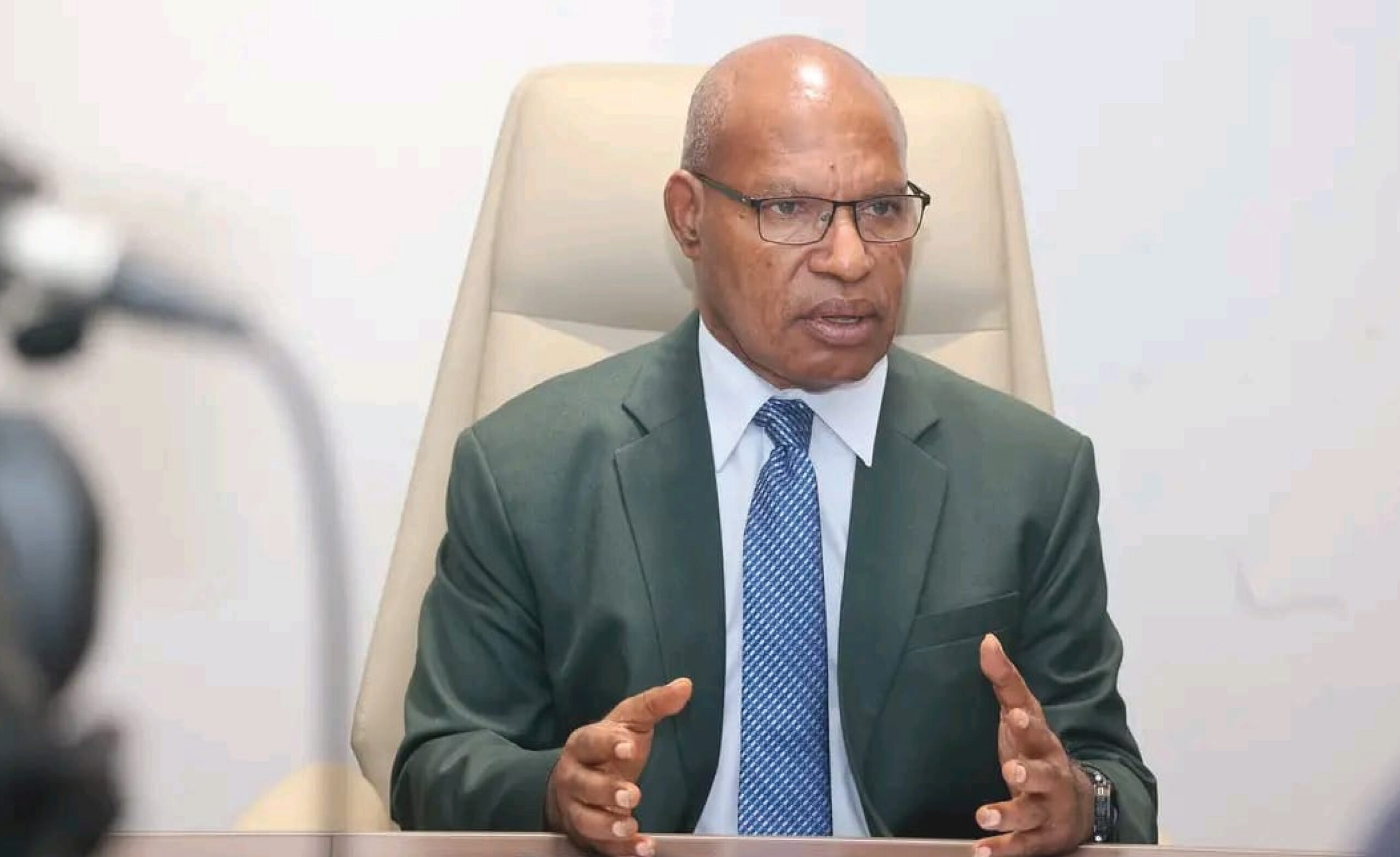
PNG Power Limited owes more than K1.2 billion in near-term payables against just K400 million owed to it by customers, a three-to-one gap that Minister Richard Maru says has pushed the state utility into cash-flow insolvency, according to The National. Maru holds the portfolio as of Prime Minister James Marape’s July 15 cabinet reshuffle, which moved PNG Power out of William Duma’s State Enterprises portfolio and into Maru’s International Trade and Investment ministry, according to a statement from the Department of Prime Minister and National Executive Council. The department said the change was made because PNG Power requires focused leadership to improve operational performance while exploring strategic private sector participation.
The K1.2 billion gap
Cash-flow insolvency measures whether a company can pay debts as they fall due, distinct from balance-sheet insolvency, which measures total assets against total liabilities. PPL’s near-term payables run three times its near-term receivables, based on Maru’s own figures. That ratio, not any longer-run debt total, is what determines whether the utility clears its next two quarters of fuel and payroll costs.
Two sourced components account for part of the K1.2 billion. The National Court ordered PPL to pay Dirio Gas and Power Company K180,778,462.68 on July 7, roughly 15 percent of the total payables figure, Business Advantage PNG reported. Separately, IP3, the industry body for independent power producers, said IPPs were collectively claiming at least K820 million in arrears as of late 2025, Business Advantage PNG reported, citing chairman David Burbidge, a figure equivalent to roughly two-thirds of Maru’s K1.2 billion. Between the two, the remaining balance of the total is not accounted for in any source Exepreneur could verify.
A dispute PPL has fought before
PPL denied owing more than K849 million to independent power producers in a May 2024 statement, then-acting chief executive Nehemaiah Naris said, according to The National. Naris named the disputing IPPs as NiuPower, Dirio, POSCO Lae, PNG Forest Products, Edevu and New Britain Palm Oil, and said more than half the amount billed was fixed capacity cost unrelated to power actually delivered. PPL also disputed K59 million in invoices advanced before one IPP’s commissioning and K66 million in late-payment interest charged by two others, Naris said.
The same underlying argument surfaced again in litigation. National Court judge John Carey, the same judge who ruled against PPL on the Dirio matter this month, dismissed a separate PPL case in an earlier dispute with NiuPower over reduced electricity supply tied to unpaid debts, The National reported. NiuPower chief executive Michael Uiari said afterward that the ruling left both companies “back where we started,” according to The National, and that he was looking for resolution on PPL’s outstanding chairperson and CEO positions before serious rescue talks could begin. NiuPower had separately proposed a Port Moresby grid cash-flow programme built around a lump-sum government payment toward roughly K460 million in arrears and a targeted K10 million weekly revenue increase for PPL, chief executive Michael Uiari told The National.
The wholesale-to-retail spread
Part of PPL’s structural loss traces to what it pays IPPs versus what it can charge back to customers. Dirio’s power cost PPL an average of K1.40 per kilowatt-hour between January and August 2024, against PPL’s average metered tariff to customers of K0.91 per kilowatt-hour, then-opposition MP Peter O’Neill said in a statement reported by both The National and PNG SUN, citing contract documents. Dirio’s highest single rate that year hit K2.31 per kilowatt-hour, more than double PPL’s average customer charge, O’Neill said.
Dirio is the outlier, not the pattern. NiuPower supplied power at around K0.75 per kilowatt-hour, Edevu’s Port Moresby hydro plant at around K0.40, and Exxon Mobil’s gas turbines at around K0.68, O’Neill said, all below PPL’s K0.91 retail average. Only Dirio’s rate sat above what PPL could legally recover from customers, a gap of roughly 54 percent per unit sold on top of the separate payment dispute. O’Neill called for a police investigation into the 25-year Dirio contract, which requires PPL to pay for 45 megawatts of capacity whether the power is used or not, and said the arrangement would cost PPL K1.379 billion over the contract’s life regardless of demand.
These figures come from a single political statement, not from PPL, the National Energy Authority, or Dirio’s own published rate schedule, and predate the 2026 tariff changes already covered above, so they describe 2024 conditions, not necessarily today’s. Dirio has disputed a separate O’Neill allegation, over a 2022 side-payment, as “grossly inaccurate,” according to The National, but no on-the-record response to these specific per-kilowatt-hour figures could be found.
Government owes itself
State agencies, hospitals, schools and police stations owe PNG Power close to K200 million in unpaid electricity bills, equivalent to half of the utility’s entire K400 million receivables base, State Enterprises Minister William Duma said, according to NBC PNG. PNG Power’s largest single customer sector is also its worst-paying one.
“It is important that all staff understand that,” Maru said of the need for a court-agreed scheme of settlement, according to The National.
Why a twelve-year freeze still matters
PNG Power operates under a national monopoly on generation, transmission and retail across most of the country, a structure the National Energy Authority now regulates and the Independent Consumer and Competition Commission previously oversaw during a twelve-year tariff freeze. PPL chief executive Paul Bayly said the freeze ended only this year, with Easipay prepaid rates rising from 73 toea to 76 toea per kilowatt-hour in June, a move he attributed to global fuel costs and disruption from the war in Iran, according to The National. A frozen retail price against input costs that were not frozen for twelve years is the structural source of the gap Maru now has to close.
The grid this pricing dispute sits on top of has long-standing reliability problems separate from the payment fight. Just 13 percent of PNG’s population had grid electricity access as of a World Bank survey cited by the Development Policy Centre’s Devpolicy Blog, with the country recording more than 40 blackouts a month in 2015, the third-highest rate in the world at the time. That data predates the current dispute by roughly a decade and should not be read as a current figure, but it establishes the baseline PNG Power was already struggling from before its finances deteriorated further.
The physical grid is failing too
Tropical Cyclone Maila brought down transmission and distribution lines across Madang, Morobe, Kimbe and East New Britain in April, forcing temporary shutdowns at the Warangoi, Lake Hargy and Ru Creek hydro stations, PNG Power said in a statement reported by Papua New Guinea Today. Chief Technical Officer Tony Koiri said East New Britain was hit hardest, with many customers left without power for an extended period, and that crews were prioritising hospitals, airports and water facilities during the restoration effort.
A utility managing a K1.2 billion payment crisis with IPPs was managing storm-damaged hydro stations and downed lines at the same time, using the same stretched balance sheet to fund both.
The investor read
Kumul Consolidated Holdings has moved on a partial privatization process for PNG Power, with cabinet approval confirmed, KCH managing director David Kavanamur said, Business Advantage PNG reported in December. IP3 chairman David Burbidge has separately called Papua New Guinea a “massive opportunity” for private power producers, Business Advantage PNG reported, though he said the sector’s business model stays in question until the PPL payment dispute resolves. A privatization tender priced against an active court judgment, a K820 million industry-wide arrears claim, and an unresolved scheme of arrangement will carry a discount that shows up in the bid, not in the announcement.
What comes next
Maru told The National he will work with PPL staff to find solutions within the next eight months. That is the confirmed clock on this story. Whether PNG Power exits cash-flow insolvency inside that window, or joins the twelve-year tariff freeze and the 2024 IPP dispute as another deadline the utility missed, is what determines who absorbs the K1.2 billion: the government that owes it K200 million, the IPPs still owed at least K820 million, or the private investors KCH is now courting to buy into the result.





