Nikkei drops 2.11%, rebounds 1.38% in two-day whipsaw. Kospi hits circuit breakers twice. Australia signs defense pacts with Fiji and PNG in single week, as China’s missile test draws condemnation from four island nations.
PORT MORESBY/SYDNEY — Asia-Pacific equity markets absorbed their most volatile week since June, as a semiconductor valuation reset collided with renewed US-Iran hostilities. At the same time, 4,000 kilometers to the southeast, Australia locked in two landmark security treaties that redraw the Pacific’s defense architecture, hours before China test-fired a submarine-launched ballistic missile into the same waters.
Markets: the chip trade breaks, then doesn’t
Japan’s Nikkei 225 fell 2.11% to 66,819.05 on July 8, its steepest one-day drop in weeks, according to Yahoo Finance data. Trading Economics reported the decline came as Samsung Electronics’ record profit failed to clear elevated expectations, intensifying a global semiconductor selloff, while Tokyo Electron, Fanuc, Lasertec and Disco tumbled in unison. The index snapped back 1.38% to 67,743.85 on July 9, CNBC reported, though declining stocks outnumbered advancers by almost two to one even as the headline gained nearly 1.4%, a breadth signal traders read as a short-covering bounce, not conviction.
South Korea’s Kospi bore the sharpest damage. The index triggered a Level 1 circuit breaker on July 7, closing down 4.91% at 7,656.31, the Korea JoongAng Daily reported, as Samsung’s preliminary earnings, despite record profit growth, triggered panic selling. It fell again the next session, down 5.35% to 7,246.79 on July 8, according to the Seoul Economic Daily, with a sell-side sidecar triggered on both the Kospi and Kosdaq for a second consecutive day. The index rose 0.62% to 7,291.91 on July 9 in choppy trade, CNBC reported, with SK Hynix among the leaders.
That name is now the market’s proxy for AI-chip demand. Demand for SK Hynix’s US listing was more than seven times oversubscribed ahead of its Friday debut, Reuters reported, citing an unnamed source. Nasdaq president Nelson Griggs told CNBC’s Arjun Kharpal at the 2026 RAISE summit that with only two main competitors in Micron and Samsung, tremendous product demand tends to translate into tremendous stock demand.
Hong Kong moved in the opposite direction to Tokyo and Seoul. The Hang Seng climbed 2.99%, or 702 points, to 24,199 on July 8 on strong turnover, according to Dimsum Daily, led by a 12.2% rally in Alibaba amid reports its Taobao Flash Sale is narrowing losses faster than expected. It gave back ground the next day, falling 0.7%, or 169 points, to 24,030, Trading Economics reported, as volatility around the Knowledge Atlas and MiniMax IPO lock-up expiries weighed on sentiment. Mainland shares tracked a similar arc. The Shanghai Composite slipped toward 3,971 on July 8, per BBN Times, as Middle East tensions weighed on regional risk appetite, before gaining 1.66% to close at 4,037 on July 9, Trading Economics reported, led by China Merchants Securities.
Australia’s benchmark tracked the region lower on both days. The ASX 200 lost 0.2% to close at 8,785 on July 8, per Trading Economics, with BHP down 2.3% after workers announced a strike at its WA iron ore terminal, then fell a further 0.26% to 8,762.50 on July 9, CNBC reported.
The trigger running underneath all five markets was the same. The US military’s strikes on Iran, launched in response to attacks on commercial vessels in the Strait of Hormuz, pushed oil higher and hardened investors’ risk-averse posture, a reminder that the AI-chip trade and Gulf geopolitics are now pricing off the same volatility curve.
Pacific: Canberra’s alliance week
While chip traders parsed Samsung’s guidance, Australia executed the most consequential week of Pacific diplomacy since the 2022 Solomon Islands security pact scare. Prime Minister Anthony Albanese and Fiji’s Sitiveni Rabuka signed the Vuvale Union and the Ocean of Peace Alliance in Suva on July 6, according to Australia’s Department of Defence, the first treaties to give practical effect to the Blue Pacific Ocean of Peace Declaration. The Ocean of Peace Alliance is Fiji’s first mutual defense treaty and Australia’s fourth alliance overall, alongside ANZUS and last year’s PNG pact, Euronews reported. Under the Vuvale Union, Australia will invest more than AUD 1 billion in Fiji over a decade, the Associated Press reported.
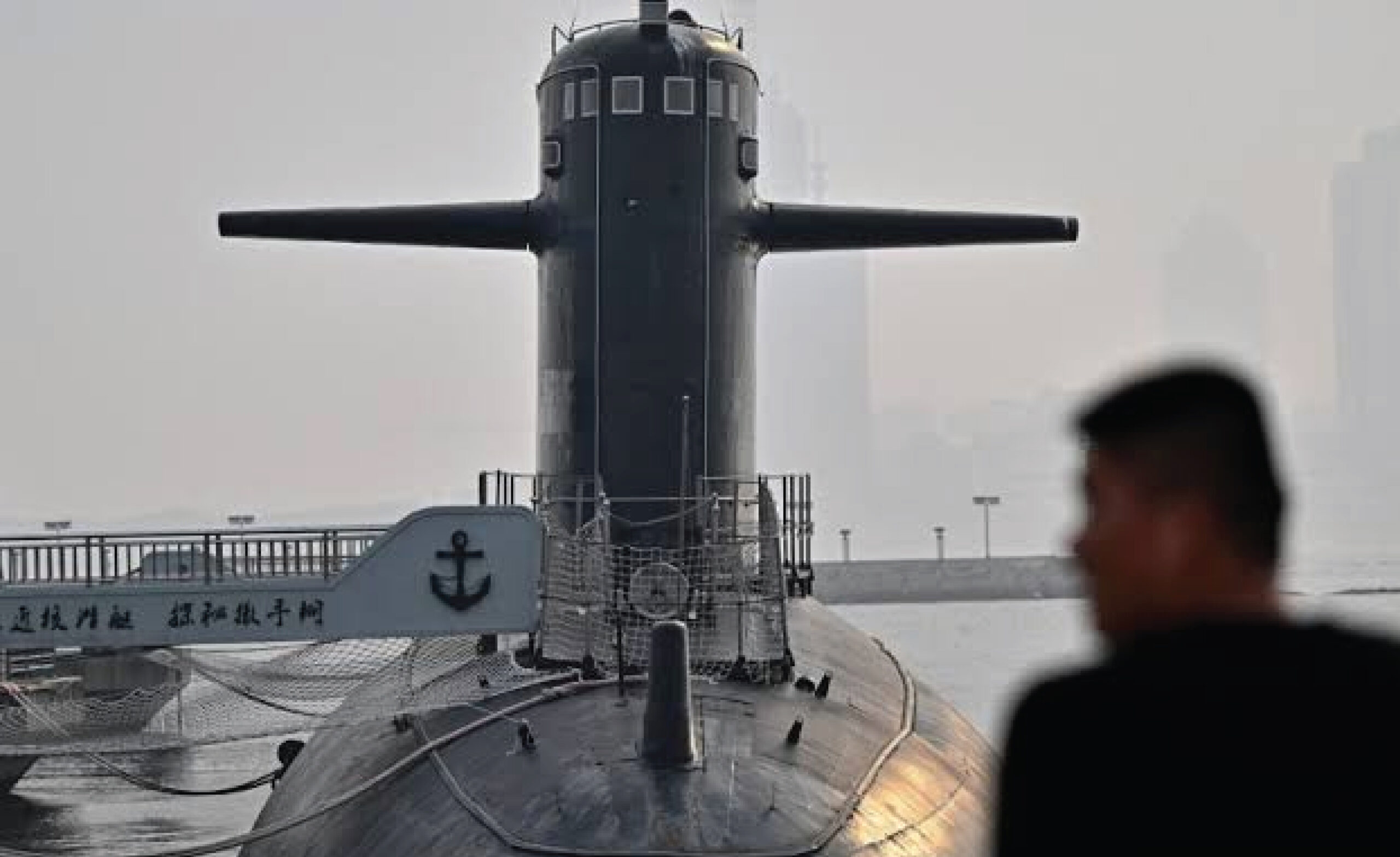
Hours after the signing, China test-launched a nuclear-capable but unarmed intercontinental-range ballistic missile from a submarine, CNN reported, citing a US State Department statement. The missile flew over the exclusive economic zones of the Federated States of Micronesia, Nauru, Kiribati and Tuvalu, splashing down roughly 1,000 kilometers northeast of Solomon Islands, near or inside Tuvalu’s EEZ, according to Islands Business. China’s Senior Captain Wang Xuemeng said the test complied with international law and was not directed at any specific country, Islands Business reported. The response was swift. Australian Foreign Minister Penny Wong called it destabilizing to the region, per Euronews, and by July 9, Tuvalu, Vanuatu and Palau had all issued formal condemnations, the Pacific Media Network reported, joining Fiji’s defense minister.
Two days later, Australia’s second treaty of the week took effect. The Pukpuk Treaty, PNG’s first-ever defense alliance and Australia’s first new alliance in more than seven decades, came into force July 8 in Brisbane, RNZ and PINA reported, strengthening intelligence-sharing, logistics and training cooperation and opening a pathway for up to 10,000 Papua New Guineans to join the Australian Defence Force. Albanese called it a momentous step reflecting the deep trust between the two neighbours, according to a statement from the Australian Prime Minister’s office. Former PNGDF two-star general Jerry Singirok has argued the treaty may conflict with PNG’s constitution absent an amendment, Radio Free Asia reported, while the Chinese Embassy in Port Moresby said the pact should not target a third party, a sovereignty debate Port Moresby has not fully closed.
Canberra paired hard security with soft power. Australia unveiled a new Pacific Rugby League Partnership, part of a broader AUD 600 million investment in the sport, according to The Australia Today, including support for the PNG Chiefs’ entry into the NRL in 2028, announced as Albanese hosted Marape alongside the leaders of Samoa and Tonga at the State of Origin decider in Brisbane.
PNG: the K100 million forum and the 30% question
On the resource file, Finance Minister Thomas Opa confirmed to The National that the National Executive Council has approved just over K100 million to host the development forum for the US$14 billion Papua LNG project in Port Moresby, after the event was relocated from Kerema over infrastructure constraints. Prime Minister James Marape has tied Papua LNG’s progress to a wider pipeline, according to PNG’s Department of Prime Minister and National Executive Council. Combined with the P’nyang project, the two could represent US$20 to 25 billion in capital investment over the next decade, potentially matching or exceeding the original PNG LNG build in construction duration.
Wafi-Golpu remains the harder negotiation. Marape has said the State intends to hold 30% equity in the project and will not be questioned on its capacity to finance that stake, arguing the State refinances over time rather than going broke, PMNEC reported. He has separately set a target of securing at least 55% of total state benefit before signing, telling Parliament that once an agreement is reached, likely spanning up to 40 years, it will not be reopened even if commodity prices move. An independent peer review team, including former Chief Secretary Isaac Lupari, is due to report before the government presents its final position to Harmony Gold and Newmont.
Smaller economies, targeted capital
The week’s development finance flows were narrower but instructive. The Asian Development Bank’s Frontier Seed initiative made its first non-sovereign investment in the Cook Islands, according to Islands Business and PINA, backing fashion brand Manini Wear with US$130,000 to fund a shift to lower-carbon ocean freight and an expansion into Aitutaki. ADB regional director Azusa Sato said the Pacific is home to some of the world’s most innovative entrepreneurs. In Palau, the ADB approved US$12.5 million in concessional financing under subprogram two of its Strengthening Fiscal Resilience for Sustainable Development Program, the bank confirmed, aimed at public financial management and disaster resilience. ADB North Pacific Advisor Aziz Haydarov credited Palau’s continued leadership on fiscal reform.
Nauru, meanwhile, pressed its Economic and Climate Resilience Citizenship Program, a for-contribution investment-migration scheme, not a conventional aid program, into a new market. The Philippines Tribune reported the government is promoting the program to Filipino families, positioning it as insurance against geopolitical uncertainty and rising sea levels, and says it has already drawn applications from Thailand and Vietnam.
What’s next
Traders are watching whether the Kospi’s Thursday bounce holds once SK Hynix’s US shares begin trading, a live test of whether memory-chip demand or margin-driven leverage is now setting the region’s volatility floor. On the Pacific side, the open question is less about the treaties already signed than the ones still pending. Australia’s Solomon Islands security talks resume this week, and Pacific Islands Forum leaders are expected to issue a joint statement on the missile test following meetings in Brisbane, a document that will show whether the region’s response coheres into policy or dissipates into individual protest notes.





