Papua New Guinea’s largest pending investment decision now rests on a negotiating table in Gulf Province, not on a drilling rig. TotalEnergies SE and its partners are targeting a final investment decision on the $14 billion to $15 billion Papua LNG project within 2026, according to Prime Minister James Marape and statements from TotalEnergies’ own leadership. The single condition standing between that target and reality is a landowner development forum the government has scheduled for late June into early July, the period the country is in right now.
The arithmetic is straightforward. A six-year framework agreement, two prior cost blowouts, and one unresolved benefit-sharing negotiation stand between Papua New Guinea and what would be its second LNG export project. None of the technical work is in question. The politics is.
The number that moved
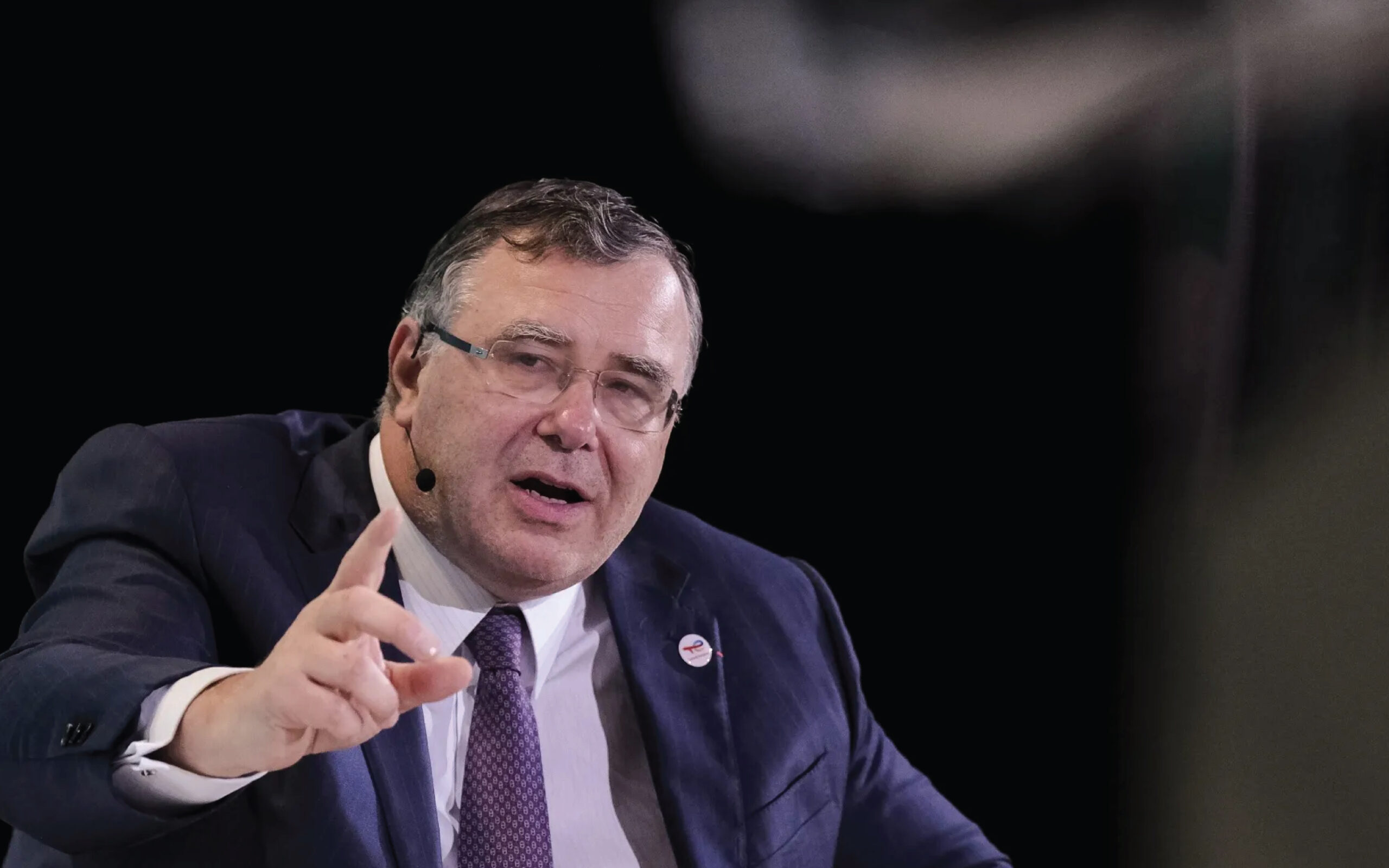
Papua LNG’s price tag has already been negotiated down once, and the revision tells its own story about where the project’s real risk sits. Marape said the initial tender came in at $18 billion, a figure TotalEnergies judged commercially unworkable. A secondary bidding process brought that down to roughly $14 billion, the Prime Minister said following his return from a bilateral visit with French President Emmanuel Macron in June. TotalEnergies CEO Patrick Pouyanné gave a tighter range during a February earnings call, telling analysts the project sits at “around $14-$15 billion, not at $18 billion, not at $12 billion,” and that the company intends to sanction the project in 2026 once capital expenditure, financing and marketing workstreams converge.
That convergence is not yet complete. JGC Corporation of Japan and Hyundai Engineering & Construction of South Korea have been selected as engineering, procurement and construction contractor, with the final contract award expected only after FID, according to JGC’s own disclosure. TotalEnergies has also been negotiating with Japanese lender MUFG and a syndicate of export credit agencies on financing, a process TotalEnergies’ Papua New Guinea managing director Arnaud Berthet described in December as “quite complex” in an interview with Business Advantage PNG.
The four conditions, three of them met
Petroleum Development Licence approval requires four things under PNG law: a Level 3 environmental permit, an approved development scheme, a national content plan, and the landowner development forum. PNG’s Conservation and Environment Protection Authority granted the Level 3 permit covering both the upstream and downstream components in late 2025, a milestone Berthet called a watershed moment. The national content plan has been submitted to regulators. The development scheme requires sign-off from the Ministry of Petroleum.
The forum is the one item that cannot be rushed by either side. “Without the development forum, we cannot take the FID, as per the law,” Berthet told Business Advantage PNG in December, describing it as one of the fundamental bricks on the path to sanction. The process brings together local landowners, the Gulf Provincial Government and Central Province to negotiate how the project’s benefits get distributed, a structure modeled on the existing PNG LNG project a few kilometres away.
That comparison carries weight precisely because PNG LNG, operated by ExxonMobil since 2014, has shown PNG governments how disputes over landowner dividends can outlast the engineering schedule by years. Papua LNG’s joint venture partners, TotalEnergies, ExxonMobil and Santos, are aiming not to repeat that pattern. Santos CEO Kevin Gallagher told industry press in February that achieving FID for Papua LNG is now the company’s fourth-highest business priority globally, and that all three partners are working toward a mid-2026 decision with remaining issues being resolved.
Reading the resource against the region
Papua LNG is built around the Elk and Antelope fields, estimated to hold approximately 6.5 trillion cubic feet of gas and 57 million barrels of condensate. Marape has been explicit that the project is smaller than TotalEnergies and ExxonMobil’s flagship developments elsewhere, noting Papua LNG’s 6.6 trillion cubic feet against the 80 trillion cubic feet projects the same companies operate in Mozambique. The comparison is the Prime Minister’s own, made to underline why PNG cannot assume Papua LNG carries the same priority inside TotalEnergies’ global portfolio that it carries inside PNG’s economy.
That asymmetry shapes the politics of the development forum. PNG has rejected requests for what Marape described as free incentives or concessions, while offering technical assistance, and the Prime Minister has said publicly that the original 2019 gas agreement’s core structure remains unchanged despite years of cost renegotiation. The message to TotalEnergies, in Marape’s words after meeting Pouyanné in Paris: “time is ticking.”
What does not happen if the forum stalls
PNG’s two largest fiscal stories of 2026, a sovereign debt repayment pathway targeting zero new borrowing by 2027 and full repayment by 2033, and a non-resource economy the government says has grown from roughly 28 billion kina in 2018 to more than 89 billion kina in 2024, both depend on resource revenue arriving roughly on schedule. Papua LNG is the single largest undeveloped piece of that revenue base. A stalled forum does not kill the project. It pushes first production, already targeted for after 2030 according to industry coverage of the 2025 Petroleum and Energy Conference, further to the right, and it extends the period during which PNG’s budget planning has to assume resource income that has not yet been sanctioned.
It also has a financing dimension PNG’s negotiators cannot fully control. Campaign groups including Reclaim Finance have published claims that close to 30 banks have declined to finance Papua LNG following an Equator Principles complaint filed by environmental organisations in December 2025, a claim made by advocacy groups tracking the project rather than by TotalEnergies or its lenders. TotalEnergies has stated publicly that Papua LNG is being developed in compliance with the Equator Principles and International Finance Corporation performance standards. Whatever the outcome of that dispute, it adds another constituency Papua LNG’s backers have to satisfy before the financing workstream Pouyanné described in February actually closes.
The open question
Every major participant, the Prime Minister, TotalEnergies’ country head, and Santos’s chief executive, has now gone on record saying 2026 is the year. None of them has said the development forum will conclude on schedule. The forum convenes this month. What it produces will tell Papua New Guinea more about its next decade of resource revenue than any seismic survey has.





