
Ransomware Has Now Hit Four Pacific Governments Since 2021, PNG Twice
Ransomware hit PNG's Finance Department in 2021 and its tax office in 2025. Vanuatu, Palau and Tonga also lost government systems to attacks.
Key points
- Pacific cybersecurity is under test: ransomware has hit PNG’s Department of Finance (2021) and Internal Revenue Commission (2025), Vanuatu’s government (2022), and the health ministries of Palau and Tonga (2025).
- PNG’s draft Cybersecurity Bill 2026 would make critical-infrastructure operators report incidents within 24 hours and keep them accountable for cloud and third-party providers.
- Exepreneur found no published survey of how prepared Pacific companies are for a cyberattack.
Papua New Guinea has lost a core government system to ransomware twice in four years. The first was the Department of Finance’s Integrated Financial Management System, hit at 1am on 22 October 2021, according to a statement from then Finance Minister John Pundari, Bloomberg reported. The second was the Internal Revenue Commission in January 2025.
Vanuatu, Palau and Tonga have been hit too. The Pacific Islands Forum’s Pacific Security Outlook Report 2026 says the region is strengthening its cyber posture but that “a Pacific capability gap remains.” It expects the higher tempo of attacks on state information systems to continue over the next 12 to 24 months.
The record
| Date | Country | Target | What happened |
|---|---|---|---|
| Oct 2021 | PNG | Department of Finance (IFMS) | Ransomware; Bitcoin demand; no ransom paid |
| Nov 2022 | Vanuatu | Government networks | Ransomware; systems down for over a month |
| Feb 2023 | Tonga | Tonga Communications Corporation | Ransomware claimed by Medusa |
| Jan 2025 | PNG | Internal Revenue Commission | Ransomware; network and email disrupted |
| Feb 2025 | Samoa | Government and infrastructure networks | APT40 advisory issued by SamCERT |
| Early 2025 | Palau | Ministry of Health | Qilin ransomware |
| Jun 2025 | Tonga | Ministry of Health | INC Ransom; US$1m demand reported, unpaid |
PNG, Department of Finance, October 2021. The IFMS manages access to hundreds of millions of dollars in foreign aid, Bloomberg reported. The attackers demanded Bitcoin. Pundari said the department paid no ransom and restored the system, and Security Affairs reported it was recovered from backups.
Vanuatu, November 2022. A ransomware attack shut the government out of all state-run computer systems on 6 November 2022, the first day of a new government, Islands Business reported. More than a month later, many officials were still running government business from personal email accounts, The Diplomat reported. Chief Justice Vincent Lunabek confirmed that court records were lost, RNZ reported.
Vanuatu had run its own Computer Emergency Response Team since 2021, Tech Monitor reported.
Tonga, February 2023. Ransomware encrypted part of the systems at Tonga Communications Corporation, the state-owned telecoms company, The Record reported. Security researcher Dominic Alvieri said the Medusa group claimed it.
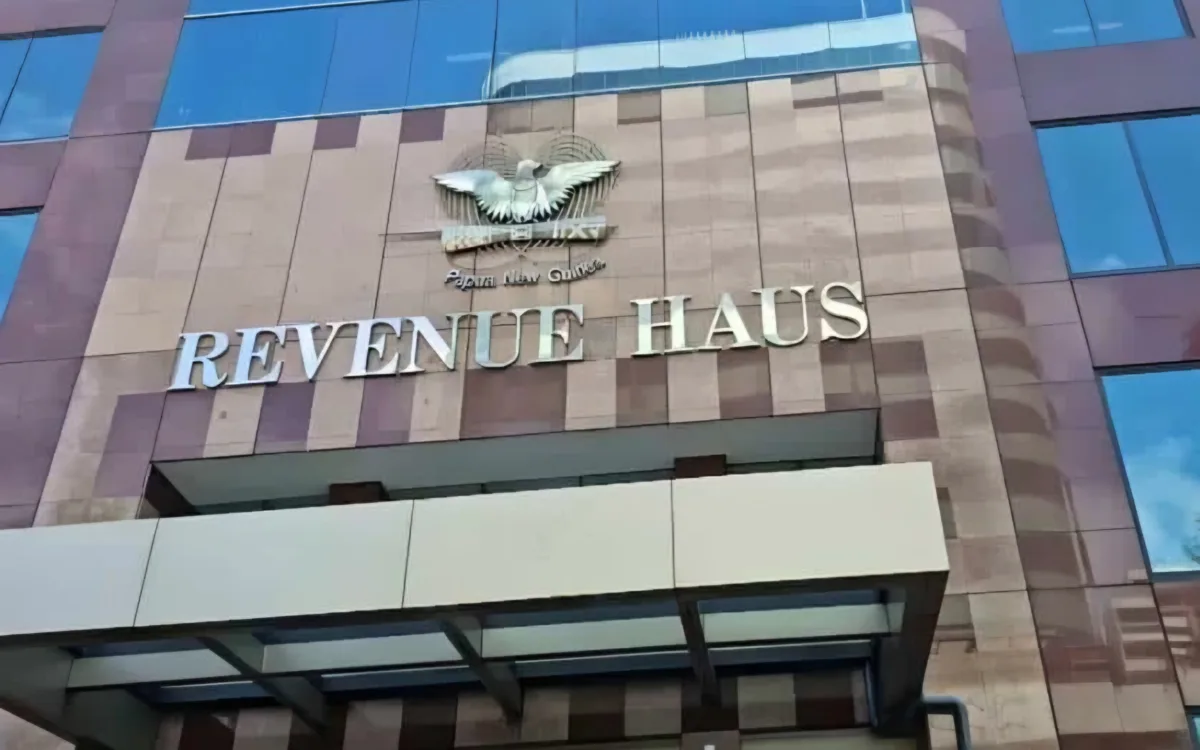
PNG, Internal Revenue Commission, January 2025. The Internal Revenue Commission announced a “system outage” on 29 January, Islands Business reported. The ABC later reported that the outage was a cyberattack, confirmed by sources in PNG and Australia, and that Australia had offered support that PNG had not taken up.
The IRC then confirmed it was hit by ransomware on 28 January, disrupting its network and email systems, the Post-Courier reported. Commissioner General Sam Koim said the attack came despite significant cybersecurity upgrades, PNG Haus Bung reported. The IRC said taxpayer data in SIGTAS, its core tax system, was not compromised, in a statement carried by the Prime Minister’s office.
Samoa, February 2025. SamCERT, Samoa’s national cyber team, issued an advisory on 11 February about APT40, a hacking group linked to China’s Ministry of State Security, ASPI’s The Strategist reported. It was the first time a Pacific island country formally attributed a cyberattack to a China-linked group.
Palau and Tonga health ministries, 2025. Palau’s Ministry of Health was hit by Qilin ransomware early in 2025, SC Media reported. On 15 June 2025 ransomware took down Tonga’s Ministry of Health ICT environment and disrupted the national health network, according to Australia’s Cyber Security Centre. The INC Ransom group claimed it on 26 June. Media reports put the demand at US$1 million, which the Tongan government said it had not paid, RNZ reported.
PNG, September 2026. Police rescued 39 Indonesians believed to have been trafficked to work in a cyber scam compound, the first case of its kind uncovered in PNG, OCCRP reported.
Pacific cybersecurity: where governments stand
PNG’s National Cyber Security Centre opened in 2018, according to the National Cyber Security Policy 2021, with joint funding from Australia and PNG, the Australian Computer Society reported. The policy places PNGCERT and a security operations centre inside the NCSC.
The National Cyber Security Strategy 2024 to 2030 came next. In November 2024 then ICT Minister Timothy Masiu said it would set up a National Cyber Security Coordination Centre.
In October 2024, Masiu said PNG had “made significant improvement” in its cybersecurity posture but that “there is still so much to do,” the Australian Computer Society reported. Three months later the IRC was hit.
Fiji’s Cabinet endorsed a National Cybersecurity Strategy for 2026 to 2031 in February, and Fiji set up a police Cybercrime Directorate, the Pacific Islands Chapter of the Internet Society reported. Samoa has published a national strategy for 2025/26 to 2030/31.
INTERPOL’s Asia and South Pacific Cyber Threat Assessment for 2025/2026 found the LummaC2 infostealer active in PNG and RedLine Stealer targeting Fiji and Kiribati, Transparency International New Zealand reported. Both tools harvest banking logins, personal data and cryptocurrency wallet details. INTERPOL named a lack of forensic tools, training and technical capacity as common obstacles for smaller Pacific administrations.
Opening the Pacific Cyber Security Operational Network’s annual meeting in Port Moresby in July, ICT Minister Robert Naguri said threats do not respect national borders. He said a weakness in one Pacific country’s systems could affect others.
Tonga and Australia activated the Cyber Rapid Assistance for Pacific Incidents and Disasters (RAPID) programme after the health ministry attack, Kaniva Tonga reported.
What PNG’s Cybersecurity Bill would ask of business
The draft Cybersecurity Bill 2026 sets out what PNG would expect from companies. Submissions closed on 19 August 2026, according to the Department of ICT’s consultation notice. Exepreneur could not confirm whether it has gone to Parliament.
According to the notice, the Bill would:
- make NICTA the interim National Cybersecurity Authority, with its own cybersecurity division and budget, and set up PNGCERT and a Cybersecurity Operations Centre in law
- let the state designate critical information infrastructure, whose operators would need security plans, minimum standards, risk assessments and audits
- require those operators to report incidents, starting with a notice within 24 hours and followed by a full report
- keep local operators accountable when their critical systems run on cloud or third-party providers
- set cybersecurity controls for financial institutions in coordination with the Bank of Papua New Guinea, including electronic asset-freezing procedures
- license firms that sell cybersecurity auditing, penetration testing, digital forensics and managed security services
Cybercrime investigations would sit with a Cybercrime Investigation Unit in the Royal Papua New Guinea Constabulary. The notice lists no penalties.
Pacific cybersecurity: where companies stand
Exepreneur found no published survey measuring how many PNG or Pacific companies have incident response plans, offline backups or cyber insurance.
In February 2025, after the IRC attack, Ian Tarutia, president of the PNG Chamber of Commerce and Industry, said PNG was now a soft target for hackers, NBC News PNG reported. He called for minimum standards of cyber protection across all management information systems.
PwC PNG told clients in July 2025 that financial services, telecommunications and travel businesses should treat cybersecurity as urgent, citing an airline cyberattack and the IRC attack. PwC did not name the airline in the material Exepreneur reviewed.
Australia’s Cyber RAPID team has run attack-simulation workshops for PNG state-owned enterprises, the Australian High Commission said. In June 2026 the PNG-Australia Partnership trained micro, small and medium businesses in scam awareness, password protection and account security.
November’s stress test
The biggest outages of the past fortnight, at Microsoft, the FAA and Apple, were not cyberattacks, according to the companies and officials involved. All three were failures inside global providers.
Microsoft’s preliminary post-incident report puts the Microsoft 365 outage at 4:20pm UTC on 12 November to 4:10pm UTC on 13 November. In Port Moresby that was 2:20am Friday to 2:10am Saturday, 23 hours and 50 minutes by Exepreneur’s calculation. Microsoft blamed a latent software bug exposed by a network change and said the incident was “not related to cyber or AI/agents,” Stocktwits reported.
Outlook, Teams, SharePoint and Copilot were all affected, Interesting Engineering reported. Downdetector logged nearly 140,000 Outlook reports at the peak, SOCRadar reported.
On 13 November the US Federal Aviation Administration grounded every departing flight in the country. The FAA said its initial investigation pointed to “excessive data flooding the systems” from a radar site in Texas and a radio site in Arkansas. Operators cancelled about 12,462 flights, the FAA said.
Homeland Security Secretary Markwayne Mullin said there was “no indication, as of yet, that this was a nefarious act against us,” CBS News reported. “It was just a telecommunication outage, as of right now.”
On 16 November a system outage disrupted United Airlines departures across the US and left pilots without flight information, Fodor’s reported. Chase and Wells Fargo customers had trouble getting into their accounts online the same afternoon, CNN reported. JPMorgan blamed a software bug for its outage, according to The CyberDiplomat.
On 17 November iCloud, the App Store and Apple Pay failed. Apple told Tom’s Guide that “an internal update caused some outages,” and ruled out a cyberattack, TechRepublic reported.
The confirmed attack that week came through a supplier in the Asia-Pacific region. On 16 November the ransomware group n0n listed Visa, Mastercard and JPMorgan Chase on its leak site, Sumsub reported. Visa confirmed an incident at a third-party service provider in the Asia-Pacific region, said its own systems were not involved and did not name the provider or its country.
JPMorgan said attackers accessed marketing data held by its vendors, which may include some customer names and email addresses, Reuters reported. Visa shares fell 2.6% in midday trading on 19 November, The Wall Street Journal reported, as cited by Organiser.
n0n surfaced in September and has claimed about 200 breaches worldwide, according to security analysts cited by Gujarat Samachar. That is the group’s own claim count, not a verified tally. The deadline it set Visa, Mastercard and JPMorgan had passed by 19 November, and public reporting had not established that the data had been published or authenticated, The CyberDiplomat reported.
US government systems were breached in the same week. The US Department of Agriculture confirmed a breach that shut several internal applications for days, and the FBI’s National Crime Information Center network was accessed without authorisation, Gujarat Samachar reported, citing CNN.
CNN reported on 17 November that it is getting harder to tell technical glitches from the work of malicious cyber actors.
Visa’s Fall 2026 threats report, released on 17 November, found incidents involving third-party agents rose 62% against the previous six months. Those providers were linked to about 56% of the compromised payment credentials Visa identified.
Under PNG’s draft Bill, a local operator would stay accountable when its critical systems run on someone else’s cloud or service.
Two weeks against 24 hours
The IRC described its attack as a “system outage” for about two weeks before confirming ransomware, according to Island Times and the Post-Courier. The Cybersecurity Bill would require operators of designated critical infrastructure to give an initial notice within 24 hours.