Digicel Pacific Hires Former Orange CEO Frédéric Debord to Run Its Largest Market, PNG
Digicel Pacific has named Frédéric Debord, a former Orange CEO in Cameroon and Madagascar, to run Digicel PNG as rival Vodafone PNG grows fast.
Key points
- Digicel Pacific has appointed Frédéric Debord, a former Orange chief executive in four countries, as CEO of Digicel PNG from 16 November.
- He takes over a business whose parent, Telstra, reported Digicel Pacific income down 10.2% to A$593 million in the year to June, partly because of the kina’s fall.
- Interim CEO Brett Goschen returns to his role as Group Chief Financial Officer of Digicel Pacific.
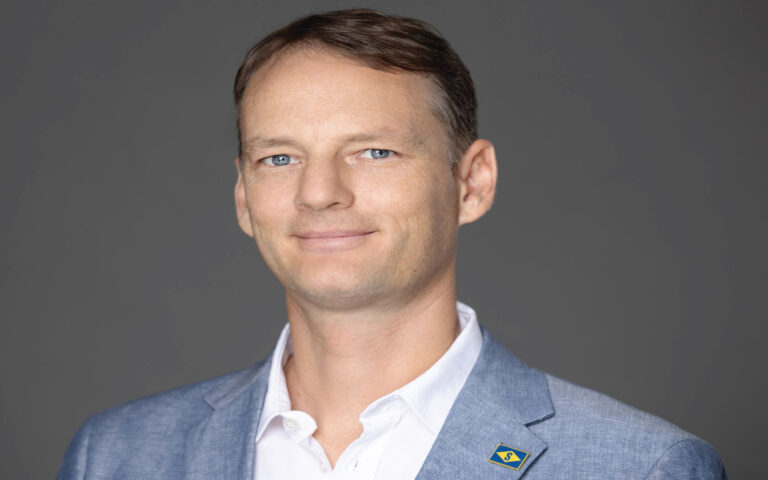
Digicel Pacific has appointed Frédéric Debord, a French telecommunications executive who ran Orange’s businesses in Cameroon and Madagascar, as Chief Executive Officer of Digicel PNG, effective 16 November.
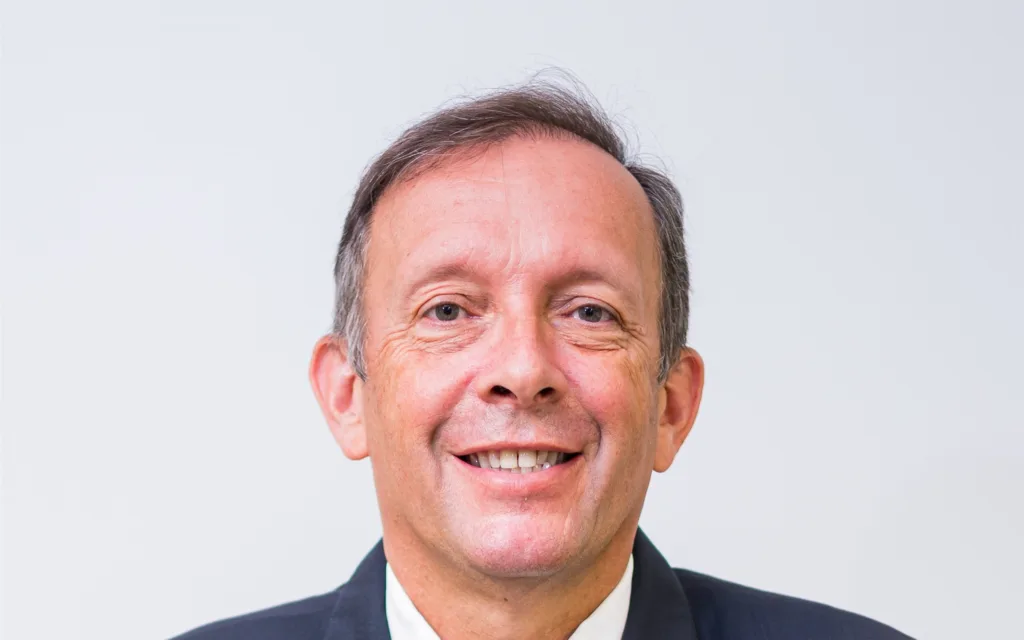
The Telstra-owned group announced the appointment in Port Moresby on Thursday. Debord fills a post that has been held on an interim basis since Tarik Boudiaf stepped down earlier this year after nearly two years in the job.
Papua New Guinea is Digicel Pacific’s largest market and “a key driver of its growth strategy,” the company said. Debord arrives as the business faces a falling kina, a faster-growing rival in Vodafone PNG, and new government rules on SIM registration.
Who is Frédéric Debord
Digicel Pacific said Debord brings more than 20 years of telecommunications leadership across Africa, the Caribbean and Europe, including chief executive roles with Orange in Madagascar, Cameroon, Morocco and the Dominican Republic.
Orange Cameroon announced his appointment as chief executive effective 15 February 2018, Telecompaper reported at the time. In July 2021, Orange moved him to head Orange Madagascar, replacing Michel Degland, according to CIO Africa and Financial Afrik. Patrick Benon succeeded him in Cameroon.
His LinkedIn profile lists the Madagascar role as running from September 2021 to May 2025, and an earlier post as Chief Operating Officer of Ooredoo Kuwait from 2016 to 2017. He studied at Sciences Po in Paris, according to the same profile.
“I am honoured to join Digicel Pacific and lead the PNG business at such an important time,” Debord said in the company’s statement. He said he would work with employees, customers, partners and stakeholders “to build on the strong foundations already established, strengthen our market position, and deliver long-term value for our customers and communities.”
Why Digicel looked overseas
Roary Stasko, Chief Executive of Digicel Pacific, said the company ran “a comprehensive international search” before choosing Debord.
Stasko also thanked Brett Goschen, who has run Digicel PNG as interim chief executive since Boudiaf’s departure. “Brett has provided strong leadership, stability and continuity during an important period for the business,” he said. Goschen now returns to his role as Group Chief Financial Officer of Digicel Pacific.
Stasko is also Chief Executive of Telstra International, Telstra’s offshore business, The PNG Bulletin reported.
Boudiaf announced earlier this year that he would step down after nearly two years as Digicel PNG’s chief executive and return to France to spend more time with his family, The PNG Bulletin reported.
The Digicel PNG business Debord inherits
Digicel Pacific serves Papua New Guinea, Fiji, Samoa, Tonga, Vanuatu and Nauru. Telstra completed its purchase of the business from Digicel Group in July 2022, in a deal that valued Digicel Pacific at up to US$1.85 billion including a three-year, US$250 million earn-out, according to Digicel’s announcement on PR Newswire. The Australian Government supported the acquisition with financing, Export Finance Australia said.
The numbers since then have been mixed. Telstra’s results for the year to 30 June 2026 put Digicel Pacific’s income at A$593 million, down 10.2%. Telstra said the figure included the impact of the kina’s devaluation. In constant currency, income fell 1.8%, which Telstra attributed to lower average revenue per user in PNG.
Digicel Pacific’s EBITDA, or earnings before interest, tax, depreciation and amortisation, fell 10.4% to A$293 million in the same year. Excluding one-off balance sheet releases, a prior-year earn-out adjustment and currency movements, Telstra said EBITDA grew 4%.
Telstra does not publish Digicel’s subscriber numbers or a separate profit figure for the PNG business.
A rival that is growing faster
Debord’s main competitor is Vodafone PNG, owned by Fiji’s Amalgamated Telecom Holdings (ATH). ATH told the South Pacific Stock Exchange that Vodafone PNG’s revenue rose 32% in the six months to December 2025.
Digicel still has the bigger network. It has more than 1,200 towers, according to a TelecomLead report in October, against about 800 sites for Vodafone PNG, according to Vodafone PNG Chief Executive Pradeep Lal. Lal has said Vodafone is targeting 1,200 sites within 18 months.
The two operators, along with state-owned Telikom, have begun to share infrastructure. Digicel and Vodafone signed a tower-sharing licence in September, and Digicel and Telikom followed in October, Developing Telecoms reported. The first shared site went live at Minj in Jiwaka.
Goschen signed the Vodafone deal during his time as interim chief executive. “This agreement is a practical step towards delivering better outcomes,” he said, according to Developing Telecoms. Baiyer River was named as the next shared site.
Digicel PNG inside the PNG market
The PNG mobile market is smaller than its population suggests. Vodafone’s Lal has put national mobile penetration at 46%. Boudiaf gave a lower figure in January 2025. “Our market penetration rate is at around 30 to 35 per cent,” he told Business Advantage PNG. The two estimates have not been reconciled, and no regulator publishes operator market shares.
Digicel built 115 new towers and upgraded 96 to 4G between 2022 and early 2025, and covered more than 80% of the population, Business Advantage PNG reported in January 2025.
Vodafone’s claims about its own size have moved. Lal told Business Advantage PNG in March that Vodafone PNG had about 2 million subscribers, 93% of them on smartphones, and carried 55% of PNG’s data traffic. ATH Chief Executive Ivan Fong told his company’s annual meeting in October 2025 that Vodafone PNG had “crossed about a million in customers,” the Fiji Times reported. Neither company has explained the gap, and the data share figure has not been independently confirmed.
Pricing has also diverged. Researchers at the Development Policy Centre reported in June that Digicel’s prices in 2025 were “unstable and unpredictable.” Vodafone held its core bundles and added cheaper data packs from January 2026, the same research found.
Coverage has slipped across the market. PNG’s telecommunications regulator, NICTA, said in December 2025 that population mobile coverage fell from 86% in 2022 to 77% in 2024.
The rules ahead
Two policy changes could reshape the market Debord now leads.
The first is SIM registration. The Ministry of Information and Communications Technology said in March that subscribers aged 18 and over “will be required to hold a valid SevisPass Digital ID,” with enforcement to be phased in. The regulation has not been gazetted and no deactivation date has been set, according to the ministry. Any rule that cuts off unverified SIM cards would reduce subscriber counts at every operator.
The second is satellite competition. A court ruling on 24 April 2026 cleared the way for Starlink to be licensed in PNG, researchers at the Development Policy Centre reported.
Parliament is also pressing on infrastructure. A committee chaired by Marsh Narewec has recommended that tower-sharing be made mandatory under the ICT Act 2009, The National reported on 3 November.
What Digicel has promised
Digicel Pacific said it is “committed to investing in network capability, digital innovation and customer experience to support the future growth and digital development of Papua New Guinea.”
The company did not give an investment figure, a network target or a timeline for Debord’s plans. It also did not say where he will be based or whether his appointment brings changes to the PNG management team.
Debord’s first public test will be Telstra’s half-year results in February 2027, which will show whether Digicel Pacific’s income has stabilised after the kina’s fall. The second will be the SevisPass deadline, when the government sets one, and how many Digicel customers are still connected after it.
Digicel PNG has had three chief executives in under three years: Boudiaf, Goschen in an acting capacity, and now Debord.