Kina Bank needs up to K78.3m in H2 2026 to hit its profit target. Inside its fight with BSP, CreditBank and CellMoni for PNG digital customers.
KEY POINTS
- Kina Bank must earn up to K78.3 million in the second half to hit its 2026 profit target.
- BSP earned K1.17 billion in 2025, ten times Kina’s profit.
- Kina’s Pei Beta wallet opens to new customers in the second half of 2026.
- A rival bank’s card problem has delayed growth in Kina’s payments business.
Kina Bank expects to earn K132 million to K138 million after tax in 2026, according to guidance it gave the market on 7 July. The bank made K59.7 million in the first half, its half-year results show. To land inside its own range, Kina must earn between K72.3 million and K78.3 million in the last six months of the year.
That is 21% to 31% more than it made from January to June.
Much of that gap depends on one group of customers. They already have a bank account. They carry a phone and pay by card or app. Exepreneur calls them PNG’s digitally active middle market, and Kina, BSP, the new digital banks and the mobile phone companies all want them.
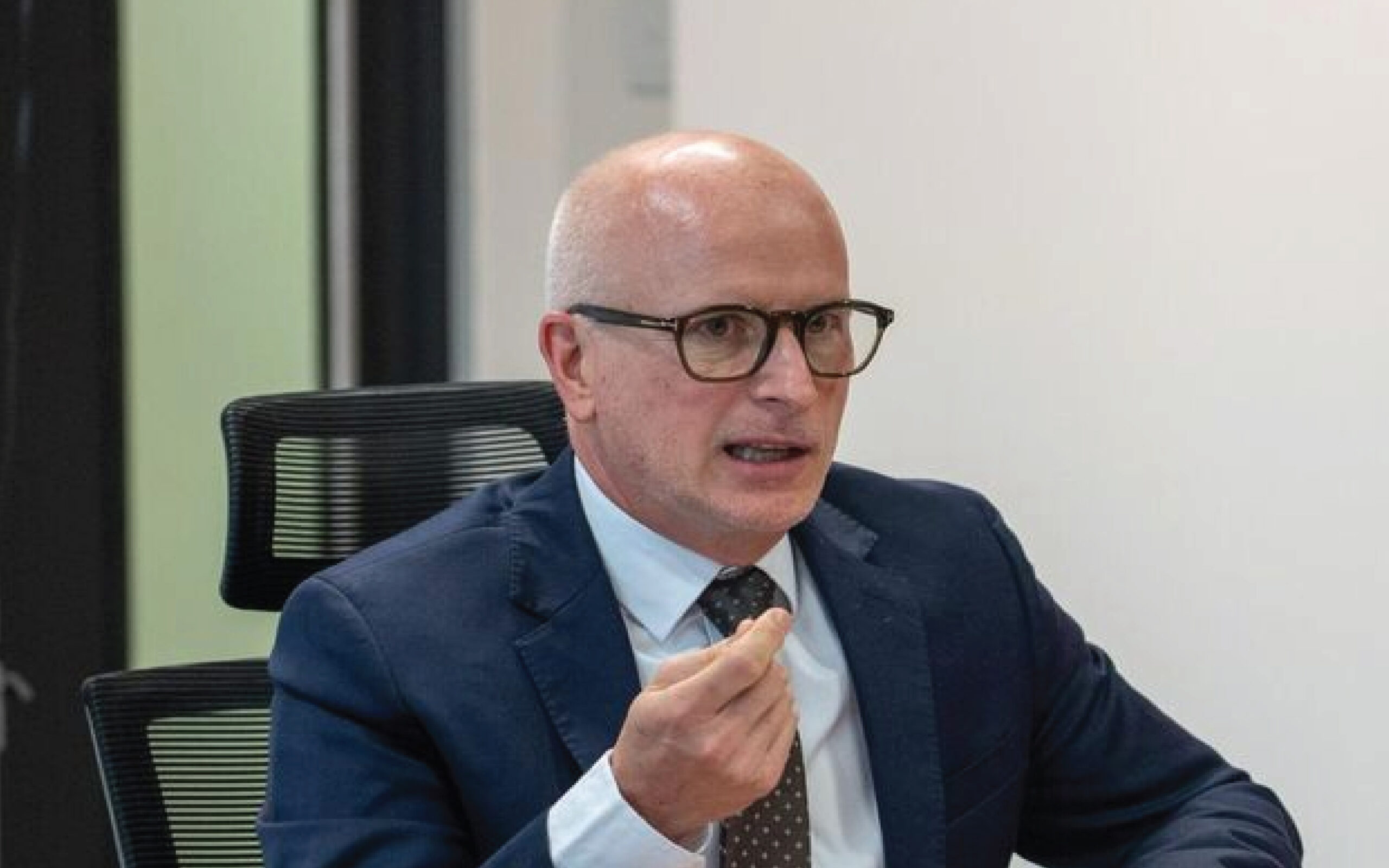
Kina’s chief executive, Ivan Vidovich, told investors in August that the first half produced “weaker growth than what we’ve delivered in recent halves,” according to a transcript of the results call published by Investing.com. In its results statement, reported by The Motley Fool, he said Kina “entered the second half with positive momentum, and expect earnings to increase during the remainder of 2026.”
The bank and the man running it
Kina Bank is the main business of Kina Securities Limited, which trades on both PNGX and the ASX under the code KSL.
Ivan Vidovich is Kina’s Managing Director and Chief Executive Officer. Business Advantage PNG reported in December 2024 that Kina had made him acting chief executive, replacing Greg Pawson from 1 January, with the permanent appointment subject to regulatory approval. Kina’s own news release of 4 February 2026 and its May 2026 annual meeting presentation both name him as Managing Director and CEO.
Kina is much smaller than its main rival. BSP Financial Group reported net profit of K1.17 billion for 2025. Kina’s audited 2025 net profit was K114.6 million, according to its July guidance statement. BSP earned about ten times as much.
On market share, Kina held 16.9% of PNG’s lending and 10.9% of its deposits at the half year, management said on the August call. In the first half of 2023, Kina reported 16% of loans and 13% of deposits. Management said the fall in deposit share was a choice: the bank let higher-cost fixed deposits and cash management balances run off.
The first-half numbers show the pressure. Revenue rose 2% to K254.8 million. Operating costs rose 7% to K159.6 million, growing three and a half times as fast as revenue. Net profit rose 4%.
Lending slowed too. The loan book grew 2%, according to the call transcript. Management said underlying growth would have been 7% without the bank’s decision to cut back a small number of exposures. Business lending fell, led by construction, which management partly put down to projects being completed.
The share price sits near its low. Kina last traded at A$1.19 on the ASX at the time of the transcript, close to the bottom of its 52-week range of A$1.15 to A$1.385. The interim dividend rose 13% in kina terms to 14.2 toea, but stayed flat at 4.5 Australian cents because the kina had weakened.
Kina is also more than a lender. Funds under administration in its wealth business rose 15% to K25.1 billion in the half, and wealth income rose 11%, according to the call transcript.
Kina did strengthen its balance sheet. Its capital adequacy ratio reached 26% after it raised K235 million through a ten-year Tier 2 bond, which it listed on PNGX on 6 May 2026. The Motley Fool reported that the bond was PNG’s first listed corporate bond.
Who the middle market is
When BSP launched its Wantok Wallet in February 2025, Group CEO Mark Robinson put PNG’s population at more than 11.7 million. He said only about 25% had access to banking, leaving 8.7 million people unbanked. BSP also said around 4 million people use mobile phones.
The banked quarter is where the banks compete today. In this article, the middle market means those customers, and especially the ones who already pay with phones and cards instead of cash: salaried workers and small business owners.
BSP alone serves 2.6 million customers, Robinson said at the same launch. Westpac PNG chief executive Andrew Cairns told Business Advantage PNG in April 2026 that digital banking gives lenders a way to reach the rest: “Those who are underbanked or non-banked: we have the opportunity to be able to bring them into the system.”
They matter to banks because every digital payment can earn a fee. Kina showed how this works in 2023, when it reported that fees and commissions rose 19% and put the gain down to the growth of its digital channel.
Cash is still the default for most people. Paul Thornton, outgoing chief executive of the National Banking Corporation, told Business Advantage PNG in April 2026: “It’s still a cash economy; it’s going to be for the foreseeable future.”
That leaves a small group of digital customers for many competitors to share. Whoever wins their daily payments wins the fee income that comes with them.
How a card payment makes money
A simple example explains why the card fight matters. When a shopper taps a debit card at a supermarket, two banks are involved. One bank issued the card. Another bank may own the EFTPOS machine on the counter. The machine’s owner is called the acquiring bank, and it earns fees for processing the payment.
Kina runs what it calls an “extensive payment acquiring business,” covering EFTPOS, online payments and ATMs, according to its July guidance. Every time a customer of any bank pays at a Kina machine, Kina can earn. That only works if the card and the machine can talk to each other. Bankers call this interoperability.
The same logic drives the wallets. A customer who pays school fees and power bills through one app hands that bank a steady stream of small fees and a reason to stay. Vidovich said in June that Kina is pushing for interoperable payment systems and lower banking costs across the industry.
What Kina has built
Kina was the first commercial bank in PNG to complete full retail customer onboarding online, through its DigiBankr platform in 2023, Business Advantage PNG reported. It also offers banking through WhatsApp. In 2025 it launched Kina Pei, which turns a Visa debit card into a digital card for tap-to-pay on a smartphone.
Its newest product is Pei Beta, a digital wallet launched in the first half of 2026. Kina’s May 2026 annual meeting presentation says the wallet targets mass retail payments and aims to grow fee income, scale and financial inclusion. Users can send money to each other instantly, pay shops by QR code and pay bills without a fee, Business Advantage PNG reported.
For now, Pei Beta is open only to existing Kina customers, who log in with their online banking details. Kina is working with the Bank of Papua New Guinea and the Financial Analysis and Supervision Unit to allow new users to sign up digitally in the second half of 2026, using electronic know-your-customer checks.
Know-your-customer, or KYC, is the identity check every bank must run before opening an account. Done electronically, it lets a customer sign up from a phone instead of queuing at a branch with documents. For Pei Beta, that switch decides whether the wallet stays a tool for Kina’s existing customers or becomes a way to win new ones. Vidovich told Business Advantage PNG in April that the regulator had been “very accommodating and willing to work with us on those innovation opportunities.”
“It’s been received incredibly well, probably even a little better than what we [initially] thought,” Vidovich said of Pei Beta in June.
Kina has not published how many people use Pei Beta. On the August call, management described digital income as broadly stable compared with a year earlier, according to the Investing.com transcript. The bank has also launched a Corporate Online Banking platform for business customers.
The competition
BSP is moving on two fronts. Its Wantok Wallet runs on basic phones through the *131# menu, so users need neither a smartphone nor a bank account, BSP said at the launch. Users can withdraw cash without a card at more than 300 BSP ATMs and cash agents. Sign-ups passed 100,000 by the end of 2025, according to BSP’s full-year results. The same results reported that digital adoption rose more than 22%, internet banking transactions rose 54% and EFTPOS transactions rose 16%.
The new banks are built for phones. CreditBank PNG, which received its full commercial banking licence in 2024, says 70% of its new customers open accounts online. Chief executive Danny Robinson told Business Advantage PNG they do so “without ever having to come into the branch.” The same report said TISA Bank offers an app, USSD and WhatsApp banking, and plans a “super app.”
The mobile phone companies may be the biggest threat. Digicel’s CellMoni has about 1.6 million individual users, around 53% of Digicel’s customer base, Business Advantage PNG reported. That is 16 times the number of Wantok Wallet sign-ups BSP has published. Set against BSP’s own estimate of 4 million mobile phone users, CellMoni already reaches about four in ten of them, although the two figures come from different companies and dates. Vodafone PNG has been licensed for M-PAiSA, the mobile money service it already runs in Fiji.
For banks, that is the uncomfortable part. A phone company already has the customer’s number and the shops that sell its airtime. A bank wallet has to win the same customer from behind.
“The telco market is extremely competitive,” Vidovich said in June. “We’re challenging ourselves and our competitors to do better.”
The fight has already cost Kina money. In its 7 July guidance, Kina said growth in its payments business was delayed by “interoperability issues affecting a major PNG bank’s newly issued debit cards.” It said the problem “was not caused by Kina Bank.” On the August call, management said the other bank’s new debit cards could not be used on rival acquiring networks, which hurt Kina’s EFTPOS, e-commerce and ATM business. Kina did not name the bank.
What could go wrong
Kina expects the card problem to be fixed before the end of 2026. The call transcript shows management also said a full recovery in payments revenue could run into 2027.
The currency adds pressure. Vidovich warned in February that the kina could fall closer to 30 Australian cents this year and that PNG should expect imported inflation to rise. Kina’s July guidance listed the weaker kina as a source of cost inflation, along with lower yields on government securities and stronger competition in foreign exchange.
Kina has set itself a longer goal. Its 2030 strategy, presented at the May annual meeting, states a vision “to be the most trusted financial services partner for the people, communities, and the markets that we serve.” Growth through innovation is one of six priorities listed in that plan.
Two dates now decide the year. Kina wants to open Pei Beta to people outside its books in the second half of 2026, and it expects the card fix by December. Its full-year results will follow in early 2027; it reported its 2025 results on 27 February 2026.
BSP earns ten times what Kina does and already has a wallet that works without a smartphone. Kina’s case rests on speed. It put customers through full online onboarding before any other PNG commercial bank, and now it has to turn Pei Beta into a wallet that people outside its books will choose. Its own guidance requires the second half to beat the first by at least 21%.