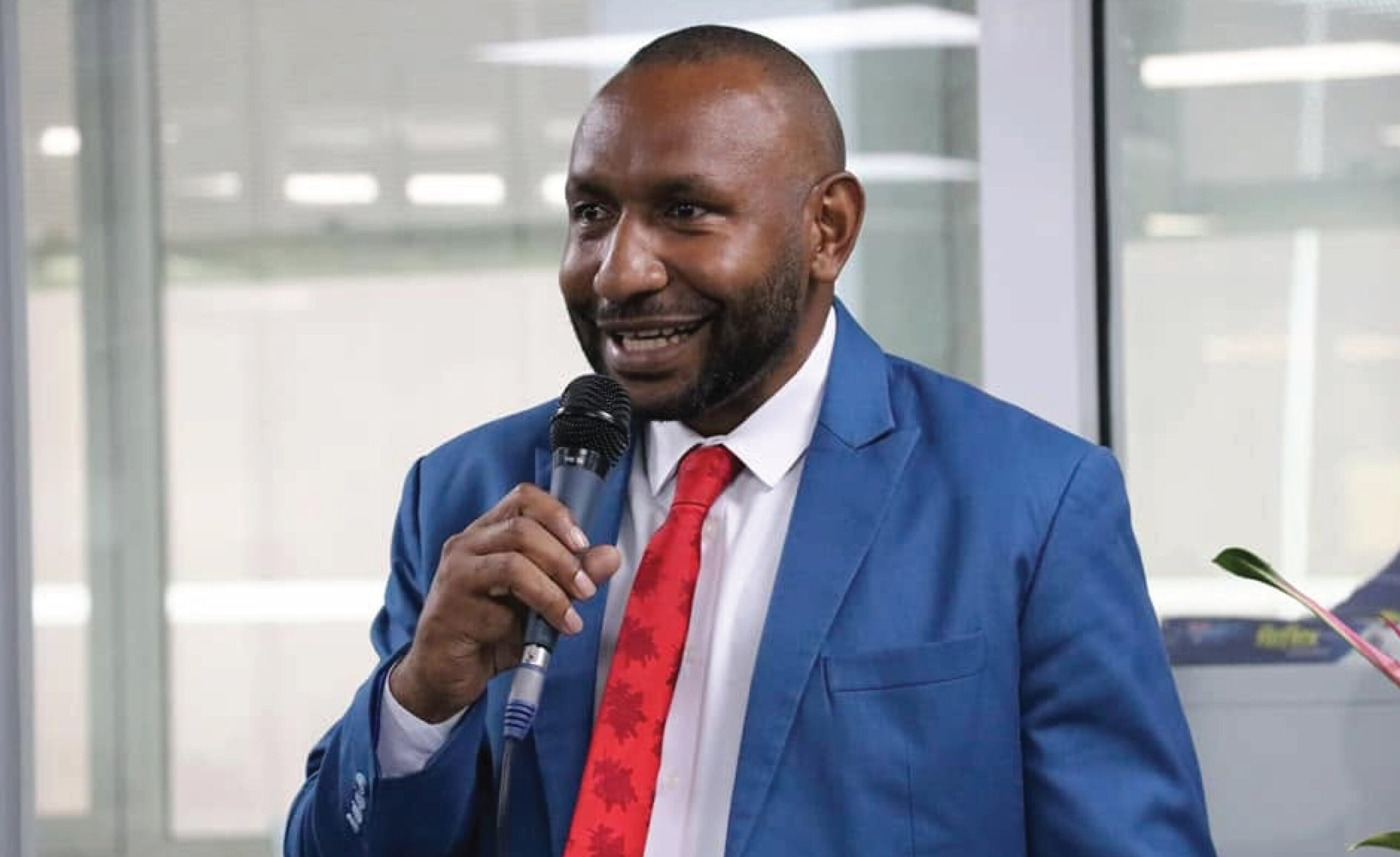
Four men have spent years building reputations as James Marape’s toughest parliamentary opponents. Three of them now sit, or have sat, in his Cabinet.
The most fiercest of them all, joined Marape
Start with the man who spent the longest time on the other side. Belden Namah was PNG’s Deputy Prime Minister once, then its Opposition Leader from 2012 to 2014, then one of its most combative backbench critics for the better part of a decade, according to his own parliamentary biography.
He was the only MP formally prosecuted for storming PNG’s Supreme Court during the 2011-2012 constitutional crisis. After the 2022 election he pulled back to the parliamentary middle bench, neither government nor full opposition.
On July 9, 2024, Marape swore him in as Minister for Culture and Tourism, later adding border security to his portfolio. PNG’s national broadcaster NBC ran the appointment under a headline that does the analysis for you: “Belden Namah in Opposition for too long: Prime Minister Marape.” Marape is quoted directly at the swearing-in, noting he and Namah entered politics the same year, 2007, and welcoming him “into government” after what the Prime Minister himself called too long in opposition.
The man who tried twice to remove Marape, then joined him
Rainbo Paita’s arc is the most dramatic of the four, and the most thoroughly documented. Paita was Marape’s finance minister and leader of government business until May 2024, when he defected to the Opposition with a bloc of MPs Reuters put at 18 and other outlets put as high as 20, including five sitting ministers, according to BenarNews, Radio Free Asia and the Development Policy Centre’s Devpolicy blog.
He was installed as the Opposition’s alternate prime minister candidate and led back-to-back no-confidence motions through mid-2024. Both failed on procedural grounds, according to Devpolicy’s contemporaneous coverage.
By November 2024, Paita had quietly walked his party, Our Pati, back into government, per The National’s reporting at the time. In January 2025, Marape swore him in as Minister Assisting the Prime Minister, bringing Cabinet to a full 39 members, with Marape’s office crediting Paita’s “unwavering loyalty” for helping pass constitutional legislation during his time away.
RNZ Pacific’s PNG correspondent Scott Waide noted the wider damage at the time: the move left the Opposition “much weaker,” with government support climbing past 90 of 118 seats after 13 more opposition MPs defected that same month.
Two months later, on March 25, 2025, Marape handed Paita the Mining Ministry outright, tasking him with finalizing the Porgera and Wafi Golpu agreements, according to The National and PNG Mining. Paita held the post until November 2025, when he resigned to run for the Morobe Governor’s seat, per The National’s January 2026 report on the resulting Cabinet vacancy.
The leader praised for not fighting
Joseph Lelang became Opposition Leader on August 12, 2022, per PNG’s parliamentary record, then resigned the post on February 16, 2024, telling reporters he’d been frozen out of his own side’s strategy discussions, a resignation covered by Islands Business and the Pacific Islands News Association.
He sat as a backbencher, not a defector, for the rest of that year. Ten months later, Marape’s office announced his appointment as Minister for Rural and Economic Development, and the Prime Minister praised him directly for his “refusal to succumb to the pitfalls of adversarial politics,” crediting his “commitment to offering viable alternatives” for shaping government policy. That is the government’s own explanation for the reward: not for winning an argument, but for not making one.
This week’s addition
Douglas Tomuriesa took over as Opposition Leader after Lelang and ran a full 14-man shadow cabinet, installing East Sepik Governor Allan Bird as the alternate government’s nominee for prime minister, according to PNG’s national broadcaster NBC. On Monday this week, Tomuriesa was sworn in as Minister for Civil Aviation, part of a six-portfolio reshuffle Marape used to tighten the coalition ahead of 2027, reported by One Papua New Guinea and Papua New Guinea Today.
The math behind it
Devpolicy’s June 2024 analysis put the Opposition at just 37 of PNG’s then-112 filled seats even at what should have been its strongest moment, with three ministers already reported drifting back to Marape’s camp before that count was even final, per the Samoa Observer’s wire coverage. By January 2025, RNZ reported the coalition past 90 of 118 seats. PNG’s Opposition doesn’t lose ground gradually. It loses it every time government has a ministry free.
Marape’s own office describes this as a feature, not a leak. When three more ministers were sworn in this January, his office quoted him crediting the appointments to “political balance” in the coalition, singling out Our Pati, the party Paita built during his time away, as “now the second-largest bloc in the coalition.”
The two who haven’t been absorbed
Two figures with real opposition credibility remain outside this pattern, and the contrast matters. Allan Bird, Tomuriesa’s own alternate PM nominee, is still in that role as of the most recent shadow cabinet reporting available.
Gary Juffa, Northern Province’s governor and one of PNG’s longest-running government critics, was still publicly opposing the government’s deep-sea mining posture in mid-2025 and pressing Marape directly in Parliament over transport authority failures in more recent sessions. Neither has taken a ministry. Whether either becomes the fifth confirmation or the exception that breaks the pattern is arguably the more consequential question for PNG’s 2027 election than anything happening inside Cabinet right now.
The result?
PNG’s Opposition has now watched four of its toughest critics walk some version of the same road, from Namah’s decade of confrontation to Tomuriesa’s appointment this week. The government calls it stability, and it has the seat count to back that claim up.
But Marape’s own words on Namah and Lelang are the tell: neither man was welcomed for what he built in opposition. Both were welcomed for stopping. That’s not a coincidence four times over. That’s a system telling every ambitious MP in Port Moresby exactly what the fastest route to a ministry looks like, and it isn’t fighting the government at all.